
Contents
- Expressing your preferences: what matters a little to you?
- How can you express your preferences without apologizing?
- If you don’t yet know what you prefer
- Making room for different preferences
- If people make fun of your tastes or always decide for you
- An experiment with three small decisions
- Sharing an opinion even when it’s still tentative
- Frequently asked questions
- Sources
Expressing your preferences means saying what you’d choose in a specific situation, without insisting that your choice prevail. “I’d rather walk” or “I’d like somewhere quieter” gives others information they can’t always guess.
Small everyday decisions offer chances to find your voice again: a time, a meal, a route, or an activity. The goal isn’t to win more often or to have an opinion on everything. You may also be genuinely indifferent, as long as you can tell that flexibility apart from automatically setting your own needs aside.
Expressing your preferences: what matters a little to you?
Before answering “whatever you want,” take a few seconds to consider the options. You may have a slight preference without being ready to defend your choice at length. “I slightly prefer the park, but either works for me” gives a nuanced picture. The group then knows that you’re neither opposed to the other option nor completely indifferent.
Notice the practical criteria: noise, distance, cost, duration, or interest. A preference becomes clearer when it’s tied to how you’ll use something. “I prefer this café because we can hear each other” is different from “the other place is awful.” You describe what matters to you without turning your taste into a universal ranking.
The guide to distinguish your desires from other people’s goals can help if you answer mostly based on what you imagine is expected. This doesn’t mean your desires are always hidden. Sometimes you simply haven’t looked at the options yet, or you need more information.
| Response type | Example | Effect on the decision |
|---|---|---|
| Mild preference | I’m leaning toward this walk | Negotiable information |
| Strong preference | I’d really like somewhere quiet | Important criterion |
| Constraint | I have to leave before six p.m. | Practical condition |
| Limit | I won’t take part in this activity | Agreement not given |
How can you express your preferences without apologizing?
Start with “I prefer,” “I’d like,” or “I’d choose.” These words express your point of view without giving it general authority. You can add a brief reason if it helps, but you don’t have to prove that one dessert or route is objectively better to have the right to choose it.
Avoid immediately taking back your statement with “but it doesn’t matter, forget it.” If your preference is mild, say so clearly instead of erasing it. “I prefer the first option, but I can go with the other one” lets the people there take your opinion into account without having to convince you that it deserves to exist.
The CCI’s resources on assertiveness distinguish clear expression from imposing your will. That’s the useful point here: you can name your choice while leaving room for other people’s choices. Better wording doesn’t guarantee agreement, but it makes the information available for a shared decision.

Flip cards
One phrase for each level of intensity
Either option worksFlip
I’m leaning slightly toward this one.
One criterion really mattersFlip
I’d prefer somewhere quieter to talk.
A constraint changes the choiceFlip
I can come if we finish before this time.
I really don’t mind either wayFlip
Either works for me; I’ll let you choose this time.
If you don’t yet know what you prefer
Ask for the information you’re missing. You may be unsure because you don’t know the distance, price, or duration—not because you’re incapable of choosing. Saying you don’t know can be followed by a specific question. “How long does the activity last?” may be enough to help a preference emerge.
If the stakes are low, you can try one option without giving it a lasting meaning. Choosing a new route doesn’t commit you to liking it forever. You can note what you enjoyed afterward. Learning what you like sometimes comes through experience, not just prior introspection.
If no preference comes up, keep it simple. “I don’t have a preference this time” is a valid answer. The goal isn’t to force yourself to have an opinion on every detail. Just notice whether you’re choosing this answer or using it systematically to keep other people from knowing what you want.
Workshop
Find a phrase to guide your next action
Start with the thought on your mind and explore three ways to phrase it. These are examples: you can keep the step that feels most believable, change it, or leave them all aside. The workshop offers general phrasing; don’t enter any confidential information.
Its area
Example for “My preferences aren’t important enough to share”
- Step 1 · ObserveI notice a preference, even a mild one.
- Step 2 · Open upI can express it without insisting that it win out.
- Step 3 · AimI share my opinion and take part in the shared decision.
Keep only a phrasing you find believable and connect it to a concrete action. The slider reflects your opinion, not a clinical result.
How do I choose a suggestion?
Read each sentence quietly. Keep the one that describes a realistic possibility for you, then choose a small, concrete action. You can also write your own version on paper.
 Read alsoLimiting beliefs: how to recognize and move beyond them, one step at a time
Making room for different preferences
After sharing your opinion, ask others for theirs if you don’t know it. A shared decision can compare criteria, take turns choosing, or find a third option. Still, avoid suggesting a compromise that genuinely works for no one just to eliminate any visible differences.
You can prepare for a calm disagreement if a criterion matters more to you than you expected. “I understand that you’d prefer this activity; on my end, the noise is really bothering me today” explains the situation. Then you can see whether an adjustment is possible or whether you’ll make separate choices.
Don’t turn taking turns into rigid scorekeeping. “You chose last time” can help a group vary its choices, but it doesn’t replace considering the constraints at hand. Someone may have a particular need that day. Your preferences and those of others deserve to be heard in context, not just counted.

Quiz
Expressing a preference doesn’t impose an outcome
I have to prove that one option is better to say I prefer it.
See the answer
No. A preference can be expressed as a personal point of view.
I can genuinely feel indifferent between two choices.
See the answer
Yes. The goal isn’t to manufacture a preference about everything.
A constraint and a mild preference are always handled the same way.
See the answer
No. A constraint changes the possible conditions for the decision.
If people make fun of your tastes or always decide for you
A one-off joke and systematically dismissing yourself aren’t the same situation. You can name the effect: “When my choice is immediately made fun of, I don’t feel like answering anymore.” Guidance on setting a boundary can support a request for respect without requiring everyone to share your preferences.
If you’ve long answered that anything works for you, others may have taken that habit at face value. You can announce the change: “I’m going to try to tell you more about what I prefer.” This doesn’t erase disrespectful behavior, but it helps distinguish an old expectation from a current refusal to listen.
An experiment with three small decisions
Choose three everyday occasions in the coming days: a time, an activity, and a meal detail. For each one, note your preference, how strongly you feel about it, and what was ultimately decided. You can use your decision journal without turning the exercise into a competition to see how many times you won.
The measure of progress is whether you shared accurate information. Even if another option is chosen, you were able to take part in the decision. Your weekly check-in can show which situations still make it difficult to speak up and which are becoming easier.
The confidence exercises can accompany these attempts, but they don’t replace support when there’s relational control or persistent fear. If expressing a preference exposes you to threats, safety comes first. This is no longer just about practicing how to choose a restaurant or a time more effectively.
Checklist
A visible preference
0 / 5
Taking part in the decision doesn’t mean you have to win.
For a complementary perspective, watch this video from TED.
Sharing an opinion even when it’s still tentative
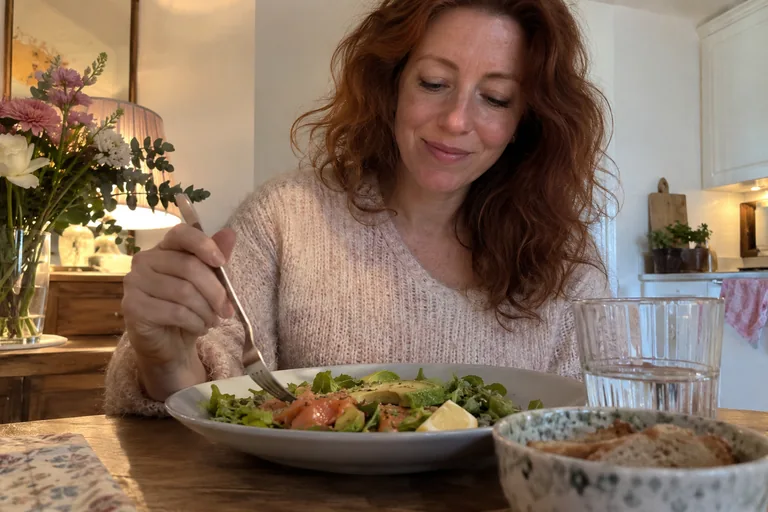
You can say “for now, I’m leaning toward this option” if you’re ready to consider new information. This wording isn’t an excuse; it simply describes how firm your choice is. In a nonjudgmental decision review, you can then note what confirmed or changed that preference. This helps you learn to speak precisely without demanding complete certainty from yourself about every detail.
Frequently asked questions
How can you express your preferences simply?
Start with “I prefer” or “I’d like,” then add a criterion if that helps. You don’t have to prove that your taste is universally better.
What’s the difference between a preference and a boundary?
A preference expresses a desired choice. A boundary states what you don’t consent to or can’t do.
What if I really don’t have a preference?
You can say so. The goal isn’t to make up an opinion, but to tell genuine indifference apart from automatically setting your own needs aside.
How can I avoid imposing my choice?
Present it as your point of view, then listen to others. The decision-making process can take several criteria into account or include taking turns.
Can I change my preference?
Yes, if you learn something new or the situation changes. Let the people involved know if the choice has already created a commitment.
What should I do if people ridicule my tastes?
You can ask for your opinion to be heard without mockery and set a boundary. A threatening situation calls for appropriate support and protection.
Sources
- Centre for Clinical Interventions, Department of Health Western Australia. Assertive communication. Assertive communication guidelines; they don’t guarantee how others will respond.
- Inserm. Anxiety disorders: when should you seek help?. Guidance on seeking help when anxiety persistently affects daily activities and relationships; this guide does not make a diagnosis.