Where to start
Write for a few minutes a day
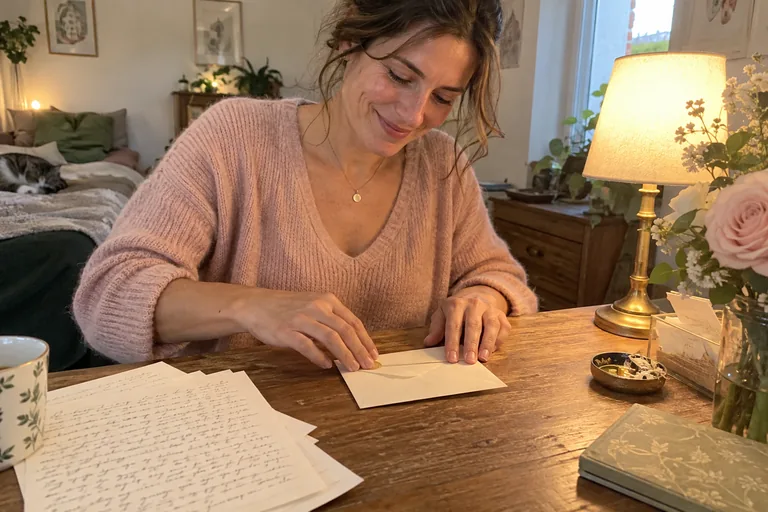
Writing turns a blur of emotions into something clearer. The practices in this section range from the briefest (three things you’re grateful for in the evening) to the most introspective (a letter to the person you’ll be ten years from now).
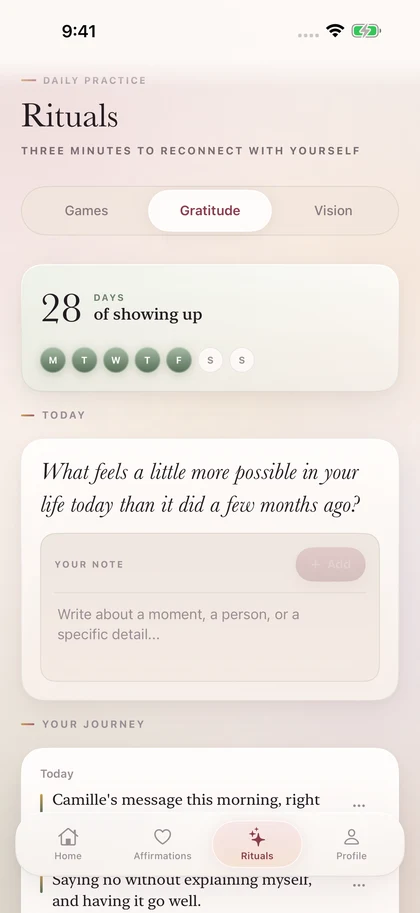
If you’re just starting out, a gratitude journal is the easiest ritual to stick with. Journaling prompts can then help you write when the blank page feels intimidating.
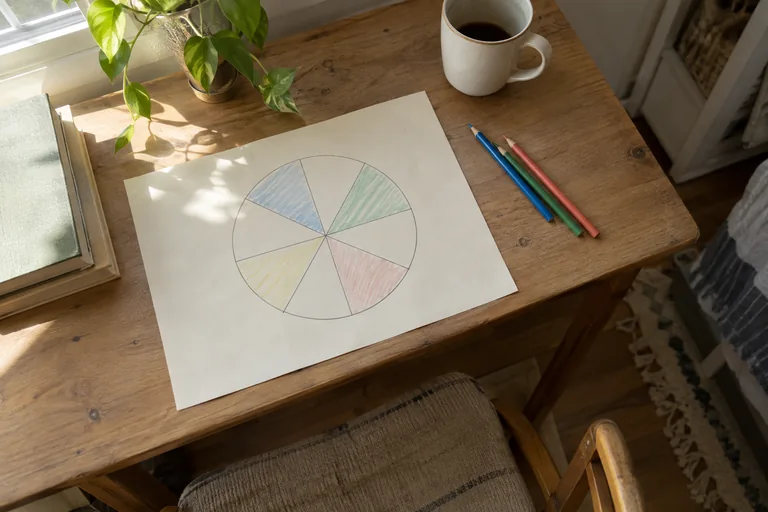
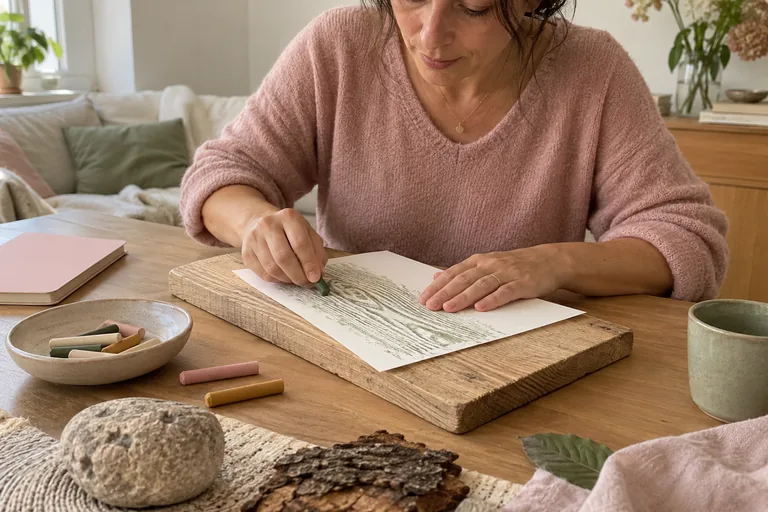
One exercise of its own: the letter to yourself 10 years from nowWriting also has a place in the rituals for morning and evening. Three pages when you wake up, without rereading them: the morning pages. If speaking comes more easily, you can try a personal audio journal and choose what you’d like to keep. Before organizing your entries, compare the uses of a paper or digital journal to choose a format that’s truly practical. In a shared home, a few guidelines can help you protect your journal’s privacy without promising absolute security. If you come across old notebooks, you can reread them without judging the person you were them by putting each page back in context. Before choosing, a page to distinguish facts from interpretations can clarify what’s available and what remains unknown. You can also save a prompt in a question journal without an immediate answer, without needing to reach a conclusion in every session. A familiar object can be a starting point: our five-object personal journal connects ordinary things with the scenes they bring to mind. To vary your observations without recording the people around you, try a written sound journal using words. When new information changes your opinion, also keep a record of what changed your mindOn a different scale, the performance-free birthday check-in makes room for the moments, connections, and needs of the year. During a bigger change in your routine, the retirement transition journal helps you explore relationships, activities, and the time you have available. When starting a new position, the first thirty days journal organizes questions and lessons without keeping confidential data. Once you’ve decided to leave a job, the journal after resigning distinguishes the experience worth keeping from the conditions you’d like going forward. When you return, a separate page can choose which discovery from the trip to adapt to everyday life, without turning every memory into a resolution. If words come to you in more than one language, you can welcome them in a bilingual journal without translating everything. A journal of values in action can shed light on what matters to you through scenes you’ve actually experienced. If you think you have nothing to write about, our method for writing about ordinary moments starts with an action and a detail. If words are hard to come by, a written inner-weather check-in without a score can give a temporary picture of how you feel right now. If you want to share part of this story, prepare a memory journal to pass on separate from your private pages. Picking it up again is optional: you can also stop keeping a journal that no longer works for you or choose another use. After a free first draft, you can explore another path with a chosen writing ruleYou can shift this perspective by entrusting the scene to a narrating object, with its own limits of perception. If you want to turn an observation into fiction without identifying a real person, you can build a portrait through gesturesFor a fiction exercise based on an action, you can write a scene without dialogue and notice what the gestures make clear. To experiment with the lens of a story, you can rewrite a scene from three points of viewIf a note makes you want to invent rather than record, you can turn it into flash fiction with a situation and a change. A precise observation can inform a first haiku in English, with attention to detail rather than an added moral. Alongside attributed quotes, you can keep a notebook of your own metaphors to test out original connections. Before preparing the captions, compare several titles for your creation Once you’ve written the scene, reading it aloud lets you examine the lines, their sequences, and the repetitions. To turn a reference into an active draft, create a notebook of observed color palettes with their provenance and proportions. To take action, try a still life drawing of a simple object, without waiting to prove you have talent. To make your own graphic materials, you can explore the texture-rubbing sketchbook on suitable surfaces. If you want to move from a memory to a shared visual intention, try a small themed photo series. To clarify what’s at stake beneath the lines, build the character’s desires and contradictions. To connect several places to an action, try an imaginary map that sparks a story. Before reopening the whole project, you can sort drafts into ones to resume, keep in reserve, or archive. For a creative activity, the first step could be to choose three materials you already have instead of preparing a shopping list. Before reusing a reference, distinguish inspiration, copying, attribution, and distribution rights. For a journal project, one way to wrap up could be to choose an ending without filling every page. For a practice you can adapt to everyday life, find out how to practice gratitude on difficult days without forcing yourself. For a practice you can adapt to everyday life, find out how to recognize one way you’ve supported yourself. For a practice you can adapt to everyday life, find out how to thank them without feeling bound by an invisible debt. To take stock of several areas before choosing one small step, fill out a wheel of life with your own reference points. To explore an activity that matters to you and prepare a trial that fits, discover this ikigai exercise, with no calculated career path or required intersection. To start with a sensory evocation, the olfactory journal offers six sections that distinguish sensation, memory, and invention. To revisit a topic over the seasons, start a a tree journal by separating observations from questions. Upon waking, the dream journal holds on to fragments and uncertainties, without automatic interpretation.
To revisit the same date over the years, the five-year journal offers a brief, flexible layout.
To organize pages, try a notebook index or a vocabulary notebook. To vary the form, explore a list poem and free indirect discourse. You can also alternate books without losing your place.