Contents
Keeping a personal journal means choosing a record of your experience in your own words. Begin with a fact, reaction, or question, and choose a medium that fits your privacy needs. Write briefly, take breaks, or stop: no daily streak is required.
This page offers writing methods and practical guidance without promising health effects or requiring you to describe a difficult experience.
What do you want your journal to keep?
Choose a concrete purpose: preserve a memory, examine a reaction, frame a question, or prepare a small action. The purpose can change between entries. A journal does not need to turn every event into a lesson.
If words come more easily aloud, personal audio journaling describes another practice. In a shared home, consider protecting your journal’s privacy without assuming absolute security. If writing becomes burdensome, change formats or stop. A portable writing corner may help when you have no separate room.
When rereading, distinguish what you knew then from what you know now. An older page can remain uncertain, contradictory, or incomplete; you do not need to correct it like homework.
What kind of journal is right for you?
Flip cards
Choose according to your purpose
Free pageFlip
Write without a required question, then choose what to keep.
Guided pageFlip
Start from a question that suits you today.
Brief pageFlip
Keep a fact and a reaction without developing them further.
Three Simple Methods
Morning pages
Morning Pages are associated with Julia Cameron and The Artist’s Way. They are a creative practice proposal, rather than a requirement for every journal. For a personal first attempt, choose a shorter free page if you wish; it need not reproduce an entire program.
Three-line journaling
You can record a fact, a reaction , and something you noticed. Adapt the fields: you do not have to find gratitude when that does not suit you. This brief format is related to a gratitude journalwithout being identical to it.
Guided journaling
Choose a question that interests you and leave the others aside. Our journaling questions offer several starting points without a required order or expected answer.
Generator
A prompt for today’s page
What took up most of my energy today, and why?
See all the phrases
Reflect
- What took up most of my energy today, and why?
- What do I wish I’d done differently?
- What am I proud of today, even a little?
Emotions
- Which emotion was most present today?
- What’s worrying me right now, and what can I do about it?
- When did I feel most like myself this week?
Projects
- What small step can I take tomorrow toward what matters to me?
- What do I want to experience a year from now?
- What am I putting off, and what’s holding me back?
Gentleness
- What would I say to a friend who had the same day I did?
- What do I need right now?
- What are three little things that brought me joy this week?
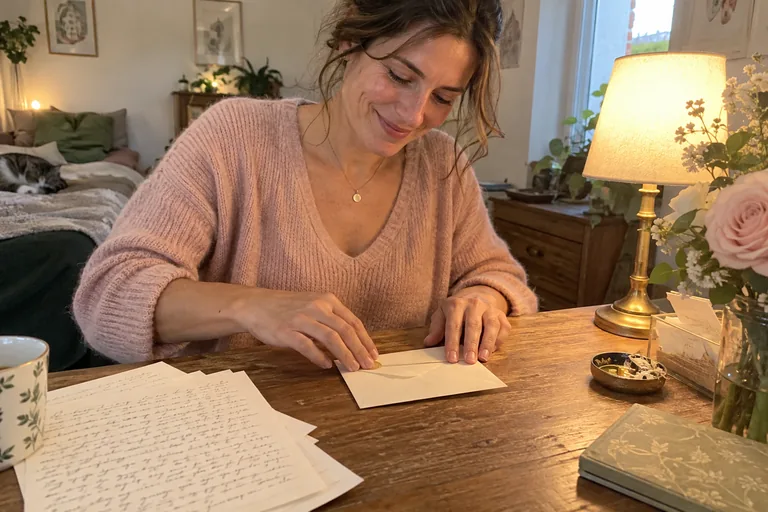 Read alsoLetter to yourself in 10 years: how to write it and why it changes the present
Keeping It Up Over Time
Prepare a flexible cue, such as opening the notebook after an existing moment in your day. If the cue stops fitting, move it or take a break. It does not automatically make writing regular.
Choose where to keep the notebook too: leaving it visible may remind you, but it will not suit every privacy need. For an app, examine storage, account access, locking, and copies instead of assuming one password solves everything.
Checklist
Prepare a first attempt
0 / 4
This list prepares an experiment; it measures neither an established habit nor a personal benefit.
Quiz
Separate writing from obligation
Must I write daily to be allowed to keep a journal?
See the answer
No. An occasional practice is possible; choose your own rhythm.
Is a personal journal automatically private?
See the answer
No. Access to the medium and copies matters even when the text is intended for you alone.
Must I describe an experience I do not want to detail?
See the answer
No. You choose what to write; changing subjects or stopping remains possible.
Go further
Once the habit is established, you can explore other forms: scripting, which involves writing about your future life in the present tense, or the letter to your future self ten years from now, a powerful exercise for clarifying what you want.
Miraya offers intentions, affirmations, and guided sessions among its features. Explore that framework if it suits you, without treating an app as automatic protection for all your writing.
How can you begin with a page you can protect?
Choose what to write and who might access the medium before choosing a routine. Replace names, describe a situation in your own words, or keep the entry brief. These choices limit some exposed information; they do not guarantee absolute privacy.
| Situation | Possible first decision |
|---|---|
| Notebook in a shared home | Choose its location and a discreet entry title |
| Notes on a shared device | Check the open account and accessible copies |
| Writing about another person | Remove unnecessary identifying details |
Invented example: “A difficult conversation with a friend; I want to ask her to clarify one point” can be enough. You do not have to reproduce the whole conversation or keep private messages. Continue with a question about your own need, then close the page.
Use a discreet indexto find entries without revealing their content in titles. A reading journal is a neighboring but different space for connecting a book with your life. A journal can also be occasional; no daily streak makes it legitimate.
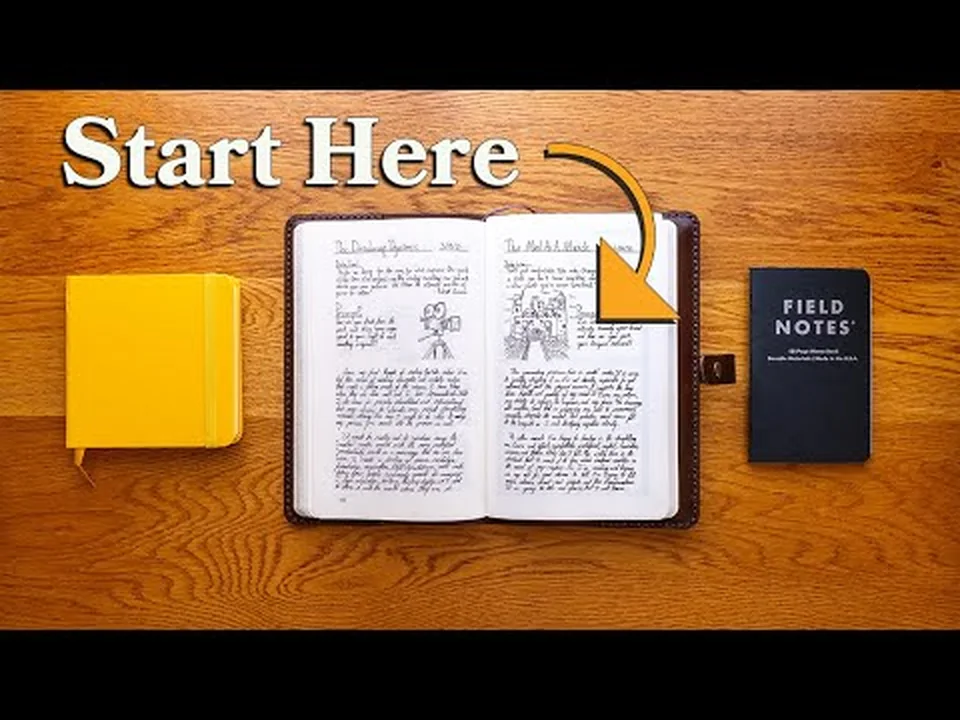
For a complementary perspective, watch this video from Zacc Rowlands. The creator offers several starting formats, not a required daily routine or a healing guarantee.
FAQ
Paper or an app for a first attempt?
Compare writing, search, and access to copies. No medium automatically protects all content; choose according to actual use.
What can I write when I have no idea?
A fact, detail, or question can be enough. You can close the page too; writing is not an obligation.
Must I reread pages that make me uncomfortable?
Leave them aside or choose another moment. A notebook does not require examining everything or turning each page into a lesson.
Must I write every day?
An occasional practice is possible. Choose a rhythm that suits you and adjust it when circumstances change.
Is a personal journal necessarily private?
Intending a text for yourself does not guarantee privacy. Check access to the medium, accounts, and copies.
Can I stop a journal I started?
Stop, change formats, or return later if you wish. A break does not create entries to catch up.
Sources
- Cameron J. (1992). The Artist’s Way. Tarcher/Putnam (book).