Contents
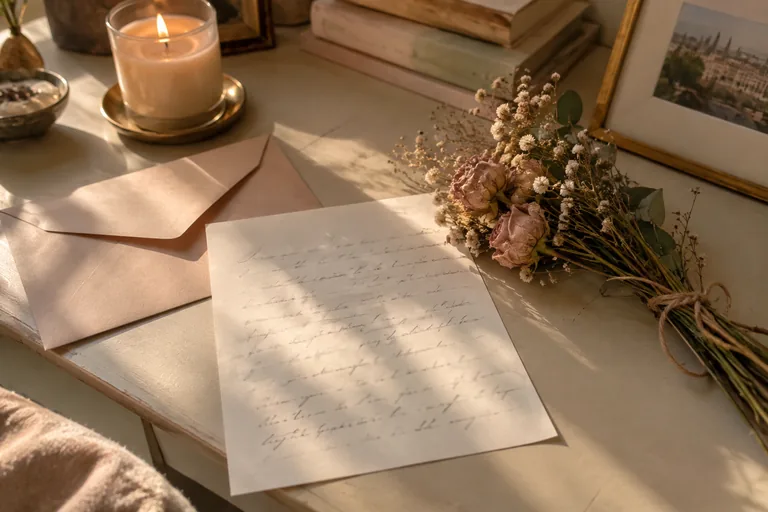
Imagine that ten years from now, one morning, you open an envelope written in your own hand. Inside, the person you are today is speaking to you: about what they were going through, what worried them, and what they hoped for you. What would you want to read? Between a distant perspective and today, a revisable seasonal plan offers a closer framework.
Writing a letter to yourself ten years from now is a simple yet powerful exercise. By writing to your future self, you do two things: preserve a precious record of who you are today, and clarify what truly matters for what comes next. It’s not a promise you have to keep at all costs; it’s a conversation between two versions of you. Here’s how to write it.
Why write to your future self
Looking ten years ahead invites you to step back from the urgencies of everyday life. The week’s worries feel less heavy, and what truly matters comes into clearer view: relationships, health, the meaning of what you do, and dreams you’ve set aside. If you keep a journal, add a few lines about this moment.
Psychology research also suggests that feeling connected to your “future self” can help you make kinder choices for yourself in the long run. Writing to this person makes them more real: you’re no longer making an effort for an abstraction, but for someone you’ve spoken to.
The five-part structure
1. A portrait of today
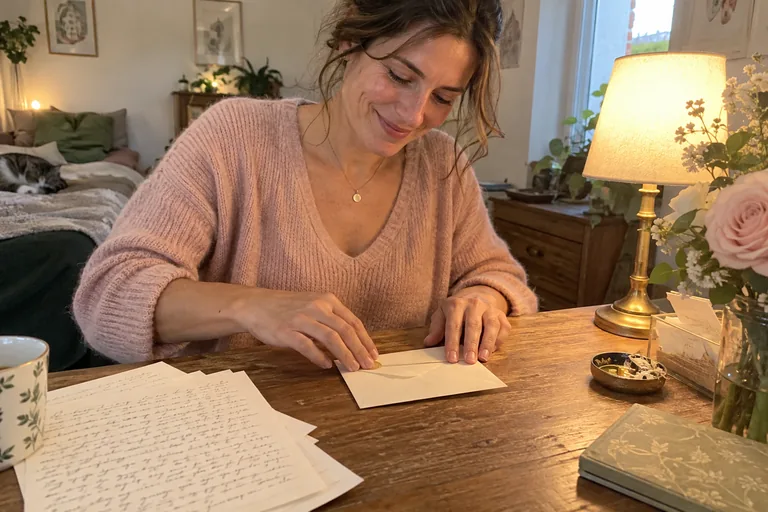
Start by describing your life right now: where you live, what you do with your days, the people close to you, what makes you laugh, and what’s on your mind at the moment. Be specific, even about details that seem ordinary: they’re the ones that will move you ten years from now.
2. What’s on your mind
Talk honestly about your current doubts and worries. Ten years from now, you’ll know how they changed; this part will remind you that storms eventually pass.
3. Your hopes
What do you wish for the person you’ll be? Not a list of measurable goals, but states of being, experiences, and values: “I hope you’ve kept your curiosity,” “I hope you’ve finally learned to rest.”
4. Your questions
Ask your future self some questions: “Did you dare to take on that project?”, “Do you still see that friend?”, “What surprised you?” These questions bring the letter to life.
5. A tender note
End with whatever you want to say to them, no matter what happened: pride, compassion, love. Remind them that they’re allowed to change their mind.
Generator
Sentence starters to help you
Today, my days look like…
See all the phrases
Portrait
- Today, my days look like…
- The people who matter most to me right now are…
- What’s making me laugh these days is…
Concerns
- Right now, what’s keeping me up at night is…
- I’m afraid of…
- I often wonder whether…
Hopes
- I hope you’ve found…
- I hope you haven’t forgotten…
- I’d like you to feel more…
Tenderness
- Whatever you’ve become, I’m proud of you because…
- If you’ve been through hard times, remember that…
- I forgive you in advance for…
Before you begin
Checklist
Getting ready for your writing time
0 / 5
Everything is ready. Take your time: this letter is a gift for the person you’re becoming.
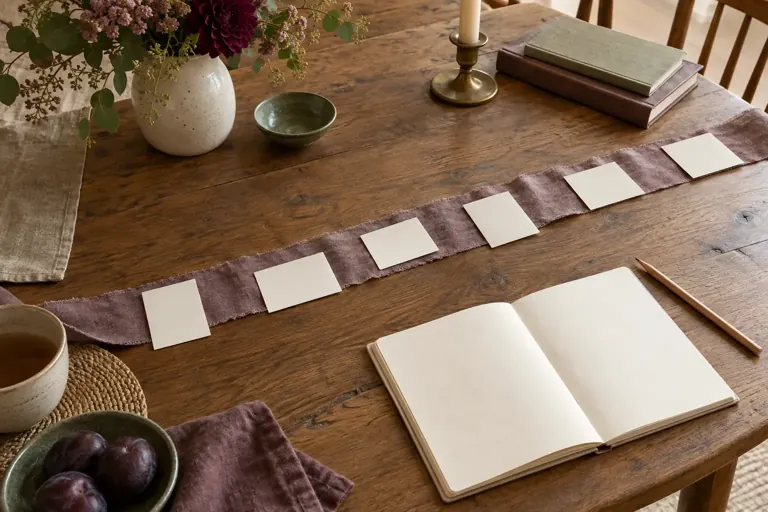 Read alsoPersonal timeline: Connect the stages of your life
Writing together
A letter to your future self can also become a shared moment. Some families each write one for a birthday or New Year’s Eve, then put them all together in the same box. Friends do this for a farewell, a wedding, or a milestone. Everyone writes alone without showing their letter, then they choose an opening date together. Ten years later, reading the letters together is often a rare, moving experience that shows just how much everyone has changed… and what has stayed the same.
Keeping the letter
How you keep your letter is part of its magic. You can tuck it into a sealed envelope with the opening date written on it, then put it in a keepsake box. Some online services also let you schedule an email to be sent on a future date. Or you can give it to someone you trust, who will return it to you when the time comes.
Many people like to reread it, or write a new one, at key moments: a milestone birthday, a move, a life change. A new moon ritual is also a good time to revisit your intentions. Before imagining far ahead, you can write a birthday reflection focused on the year you’ve lived rather than on a list of milestones to reach.
Quiz
True or false?
The letter must include specific goals that you absolutely have to achieve.
See the answer
False. It’s mainly about values, hopes, and tenderness. Overly rigid goals could become reproaches ten years from now.
It’s useful to talk about your current worries in the letter.
See the answer
True. Ten years from now, rereading these worries can remind you that you’ve made it through many of them or that they’ve faded away.
You have to write it all in one sitting and never reread it.
See the answer
False. You can let it rest, reread it, and make changes before sealing it. What matters is that it feels like you.
Taking the exercise further
If you enjoy this exercise, the scripting offers a complementary approach: write, in the present tense, about a day in your future life. The creative visualization helps make this life feel more tangible in your mind. And our journaling prompts support you every day in staying connected to what matters.
Frequently asked questions
Why ten years?
Ten years is far enough away to gain perspective and close enough to imagine. You can also write to yourself one or five years from now.
What if I can’t imagine myself ten years from now?
That’s common. Focus on who you are today and on your hopes, without trying to predict your future life.
Do I have to write it by hand?
It’s not required, but a handwritten letter carries a particular emotional weight when you reread it years later.
Sources
- Hershfield H. E. (2011). Future self-continuity: how conceptions of the future self transform intertemporal choice. Annals of the New York Academy of Sciences, 1235, 30-43.