
Contents
You’re waiting for a reply about a project, an organizational confirmation, or a message after making a proposal. The silence leaves plenty of room for assumptions. You may check your phone, replay the conversation, and imagine several outcomes without getting any new information. A waiting page offers a limited framework: what you know, what you imagine, what you can do, and when you’ll check again.
This format is for ordinary expectations. An urgent situation or a process with an official deadline calls first for the appropriate actions. The journal helps clarify the personal side of waiting; it does not replace reliable information or necessary contact.
Describe exactly what’s pending
Start with a factual sentence: “I sent my proposal on Tuesday and haven’t received a reply yet.” Add the stated timeframe, if there is one. If there isn’t, write that down instead of making one up based on your impatience. A few hours of silence and a commitment that has been overdue for several days aren’t the same situation. This page becomes more useful when you preserve those distinctions.
Also specify what you’re waiting for: a yes, a date, information, a decision. Sometimes a vague wait contains several questions. You may have received general approval but still be waiting for practical details. Naming what’s missing keeps you from interpreting the whole relationship through this one delay. Keep the necessary details without copying an entire private exchange. The date, the request, and the fact that there’s no reply yet are often enough to describe the situation clearly. If the wait ends with a no, you can receive a rejection without treating it as a verdict on you.

Put scenarios in a separate column
Next, write down the interpretations that keep coming back: “They aren’t interested in my proposal,” “My message got lost,” “They’re busy.” These are possibilities, not confirmed information. You don’t need to choose the most reassuring one right away. The useful step is to recognize them as scenarios. A comforting assumption can be just as unverified as a troubling one.
You can add “I imagine that…” in front of each one. This wording doesn’t invalidate how you feel; it simply describes the status of the thought. If new information comes in, you can update the page. In the meantime, avoid writing ten paragraphs for every possible outcome. Two or three lines are enough to show the difference between what you know and what your mind is trying to fill in. The page should put limits on the exercise, not become an endless storehouse of assumptions.
Identify the action that really depends on you
See if there’s still a practical action to take: check that the message was sent, look up a published timeframe, find a document, or prepare an appropriate follow-up. Once you’ve checked, make a note of it so you don’t repeat the check without a reason. “Sending confirmed on this date” is more useful than inspecting your inbox again every time you have a doubt. You can also note that no action is needed for now.
If a follow-up makes sense, write down its purpose before drafting it: to get a date, confirm receipt, or find out whether another step is needed. Keep the tone simple and proportionate. The journal doesn’t require you to send the message right away. It lets you prepare a clear follow-up for the right time, taking the stated timeframe and actual context into account. Avoid using multiple channels just to ease your discomfort: that can add pressure without providing information.
Set a time for your next check
Fill in these prompts to prepare for your next attempt. Nothing is sent or saved.
Your prompt will appear here after you make your choices.
Choose a time to check again
Waiting can sometimes feel overwhelming because every minute seems like a possible moment to check. You can choose a next check-in point that fits the situation: after lunch, tomorrow morning, or on the agreed date. This marker isn’t a rigid rule for every kind of waiting. A message about imminent logistics and a proposal sent for next month call for different rhythms. Use the context rather than a universal piece of advice.
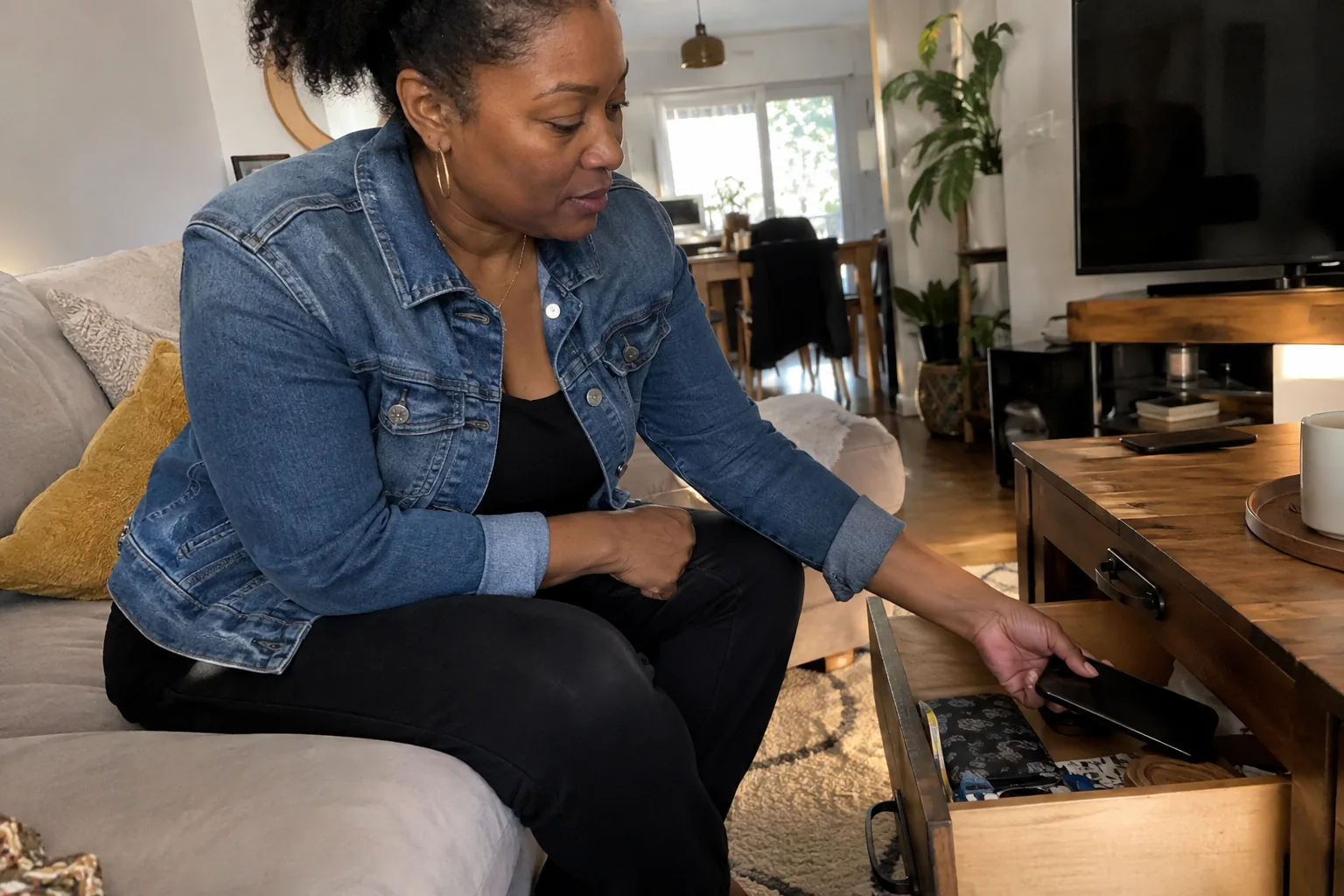
Write this point on the page, then close your journal. You can leave useful notifications on if that suits your needs, or put your phone out of sight while you do a specific activity. The goal isn’t to prove that you’ll never check again. If you check sooner, notice it without turning the deviation into a failure. Simply return to the marker you chose, or adjust it if it was unrealistic. A workable plan is better than a dramatic promise of complete detachment.
 Read alsoKeeping a journal: how to get started and stick with it over time
Plan an activity that doesn’t require a reply
While you wait, choose something that can move forward independently of the outcome you’re waiting for: prepare a meal, finish a short task, take a walk, read a few pages, or tidy a small area. Avoid an activity that stays on hold for the same answer in another form. If you’re waiting for approval on a project, spending an hour imagining its launch may prolong the waiting instead of giving you something else to focus on.
You don’t need to be perfectly focused to begin. The activity can coexist with a thought that keeps coming back. Choose a realistic scope and a clear endpoint: one chapter, one trip, one drawer. The guide on the letting go can complement this reflection, but this page stays very practical: it distinguishes what you can do now from what depends on another person or an external event. It doesn’t ask you to give up what matters to you.

Limit the time you spend writing
A waiting page doesn’t need to be rewritten every time you check. Set a short limit: four sections, a few minutes, or half a page. If no new facts emerge, you can add “situation unchanged” and stop. This keeps you from artificially generating a new analysis. The journal records the uncertainty instead of asking you to resolve it with more words.
Notice how the exercise affects you. If writing mainly leads you to describe distressing scenarios in detail, shorten the format or choose another activity. You can stick to the facts and the next step. When you’re waiting through a particularly difficult situation, support from another person may be more appropriate than a solo exercise. You don’t have to turn a journaling practice into an obligation to manage alone what feels like too much or calls for practical help.
Update the page when something changes
When the answer arrives, write down what you know now. Then you can revisit your scenarios without making fun of yourself. Some will be close to reality; others won’t. The goal isn’t to prove that your worries were ridiculous, but to notice the difference between missing information and a conclusion. You might keep a practical lesson: ask about the timeline from the start, clarify a question, or plan an alternative when a deadline matters.
If the wait stretches on, reassess the available actions based on the current situation. The marker you chose yesterday may no longer fit today. You can follow up, look for another solution, or decide to stop keeping the project open, depending on your constraints. To tell more freely what this wait has meant, the journaling prompts can open another page. It can be brief, dated, and focused on the useful facts. When the information finally arrives, you can rebuild the next steps of the project based on the current situation.

Frequently asked questions
Should I write down every possibility?
No. Two or three recurring scenarios are enough. An exhaustive list can keep you stuck in analysis. You can even write only “several explanations are possible” when detailing the possibilities doesn’t help you choose a concrete course of action.
What if the stated timeframe has passed?
Revisit the actual circumstances and how important the answer is. A clear follow-up or checking with the right person may be appropriate. The notebook shouldn’t be a reason to wait indefinitely when a practical step is needed.
Can I use this format while waiting for a personal message?
Yes, while respecting the other person’s freedom and boundaries. Not receiving a reply doesn’t give you permission to contact them repeatedly. The page can mainly help you separate facts from your interpretations and decide what you want to do with your time.