Contents
- Memory book to pass on: to whom and why?
- How do you select the memories to pass on?
- What context should you add?
- How do you respect the people you mention?
- How do you make a simple version to give as a gift?
- How do you present the memory book?
- What should you keep for yourself after passing it on?
- Have someone review the context without asking them to validate your whole story
- Frequently asked questions
- Sources
A memory book to pass on is a selection of stories prepared for a specific person. Start by choosing what you’d like them to discover, then describe a few scenes with enough context for them to understand, even if they weren’t there for those moments.
You don’t need to give someone your entire private journal. A version for someone close to you can be separate from your private pages, shorter, and more explicit. The gift should leave the recipient free to read at their own pace, without any obligation to approve your account or respond in a particular way.
A dream memory can also appear in a personal journal. The dream journal template without interpretation distinguishes the fragment noted upon waking from the comment added afterward; that distinction is still useful if you decide to pass it on one day.
Memory book to pass on: to whom and why?
Think of a real person rather than “the family” in general. What a sister already knows isn’t what a friend will discover. The recipient influences the explanations you need, the scenes you choose, and the information you want to share. A wider audience calls for another review.
| Intention | Possible content | Limit to keep in mind |
|---|---|---|
| Tell the story of a period | A few specific scenes | Don’t claim to tell the whole story |
| Pass on a practice | A recipe or a habit | Explain what might seem obvious |
| Maintain a connection | Shared moments | Don’t demand a reaction |
| Describe a place | Landmarks and anecdotes | Protect private information |
To choose what to include, the guide for writing about a specific memory help starting from a scene. A personal timeline can then provide approximate dates and the general order of events without becoming an inventory of your whole life.
How do you select the memories to pass on?
First, choose three to five scenes that don’t all serve the same purpose. One scene might show a place, another a relationship, and a third a gesture. This number is a convenient starting point, not a rule. You can add pages as long as the project remains enjoyable and coherent.
Ask yourself what each scene brings to the recipient. A memory that matters a lot to you may need plenty of context; a simple detail, by contrast, can make a time and place feel immediate. The recipe and memory journal works when you want to share both a practice and the story around it.
Avoid choosing only exemplary moments. A notebook can include an everyday mishap or a detour without becoming a full confession. You’re free to keep parts of your story private. Sharing a selection doesn’t mislead someone about the existence of other memories.
To preserve a record of a place, a notebook devoted to a tree can bring together dated observations. Keep these notes separate from older memories whose dates are uncertain.
What context should you add?
Introduce people by their relationship to you, the general location, and the time period. “At Aunt Jeanne’s” may be perfectly clear to you and obscure to the recipient. A sentence like “Jeanne, my mother’s sister, lived near the train station at the time” gives some initial context without requiring a precise address.
Distinguish between certain, approximate, and reconstructed dates. You can write “probably in the early …” when your memory is unclear. If you have a photograph or a note, say what it can actually confirm. An image rarely proves the entire story associated with it.
The A personal photo journal helps you caption an image according to its purpose. You can also include a hand-drawn map or a description of an object, as long as these elements shed light on the story rather than weighing down every page.
How do you respect the people you mention?
Telling your experience doesn’t automatically give you the right to share other people’s confidences. Reread each scene looking for sensitive information, unnecessary details, and people who could be recognized. An initial doesn’t always make someone anonymous within a close-knit circle.
For a delicate passage, ask the person involved for permission when possible and appropriate, or remove the information. You can describe how an exchange affected you without reproducing its private details. The journal of memorable conversations offers guidance on distinguishing between a personal record and words to pass on.
Take care with disagreements about memories, too. Your notebook can say “this is what I remember” instead of presenting a definitive version. If someone suggests a correction, you can note it without necessarily erasing your point of view. For legal questions or sensitive publications, seek qualified advice before sharing.
Flip cards
A few things to keep in mind
For whomFlip
What does this person already know?
ContextFlip
What detail makes the scene understandable?
ShareFlip
Who could be exposed by this passage?
 Read alsoScripting: Write your dream life to clarify what you want
Checklist
Prepare your page
0 / 4
You can now try something, adapt your approach, or close your journal.
Your workshop
Choose your starting point
Open a suggestion and try it in your journal. You don’t have to share anything personal on this page.
A recipe to pass on
Add the specific steps, the details you know, and the memory associated with it. Keep variations separate from confirmed details.
A family story
Present your version as a memory set in a specific time and place. Remove unnecessary intimate details or ask for the necessary consent.
A digital notebook
Test that the file opens, and keep drafts separate. Check the recipient before sending anything.
Generator
A writing prompt
Choose a specific recipient. What I notice in particular is…
See all the phrases
Observe
- Choose a specific recipient. What I notice in particular is…
- Keep the version you’re giving separate from your private journal. My example today would be…
Choose
- Check the final version before giving it to them. The version that feels right to me is…
- I can leave this page as it is, because what I wanted to put down here was…
How do you make a simple version to give as a gift?
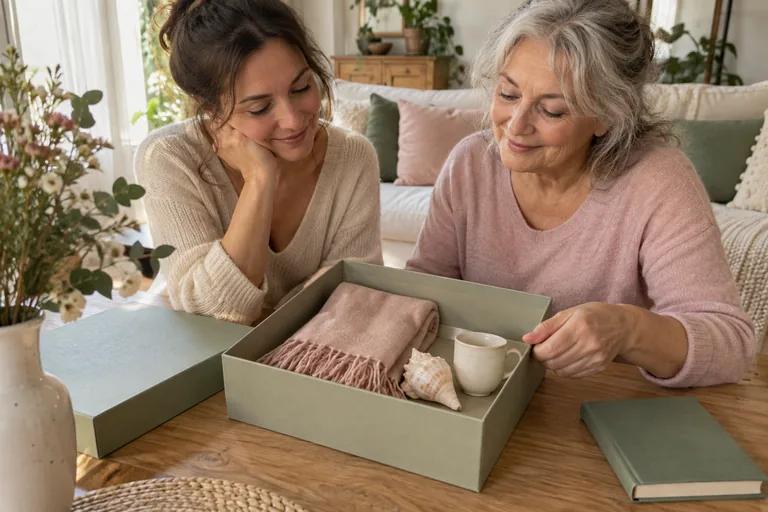
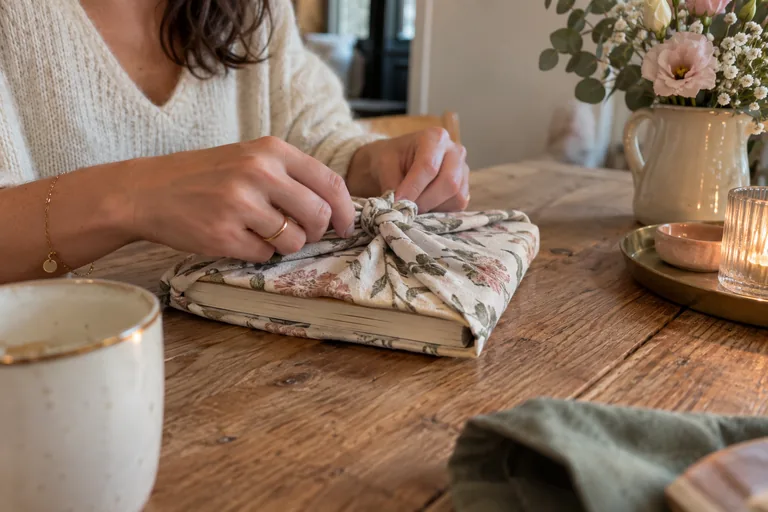
Choose a format the person can use easily: a readable notebook, printed pages, or a file they know how to open. It doesn’t need to be elaborate. Check the text size, page order, captions, and how securely the pieces are attached if you use this format.
You can borrow some ideas from the creative collage journal, but avoid letting the decoration overshadow the story. A title, a scene, and a short caption already make a complete page. The quote journal helps distinguish your words from those quoted from an author or another person.
For a digital file, open the final version on a different device if possible. Check the images, pages, and characters. The CNIL’s backup recommendations also emphasize the importance of testing copies; a backup that won’t open can’t do its job.
How do you present the memory book?
Add a short introductory note: what you chose, the period it covers, and the limits of your memory. You can clarify that these are personal memories and that no reply is expected. Avoid turning the gift into an implicit request for reconciliation, forgiveness, or recognition.
If you’d like to thank the recipient, a gratitude letter written in private may help you find simple wording. Gratitude often works best when you name a specific gesture rather than making the other person responsible for everything you’ve experienced.
Ask before sharing the same version with other people. A notebook made for someone close to you isn’t automatically suitable for a family or online publication. The context, audience, and confidences change; a new destination calls for a new selection.
What should you keep for yourself after passing it on?
Keep a copy if you wish, with the date and the version you gave them. Keep your private drafts separate so you don’t send them by mistake the next time someone asks. The well-organized idea journal can inspire a simple way to organize the scenes you haven’t used yet.
You can also let the project end there. The notebook you give doesn’t need to be the first volume of a complete work. Its value lies in the relationship and the scenes you chose, not in the number of pages or the recipient’s immediate reaction.
Have someone review the context without asking them to validate your whole story
Before giving the notebook, you can ask someone you trust to read a page you’re ready to share. Give them one focused question: Can they tell who the people are, when the scene takes place, and why you chose it? This review is about clarity, not approval of your entire experience.
If they don’t know the place, notice what’s missing for them to picture the scene. A simple point of reference may be enough; adding several pages of explanation isn’t always necessary. You can also remove a secondary first name or simplify a sequence of dates that distracts from the central memory.
Then reread the revised version from the perspective of the actual recipient. The person who helped you may not know the same things they do. So you make the final editorial decision while benefiting from an outside perspective on the places where your story assumes knowledge that hasn’t yet been provided.
For a complementary perspective, watch this video from Write Your Family History with Devon Noel Lee.
A shared walk can also leave a factual record. The birdwatching journal separates what you saw, a proposed name, and what you want to check before choosing a page to pass on.
A short text can accompany a page you pass on without summing up a whole person. The guide to composing a personal acrostic and choosing its readers distinguishes the initials constraint, rereading for meaning and the choice to share or keep a draft.
Frequently asked questions
Should you give someone your original personal journal?
No. A selection prepared for the recipient better preserves the distinction between private writing and what you choose to pass on.
How many memories should you choose?
A few scenes are enough to get started. Look for a useful variety rather than aiming for a certain number of pages.
Can you tell a memory you’re unsure about?
Yes, as long as you clearly indicate the uncertainty. An approximate date is better than invented precision.
Should you ask permission from the people you mention?
For confidences or sensitive passages, seek their consent or remove the details. Using just an initial doesn’t guarantee anonymity.
What format should you give?
Choose one the person can read easily. Check that the file is readable and opens properly instead of prioritizing its visual impact.
What if the recipient doesn’t react much?
They may need time or read it differently than you imagined. The gift doesn’t obligate them to respond.
Sources
- CNIL. “Security: backing up.” Data protection and backup verification principles from a guide for organizations. View the resource.
- CNIL. “Mobile apps: Your privacy will need better protection.” App permissions, data, and settings. View the resource.