Contents
- Sound journal or audio journal: what’s the difference?
- How can you listen to a place without tuning out what’s around you?
- What words can you use to describe a sound?
- How can you create your sound journal from three sounds?
- How can you respect the privacy of people you hear?
- What should you do if certain sounds tire you out?
- Return to the same place: what can you compare?
- A page shaped by the silences between sounds
- Frequently asked questions
- Sources
You can keep a sound journal using words alone: listen to a place, then describe a few sounds and how they follow one another. No recording is needed; this writing practice focuses on your listening experience without collecting conversations from the people around you.
Choose a place where you can stop safely. A kitchen, courtyard, or quiet bench already offers plenty to work with. The goal isn’t to identify every source with certainty, but to capture the atmosphere of a moment in a way that goes beyond describing only what you see.
Sound journal or audio journal: what’s the difference?
In an audio journal, you record yourself speaking. In the format suggested here, you listen to your surroundings and then write. So the journal contains a personal description, not a collection of files. You may enjoy both, but they have different uses and precautions.
| Practice | Record kept | Key question |
|---|---|---|
| Written sound journal | Words about a soundscape | What did I hear? |
| Personal audio journal | Your own voice | What do I want to share? |
| Sound collection | A recording of the place | What can I record and share? |
| Noise complaint log | Factual observations | What problem do I need to document? |
This guide is about the first format, not measuring noise or building a case. For a broader account, you can pair this page with the journal or with a description using the five senses, without forcing yourself to use perceptions that aren’t accessible to you.
How can you listen to a place without tuning out what’s around you?
Settle somewhere stationary and keep your eyes open if that feels better. Don’t do this exercise while crossing a street, riding a bike, or doing a task that requires your attention. Listening to a place doesn’t require you to isolate yourself with headphones or achieve perfect concentration.
Start with what stands out: ventilation, traffic, footsteps, or dishes. Then notice a quieter sound, if you can hear one. You can simply write, “I mostly hear the engine.” There’s no need to invent a delicate background to make the page interesting.
The CNRS describes soundscapes as a way to study ecosystems, human-made sounds, and relationships with the environment. Your journal isn’t a scientific investigation, but this resource is a reminder that you can observe a place by listening to it. To keep paying attention outdoors, use the nature journal.
What words can you use to describe a sound?
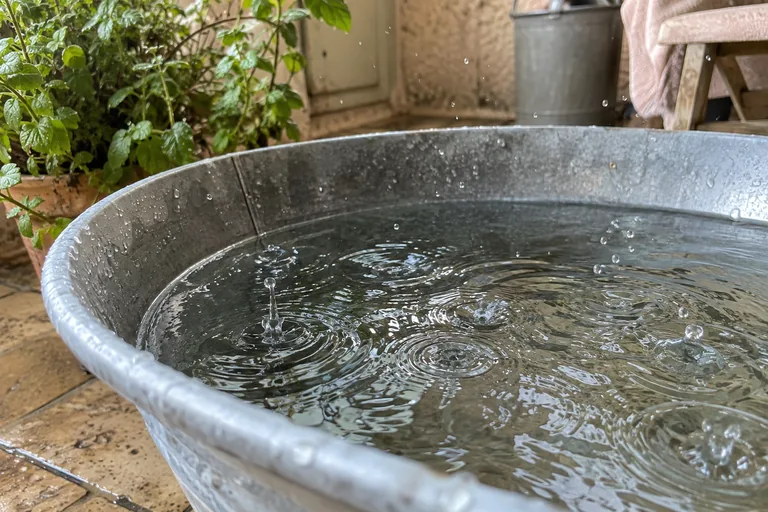
You can start with its duration: brief, continuous, intermittent. Add its rhythm: steady, hurried, hesitant. Then place it: nearby, behind you, overhead, hard to locate. These details already tell the story of an experience without musical or technical vocabulary.
Distinguish the sound from its presumed source. “A metallic scrape behind the door” is more cautious than “the neighbor is moving their chair” if you haven’t seen anything. Likewise, a bird’s song can remain a bird’s song when you don’t recognize the species. Uncertainty is information, not a flaw in your description.
Comparisons are fine too: “like crumpling paper,” “a sharp snap.” They describe what the sound brings to mind; they aren’t measurements. You can keep a small collection in your idea notebook if you often find phrases you like.
How can you create your sound journal from three sounds?
Choose a background sound, a recurring sound, and an unexpected sound. In an imaginary kitchen, the refrigerator provides a background hum, a spoon sometimes taps a cup, and a door slams in the stairwell. You can describe their sequence instead of making a list of names.
Then add where you are in the scene: you’re sitting down, waiting for the water to heat, opening a window. The same place can inspire a different page when heard from another position. Our suggestion for creative observation walk helps you vary your point of view without searching for an extraordinary setting.
End with what listening changes in your description, if it changes anything. You may have noticed a rhythm, a contrast, or a source of discomfort. You don’t have to conclude that the place is calming. The experience can be neutral, pleasant, tiring, or simply new.
Flip cards
A few things to keep in mind
DurationFlip
Is the sound brief, continuous, or intermittent?
PaceFlip
Does it return regularly or unpredictably?
DistanceFlip
Does it seem close, far away, or hard to locate?
 Read alsoScripting: Write your dream life to clarify what you want
Checklist
Prepare your page
0 / 4
You can now try something, adapt your approach, or close your journal.
Your workshop
Choose your starting point
Open a suggestion and try it in your journal. You don’t have to share anything personal on this page.
At home
Describe three sounds without naming their sources right away. Then describe the order in which they occur.
Outside
Stay still and pay attention to your safety. Note one nearby sound and one farther away, without trying to get closer.
A sound memory
Write from memory about a past atmosphere. Mark what you’re sure of and what remains approximate.
Generator
A writing prompt
Describe the sounds in your own words. What I notice specifically is…
See all the phrases
Observe
- Describe the sounds in your own words. What I notice specifically is…
- Distinguish the sound you heard from what you think caused it. My example today would be…
Choose
- Choose a phrase or a small scene. The version that feels right to me is…
- I can leave this page as it is, because what I wanted to put down here was…
How can you respect the privacy of people you hear?
Describe a soundscape without reproducing an identifiable conversation. “Voices answering one another in the courtyard” may be enough. The notebook shouldn’t become a way to collect confidences, track someone’s habits, or record information you overheard that wasn’t meant for you.
If a phrase keeps coming to mind despite your efforts, you can leave it out of the text and describe your movements or general impression instead. For conversations you take part in, the conversation journal offers a more suitable framework, focused on what you want to remember from your own experience.
Before sharing the page, review the clues together: an address, time, description of someone, and words they said could make them recognizable even without a name. A version meant for others to read can be more general than your private note. You can also choose not to share this page.

What should you do if certain sounds tire you out?
Don’t deliberately prolong an uncomfortable exposure just to finish the exercise. Change locations, shorten the time, or choose another way of observing. A loud sound doesn’t become beneficial just because it’s part of a journaling practice.
You can write about an atmosphere you already remember, noting that it’s a memory. The guide for writing about a specific memory lets you work with a past scene, while the photographic journal offers another sensory approach if it suits you better.
If you experience pain, a change in your hearing, or lasting discomfort, seek professional advice instead of using this notebook as treatment. The exercise doesn’t measure hearing or replace an evaluation. You don’t need to be able to perceive faint sounds to have a meaningful creative practice.
Return to the same place: what can you compare?
You can write a second page at another time of day. Compare only what you actually noticed: how long a sound lasted, whether sounds alternated, and whether a sound was present or absent. A difference between two sessions doesn’t support conclusions about every day in that place.
You can keep these pages side by side and give them concrete titles. “Kitchen before leaving” and “kitchen on Sunday afternoon” will be more meaningful than labeling the atmosphere good or bad. To keep it brief, try the one-sentence-a-day journal : one sentence can already capture a rhythm.
A page shaped by the silences between sounds
The journal can describe interruptions as well as the sounds themselves. In a fictional example, a courtyard seems calm until a shutter opens; the sound of dishes appears, stops, then a vehicle passes in the distance. You can describe these arrivals and departures without deciding that everything is completely silent between them.
Use relative markers instead of complicated timing: before, during, after, at the same time. They’re enough to keep the soundscape organized. If you’ve lost the exact order, write an approximate sequence. The notebook shouldn’t look like a scientific record you didn’t make.
You can then read the page aloud softly, if you’re in a private place, to check whether the sentences convey a sense of rhythm. This rereading is about the text, not vocal performance. Change a sentence that’s too long if it obscures the alternation you wanted to preserve, then stop when the soundscape feels recognizable enough to you.
For a complementary perspective, watch this video from Explore Nature.
Frequently asked questions
Do I need to record the sounds?
No. This journal is designed for written descriptions and to avoid collecting audio of the people around you.
Should I close my eyes?
Stay in a safe position, and keep your eyes open if that feels more comfortable or is necessary.
What if I can’t recognize a sound?
Describe its duration, rhythm, or direction. You can write that the source is still unknown.
Can I write from home?
A kitchen, hallway, or window can offer a variety of soundscapes without needing to go anywhere.
Is this notebook for measuring noise?
No. A personal description does not provide an acoustic measurement and does not replace the appropriate steps for addressing a nuisance.
What should I do if listening makes me uncomfortable?
Stop or switch to another medium. The practice is optional, and you don’t have to put up with an unpleasant sensation.
Sources
- CNRS Images. “Soundscapes to Listen To.” An introduction to soundscapes in a research project; the notebook practice suggested here is creative. View the resource.