Contents
- Telling the story of your day: what should you choose when nothing happens?
- How can you tell the story of your day by choosing a scene?
- What details bring everyday life to life?
- How can you write without making the scene seem nicer than it was?
- A method in three passes
- How can you vary your pages when the days feel alike?
- How can you reread these ordinary moments?
- Tell the same scene from two different distances
- Fitting a scene into a small space without making it vague
- Frequently asked questions
- Sources
Telling the story of your day means choosing an ordinary scene and giving it a few concrete details. You don’t need a trip, an achievement, or a powerful emotion: waiting, commuting, or preparing a meal can become a journal entry.
This format isn’t a gratitude log. You can describe a pleasant, ordinary, or slightly annoying moment without searching for what it taught you. The aim is to preserve the texture of a day, not to prove its value to an imaginary reader.
Telling the story of your day: what should you choose when nothing happens?
Replace the question “What important thing did I do?” with “What scene can I bring back to mind?” Maybe you looked for a sock, waited for the water to heat up, or noticed unusual light on a wall. A scene doesn’t need to lead to an event to have a beginning, an action, and an end.
| Starting point | Example | Detail to look for |
|---|---|---|
| A commute | Coming back from the bakery | A way of carrying the bag |
| A wait | Waiting before an appointment | What you were looking at |
| An action | Preparing a meal | The order of the movements |
| A tiny change | Moving a plant | Its new place in the room |
If you’re just starting out, the journal can hold these fragments without any special organization. A date and a specific title are enough. You can also choose the one-sentence-a-day journal when you want a very brief record.
How can you tell the story of your day by choosing a scene?
Set aside a few minutes and a place. “I ran errands” sums up an activity; “by the produce stand, I switched baskets twice to get the tomatoes” opens up a scene. Then you can describe where the objects are, your hesitation, and the moment you leave again.
Keep only the details that matter to this brief sequence. You don’t need to explain why you’d needed tomatoes since the start of the week. Precision doesn’t require completeness. The guide to writing about a specific memory helps you choose what makes the moment recognizable.
You can write in the present or the past. The present sometimes brings you closer to the action; the past simply shows that the scene is over. Neither tense is more authentic. Choose the one that lets you keep going without correcting every sentence.
What details bring everyday life to life?
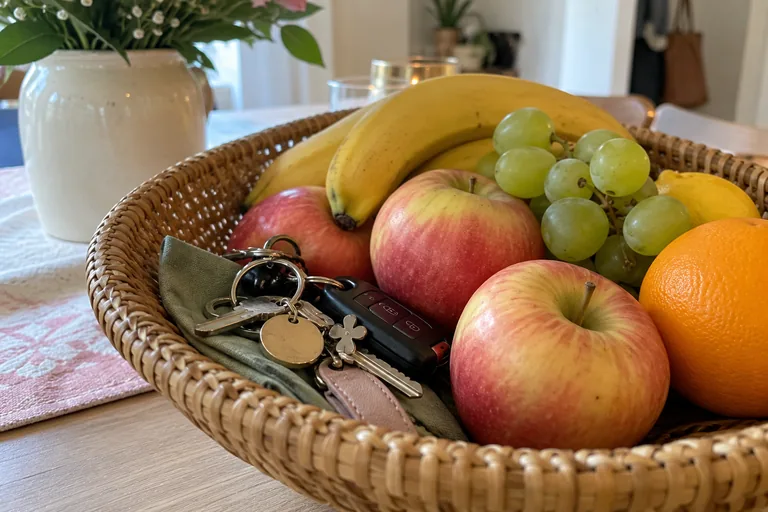
Look for a specific action before reaching for adjectives. “She folds the dish towel into thirds” shows more than “she tidies up carefully.” You can keep a sound, texture, or distance if you noticed it, without artificially adding a detail for each sense.
The guide to describing a place with the five senses offers a collection of observations. Use it as an option, not as a checklist. Some scenes are mostly visual; others hinge on a sound or a way of moving.
The BnF presents letters from Zola that mention his days, visits, meals, and conversations. This cultural heritage reference reminds us that everyday life can be the stuff of stories. Still, you don’t have to imitate a writer or create an important archive to have the right to preserve your own moments.
How can you write without making the scene seem nicer than it was?
Keep the rough edges: an object you can’t find, a moment of impatience, a sentence left hanging. They can give your writing precision. If the moment was neutral, let it stay neutral. Your journal doesn’t need to turn every round of dishes into a mindfulness exercise or every commute into a life lesson.
You can distinguish what you observed from what you add to shape the story. In an autobiographical entry, flag any uncertain detail. If you’re intentionally making something up, you can call the page “fictional variation.” The creative journal makes room for mixing forms when that’s a deliberate choice.
Also avoid attributing thoughts to others that you can’t know. Describe an action or something you heard rather than stating an intention as fact. An everyday scene remains your point of view; acknowledging that limit often makes it more accurate and respectful.
Flip cards
A few things to keep in mind
ActionFlip
What action moves the scene forward?
DetailFlip
What did you actually notice?
EndingFlip
When does the chosen action end?
 Read alsoScripting: Write your dream life to clarify what you want
Checklist
Prepare your page
0 / 4
You can now try something, adapt your approach, or close your journal.
Your workshop
Choose your starting point
Open a suggestion and try it in your journal. You don’t have to share anything personal on this page.
A wait
Describe where you are, what you’re looking at, and when the waiting changes.
A repeated action
Describe the order of the movements, then one detail that’s different today.
An ordinary trip
Choose a short segment and one observation. You don’t have to describe the whole trip.
Generator
A writing prompt
Choose a limited scene. What I notice specifically is…
See all the phrases
Observe
- Choose a limited scene. What I notice specifically is…
- Describe gestures before judging the day. My example today would be…
Choose
- Choose a simple ending. The version that works for me is…
- I can leave this page as it is, because what I wanted to put down here was…
A method in three passes
In the first pass, write the sequence of actions in a few lines. You can use simple verbs: set down, wait, look for, open, return. Don’t stop to work on the style. You’re just building a thread that lets you retrace what happened.
In the second pass, add two details you know are true. Then remove a generalization that doesn’t help the scene. “It was an ordinary day like any other” can go if the actions already show that. The idea notebook can keep the details you’d like to use on another page.
In the third pass, choose where to end. You can stop at a door closing, a cup being set down, or the bus pulling away. You don’t need a brilliant final line. The text can end when the chosen action is over, without a paragraph explaining what it reveals about your whole life.

How can you vary your pages when the days feel alike?
Change one point of observation: the place, the time, an object, or the position from which you’re looking. The same kitchen doesn’t offer the same scene when you wake up as it does after a meal. You can describe the same action several times, simply looking for what actually differs.
A creative observation walk can offer details, but you don’t need to go out to find something worth writing about. The little pleasures journal is another option if this time you’d like to focus on what you enjoyed, with a different intention.
You can also choose an occasional rhythm. Three pages about the same place, written several weeks apart, may interest you more than a daily record. Regularity should serve your needs; it doesn’t have to become an obligation that takes away the pleasure of telling a story.
How can you reread these ordinary moments?
Look for what the page helps you return to: a rhythm, an arrangement, a way of speaking. You may be surprised by a detail that seemed insignificant. That doesn’t mean every page has to become precious; some will remain simple traces.
If you’d like to share a piece of writing, review the information about other people. An ordinary scene can include an address, a habit, or a confidence. You can prepare a more general version or keep the page to yourself. Narrative interest doesn’t override privacy.
Tell the same scene from two different distances
Choose a very brief moment, such as making a cup of tea. In the first version, tell it from a certain distance: you enter the kitchen, open a cupboard, and wait. In the second, zoom in on one action: looking for a spoon, turning the handle, or choosing where to set the cup.
Compare the two texts without deciding which one is better. The first version sets the scene; the second preserves a texture. You can combine them by taking one sentence of context and one close-up detail. This small variation helps explain why some pages seem vague even when the memory remains very clear in your mind.
You don’t need to create multiple versions every day. The exercise is only useful when you want to find an angle. Once you have a way to begin, return to a single page and let ordinary gestures keep their own scale, without adding a dramatic event to make them worth telling.
For a complementary perspective, watch this video from with Jocelyn.
Fitting a scene into a small space without making it vague
For a very short entry, keep an action and a detail that will help you find the scene again. Remove repeated explanations first, rather than necessarily the specific object or gesture. A slightly awkward but recognizable sentence may be more useful when rereading than an elegant phrase that could describe any day.
| Overly general wording | A shorter, more specific version |
|---|---|
| I did some tidying. | I found the bike key in the button tin. |
| The journey was different. | The bus went around the market; I saw an unfamiliar square. |
| We had a good time. | We shared soup at the small table on the balcony. |
These examples are fictional: do not use them to make your own memory prettier. If you no longer know where the key was, keep only what you know. You can also remove the judgment “good” or “bad” and let the action speak, without erasing your mood if you want to record it.
Reread once, asking whether you could recognize the scene several months later. Add a place or a name that makes sense to you if needed, without seeking a complete summary. The five-year journal gives these dated fragments a place; a longer account can stay in another notebook, with a simple reference.
Frequently asked questions
How can you write about your daily life without boring people?
For a private journal, you don’t have to satisfy an audience. Choose one specific scene and a few actions instead of a general summary.
Do you need to have an interesting life?
No extraordinary event is required. The practice is about how you look at and describe an accessible scene.
How is it different from gratitude?
Gratitude emphasizes what you appreciate or receive. This journal can also describe the neutral, the waiting, or the annoyance.
Can you make up details?
Yes, in a variation presented as fiction. For an autobiographical record, distinguish what you invent from what you remember.
How long should the scene last?
A few minutes may be enough. Choose an easy-to-tell unit rather than a set duration.
Do I need to write every day?
No. An occasional page is still a personal journal if that rhythm works for you.
Sources
- Bibliothèque nationale de France. “Zola au jour le jour.” Heritage resource on the place of daily life, travel, and everyday details in correspondence. View the resource.