Contents
Reading several books means taking turns between them, rather than following two texts at once. Give each book a clear place to return to and choose what fits the moment. Pause a title when following it becomes a chore. Finishing the whole pile is optional.
When does alternating books suit you?
Alternate when the books serve different interests, and return to one book if that feels simpler. A novel might suit a quiet evening; a collection might fit a short break. These are personal choices, rather than rules about genres.
Notice what happens when you return: can you find your place without rebuilding the whole story? If two plots blur together, separate them or pause one. A personal reading journal holds your reactions; this page deals with moving between books.

What should you note before closing the book?
Write a location and a return sentence, rather than a complete summary. Use a page, chapter, or section heading; a page number alone may not match another edition.
| Field | Invented example |
|---|---|
| Book | The garden novel |
| Return point | Chapter 4, after the letter |
| Situation | The narrator hesitates to reply |
| Question | What will she choose to say? |
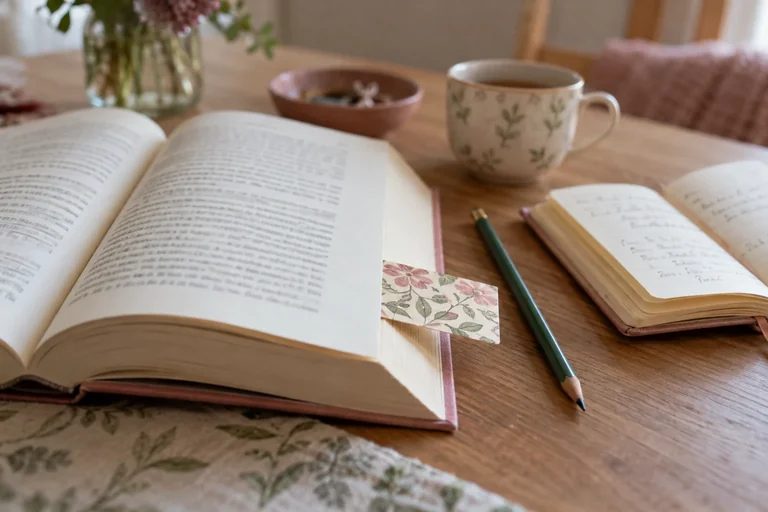
Keep your wording separate from copied passages, as in the quotation notebook. For a borrowed book, keep the note on your own paper. Avoid sticky markers that might damage its pages.
How can you choose without a rigid schedule?
Use a concrete condition: a book within reach, a quiet setting, or interest in returning to a story. Your choice does not need to maximize output. Build your note below, then copy it onto paper or compare paper and digital journals.
Build your return note
Your text stays on this page and is not saved. Copy any result you want to keep.
On paper, use the table fields and check your result against the explained examples.
 Read alsoScripting: Write your dream life to clarify what you want
What can you do with a book you keep avoiding?
Give it a clear status: active, paused, or stopped. No universal deadline decides this for you. A note such as “not now; possible return at chapter 3” keeps the option open if you want it.
Writer Nicolas Croce suggests varying formats in his personal reading advice. That preference does not establish a benefit for everybody. Our test is smaller: can you return to the text you actually want to read? For a broader restart, see returning to a notebook after a break.
When organizing takes more space than reading, keep one line in a brief daily journal. An ideas notebook can hold thoughts that move beyond the book, with a simple index to find them again.
The journaling collection offers other uses for a page; choose what helps rather than adding a notebook for every activity.
Quiz
Check your understanding
Are page numbers in different editions always equivalent?
See the answer
No; keep a chapter or another location clue too. Layouts can change between editions.
What does a pile of open books prove?
See the answer
Nothing about my worth; I can reconsider my choices. A reading status is a practical note, rather than a judgment.
Flip cards
Three distinctions to revisit
ActiveFlip
A book I can reopen with a clear return point.
PausedFlip
A book kept without a catch-up deadline.
StoppedFlip
A valid choice without an obligation to finish.
Checklist
Before keeping this draft
0 / 3
The boxes record your actions; they do not grade your writing.
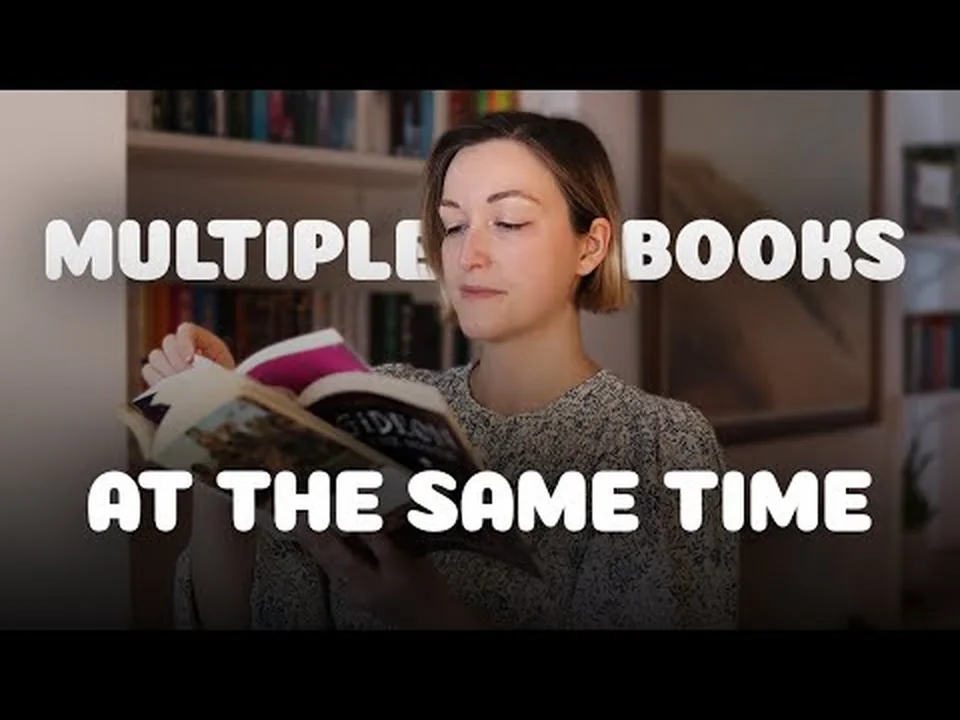
A reader shares her personal habits for alternating books. Compare her choices with your circumstances rather than treating them as rules.
For a complementary perspective, watch this video from Gina Lucia Reads.
FAQ
How many books can I read at once?
There is no universal number. Keep books you can return to easily, and reduce the pile when it becomes a burden.
Must I read a chapter of every book daily?
Alternate according to interest and circumstances. A daily rotation is unnecessary.
How do I return after several weeks?
Read your note and a little around the stopping point. If needed, restart a larger section or leave the book paused.
Can I alternate languages?
You can if you can follow each text. Keep references and useful wording in whichever language suits you.
Must I finish before starting another book?
That is a personal choice. Finish, pause, or stop a book without turning the decision into a judgment.
Does the tool save my books?
It prepares text on this page without saving it. Copy anything you want to keep before closing or reloading.