Contents
- Taking inspiration without copying: what differences should you examine?
- Describe the technique without looking at the work
- Take inspiration without copying by developing your own intention
- Attribution, license, and permission: don’t confuse them
- Studying privately does not determine what you can share later
- Ask for feedback that really helps
- Keep a clear record of your creative process
- Clarify inspiration and use
- How can you transform a writing technique without reusing sentences?
- Frequently asked questions
- Sources
Taking inspiration without copying means understanding what interests you in a reference, then making your own choices about the subject, form, and execution. Changing a few colors or replacing two words is not enough to demonstrate independence, and citing a source does not automatically give you the right to reproduce it.
This guide offers a transformation workshop and general guidance on attribution and sharing. It does not determine the legality of any particular creation. For a commercial project or a significant concern, check the applicable rights with a qualified person before publishing.
Taking inspiration without copying: what differences should you examine?
A reference can help you notice a rhythm, an arrangement of space, or a way of telling a story. You can study that principle and apply it to a different subject using your own decisions. By contrast, following a work’s composition, details, and distinctive effect while changing only its setting still leaves you heavily dependent on that work. Editorial work begins by recognizing this difference, without pretending it can be reduced to a calculation.
The INPI reminds readers that copyright protects the concrete expression of an original creation, not an abstract idea. It also outlines reproduction, representation, and adaptation rights, as well as defined exceptions. These guidelines do not let you conclude that a specific case is allowed simply because you call it inspiration, homage, or study.
| Approach | Question to ask | Record to keep |
|---|---|---|
| Observation | What technique interests me? | Source and commentary |
| Study | What am I reproducing to understand? | Clear acknowledgment of the reference |
| Creation | Which choices are mine? | Steps and decisions |
| Distribution | Which rights and conditions apply? | Relevant permission or license |
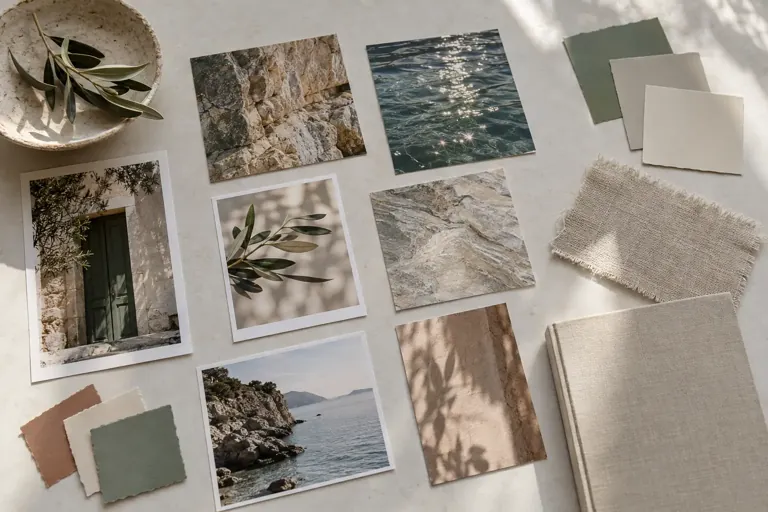
Your collection of visual references benefits from separating these levels. An image saved because you like it shouldn’t quietly become a composition template for something you plan to sell. Note the intended use when it changes, instead of looking for the source after the project is already finished.
Describe the technique without looking at the work
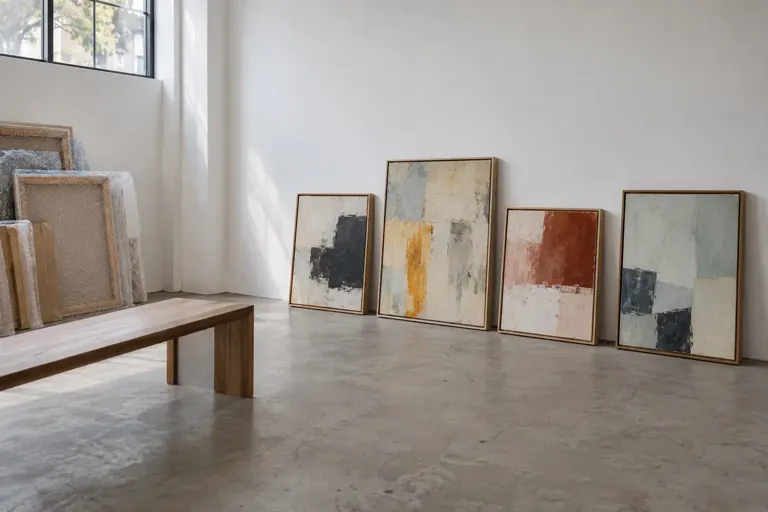
Choose a reference and write down three specific observations. For example: the subject takes up a small area within a large background, the lines lead toward a corner, or one color recurs as an accent. Avoid broad descriptions like “it’s soft” or “it’s modern.” You’re looking for relationships you can examine, not a style to put on.
Then close the reference and restate the principle in your own words. “A small shape set apart in a vast space” can be the starting point for many projects. “The same character, in the same place, with the same accessory” remains much closer to the specific expression you just saw. This distinction helps you identify the decisions that still call for real work of your own.
In your film and exhibition journal, you can note the technique you encountered and the question it raises for you. For texts, reading journal lets you observe a structure or point of view without copying a sentence and then presenting it as your own. Quotations remain clearly identified in a quote journal.
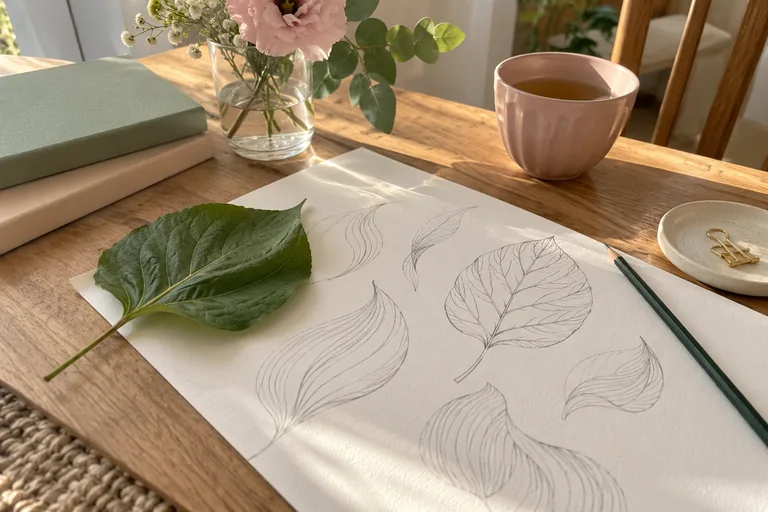
Take inspiration without copying by developing your own intention
1. Choose your subject before looking for resemblance
Start with an experience, an object, or a question you want to explore. If you’ve studied the role of empty space in a composition, choose a subject you’ve observed yourself: a chair in a hallway, a cup on a large table, or a letter in the middle of a page. The reference provides a question of form; your subject provides the concrete decisions.
2. Develop several independent solutions
Draw or write three versions without reopening the model. Change the scale, order, point of view, or relationship between elements according to your intention. The goal isn’t to reach a quota of changes. You’re looking for solutions that no longer depend on a single borrowed arrangement. Your creative project journal can preserve these steps.
3. Compare with the reference after trying
Reopen the source and look at the similarities that remain. Some may reflect the technique you studied; others may come from a detail you copied without realizing it. Make an honest note of them. If the result relies mainly on the reference’s distinctive choices, start again with a different situation or keep the attempt clearly labeled as a study instead of presenting it as an independent creation.
4. Explain your decisions without invoking a magic formula
Write a short note: what you studied, what you chose, and what you want to do with the result. This explanation doesn’t create a right to distribute the work, but it clarifies your process. A sentence like “I changed half of it” doesn’t answer questions about originality, borrowing, and use. The process matters more than an imaginary percentage.
Attribution, license, and permission: don’t confuse them
Attribution identifies a source. Permission or a license defines permitted uses and their conditions. Creative Commons explains that its different licenses don’t all grant the same permissions: you need to check the exact license, especially for adaptations or commercial use. A note saying “found on the Internet” provides neither a sufficient source nor a set of rights.
Keep the link to the original page and the relevant license information when you reuse authorized content. Also check whether the person who uploaded it appears to be entitled to grant those rights. A platform’s terms and the presence of a download button don’t necessarily settle everything. If the situation is uncertain, request appropriate permission or choose different material.
 Read alsoScripting: Write your dream life to clarify what you want
Studying privately does not determine what you can share later
You can do copying exercises to observe a technique or composition, but clearly label their status in your notebook. Publishing raises a new question. Don’t assume that labeling something a “study” authorizes every kind of distribution, especially for promotional or commercial use. Copyright exceptions depend on conditions that this guide can’t assess for your situation.
An honest presentation distinguishes the source work, your exercise, and your comments. If you want to prepare a creative exhibition, review the rights before printing and sharing information about it. It will be easier to remove or replace a study during the selection stage than after you’ve announced its sale or distribution.
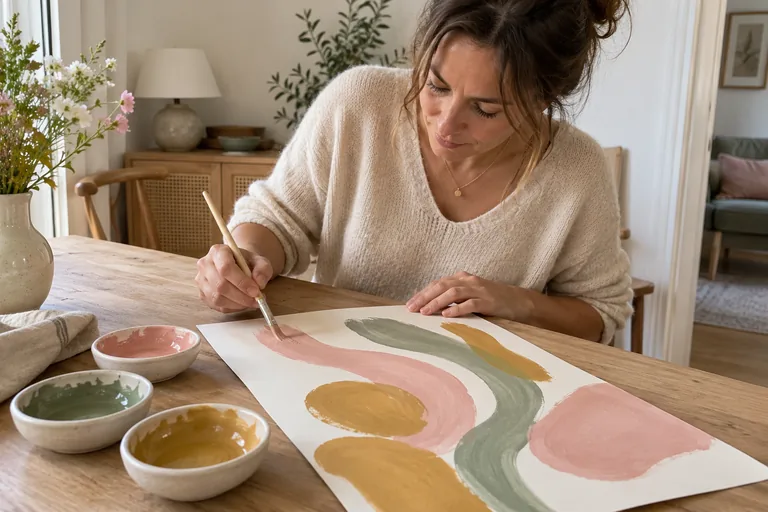
Workshop: Clarify Your Reference
What I’m studying
Name an observable technique and keep the source’s identity.
What I’m creating
Choose a subject and several decisions that reflect your own intention.
What I’m sharing
Before sharing, check the status of any reused elements, the applicable terms, and the permissions you need.
Ask for feedback that really helps
For a feedback on a creative work, show the reference and your attempt when permitted, then ask where the dependence seems strongest. Someone else may spot a composition or phrase you no longer notice. Their feedback is editorial; it doesn’t replace legal analysis if the project involves significant stakes.
You can also choose a creative title that honestly describes the work’s status, such as calling a study a study. The title shouldn’t imply a collaboration with or endorsement from the source artist if none exists. Be precise about what you did and your actual relationship to the reference.
Keep a clear record of your creative process
Keep sources, observation notes, and experiments in separate sections. The idea notebook can track the techniques you want to explore without mixing other people’s work with your own. In your learning journal, note the choice that helped you step away from relying too heavily on the model.
For your next session, start with a real observation before opening your references. This shift doesn’t guarantee anything on its own, but it brings your intention back to the center of your work. You can learn a lot from the work you love while taking the time to build a result with its own reasons for existing.
Clarify inspiration and use
Generator
A technique to transform
Study the use of empty space, then apply it to an object you observe at home.
See all the phrases
Space
- Study the use of empty space, then apply it to an object you observe at home.
- Observe a rhythm of shapes, then invent a different arrangement.
Story
- Identify a shift in points of view, then choose an unrelated scene.
- Study an open ending, then write a different event using your own clues.
Quiz
Attribution or permission?
Crediting the artist automatically allows you to reproduce the work.
See the answer
No. Provenance and usage rights are two separate questions.
Changing a fixed percentage guarantees that an adaptation is lawful.
See the answer
No. No simple calculation of how much you’ve changed a work can replace examining the specific case and the rights involved.
Flip cards
A decision before sharing
I can’t find the sourceFlip
Pause use and look into the provenance.
My draft looks mostly like the modelFlip
Keep it as a study or rebuild the project.
A license is listedFlip
Read the exact version and terms.
The project becomes commercialFlip
Review the rights again before distributing it.
Checklist
A clear process
0 / 5
You’re better able to distinguish learning, creating, and sharing without assuming you have permission.
This artist discussion distinguishes inspiration, references, and drawing adaptations in amateur practice.
For a complementary perspective, watch this video from The Good Ship Illustration. This artistic viewpoint does not grant legal permission to reproduce a work.
How can you transform a writing technique without reusing sentences?
Describe the technique in ordinary words, then close the reference before working on your own subject. “A list whose final detail changes the reading” describes a formal choice; copying a sequence of images and changing adjectives leaves a stronger dependency.
Invented example: you want to explore what remains after someone leaves. Observe your own fictional objects, choose their order, and write an ending that serves that scene. Compare the result with the reference afterward to notice an image, phrase, or sequence that remains too close.
| What you examine | Useful question |
|---|---|
| Subject | Did I choose it for my own project? |
| Images and sentences | Did I construct them independently? |
| Origin | Can I explain what I studied? |
The list poem workshop lets you try order without imitating a given poem. Free indirect discourse explores another choice: whose voice readers hear. These exercises support analysis and creation; completing them does not grant legal permission to publish reused work.
Frequently asked questions
How can you take inspiration without copying?
Study a technique, then work with a subject and make your own decisions. Afterward, compare the result with the reference to spot any remaining dependencies.
Is citing the source enough?
No. Attribution does not replace the permission or license required for certain uses. Check the terms for any content you reuse.
How much do you need to change a work?
There is no magic percentage that guarantees a use is lawful. The elements reused, their significance, and the way they are used require a case-by-case review.
Can you publish a copied study?
Calling something a study does not automatically settle the rights to share it. Check the applicable rules before sharing, especially for commercial use.
Does a Creative Commons license allow everything?
No. Licenses vary and come with conditions. Read the specific license, especially regarding adaptations, attribution, and commercial use.
When should you seek legal advice?
When the project involves commercial interests, substantial reuse, or a question that general sources cannot resolve. This workshop does not assess the legality of any particular work.