Contents
- Why create a photo series around a theme?
- Define your theme in one testable sentence
- Photograph variations instead of duplicates
- Create a photo series through selection
- Choose an order that creates a reading
- Share without confusing taking a photo with having permission
- Finish your selection without losing your experiments
- Compose your set
- Try making a selection without captions
- Frequently asked questions
- Sources
Creating a photo series around a theme means choosing several images that relate to one another through their subject, form, or progression. Start with a simple rule and a small final set: each photograph should add something the others don’t already say.
You don’t need specialized equipment for this workshop. You’ll define a theme, take photos with intention, then select and arrange your images. Cohesion comes together as much during the selection process as it does while taking the photos.
Why create a photo series around a theme?
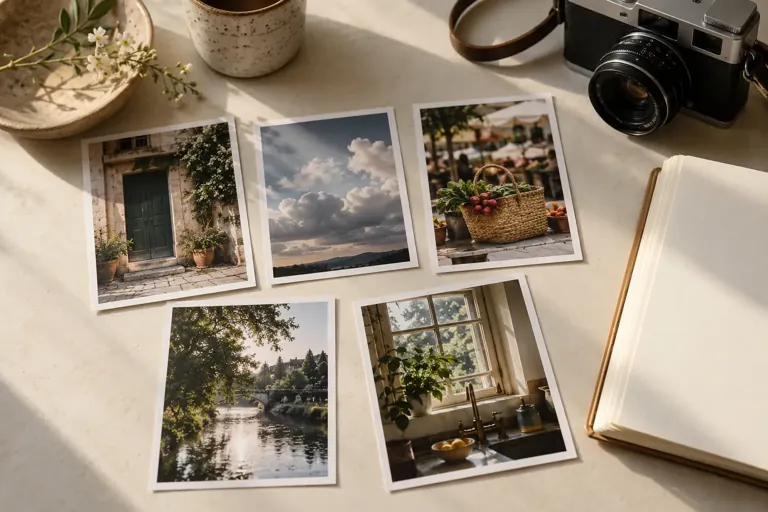
A folder filled with images of the same subject does not automatically make a successful series. It can be a starting collection. A series takes shape when you choose relationships: repetition, contrast, evolution, or a shift in perspective. Six doors photographed from the same angle can show their differences; six images of a single door can tell a story of changing light.
The BnF's photographic collections include groups of works, portfolios, and artists' series. This diversity is a reminder that a photographic work can take shape between images, not just within a single image. The approach proposed here is a personal exercise. It does not cover every photographic genre or every professional way of producing a series.
| Starting point | Possible rule | Risk to watch for |
|---|---|---|
| Thresholds | Same distance, different places | Repetition without variation |
| A window | Same frame, different times | Changes that are hard to read |
| Forgotten objects | An object and its surroundings | Intrusion into someone's privacy |
| One color | Recurring color, varied uses | Theme that's too broad |
The A personal photo journal mainly keeps a record of an experience. A thematic series selects a set of images with a particular way of looking in mind. The two practices can overlap, but the final selection may answer different questions: an important memory or an image that works for the composition.
Define your theme in one testable sentence
Replace “the beauty of everyday life” with a more concrete prompt, such as “chairs left outside after use.” It will be easier to tell whether an image belongs in the project. Add a boundary: your home, a regular route, or a place where photography is permitted. This framework limits your decisions and keeps the collection from growing endlessly.
Next, choose what will stay consistent: orientation, approximate distance, light, number of objects, or color treatment. Fixing everything might make the work rigid; fixing nothing could make it scattered. Two guidelines are often enough to get started. In your creative project journal, also note what you're willing to vary.
A creative observation walk can serve as a scouting visit without taking photos. You identify the real possibilities and constraints: foot traffic, access, light, and people's presence. You can drop a subject if capturing it would require entering a private space or bothering passersby. A theme isn't worth putting yourself in a difficult situation.
Photograph variations instead of duplicates
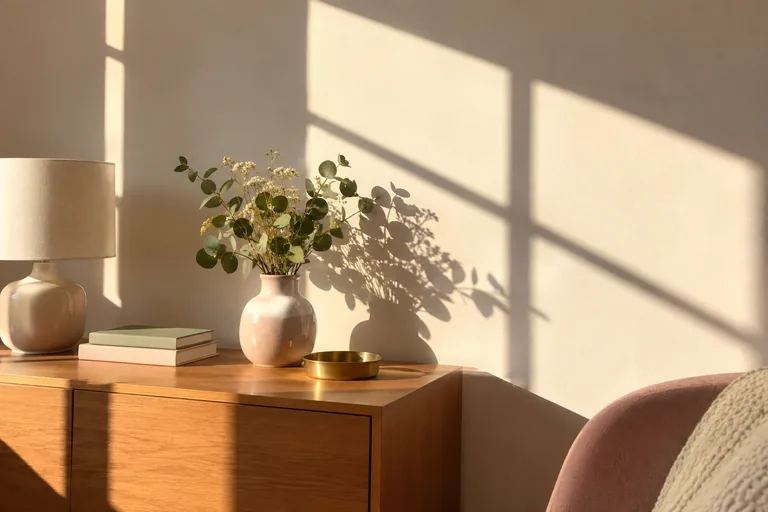
For each subject, try a planned frame and then a useful variation: closer, wider, or from another accessible angle. Don't take multiple identical images just to reassure yourself. Notice what each change adds: context, texture, or a relationship with the space. You can compare your choices instead of sorting through a long burst of nearly indistinguishable shots.
Check the edges of the frame. An unintended detail can distract from the subject or reveal private information: a name on a box, someone's reflection, a license plate, or a visible interior. You can change your angle or choose another subject. A series often benefits from planning for these limits instead of relying on later editing to fix everything.
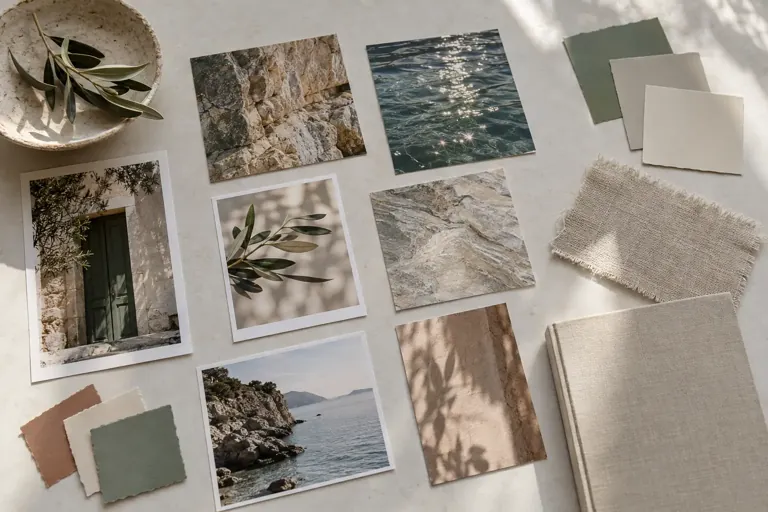
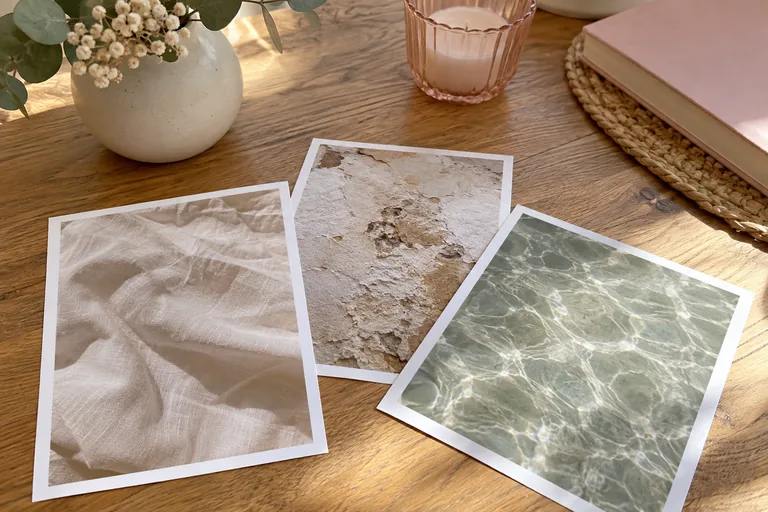
If color plays a role, observe its proportion and surroundings. The palette notebook helps you think about these relationships without treating the same filter as a universal solution. A consistent treatment can bring the images together, but it can't replace a coherent subject or framing.
Create a photo series through selection
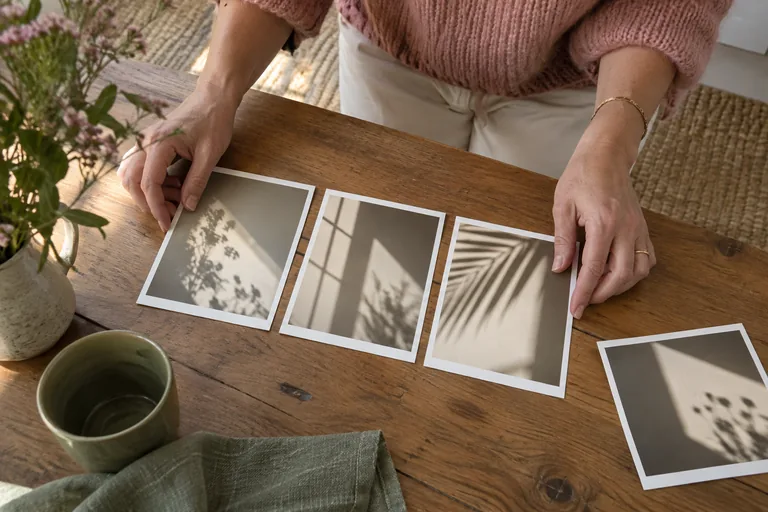
Start with a contact sheet of small images, printed or displayed in a tool you know how to use. Set aside photos that are technically unusable for your project, then group the others by role. One image introduces the subject, another makes it more specific, and a third creates contrast. You’re not necessarily looking for the six most beautiful shots on their own, but the six that make the strongest set for your intention.
Give each candidate a sentence: “it shows the relationship with the sidewalk,” “it introduces a chair occupied by an object,” “it ends with an empty space.” If two images serve exactly the same role, compare them side by side. One can leave the series without becoming a bad photo. Keep it elsewhere if you’re interested in it for another project.
In your collection of visual references, notice how published sets alternate distances, density, or patterns. Study the relationship between the images instead of reproducing an existing series. Your film and exhibition journal can hold a note about the order of a display that left an impression on you.
 Read alsoScripting: Write your dream life to clarify what you want
Choose an order that creates a reading
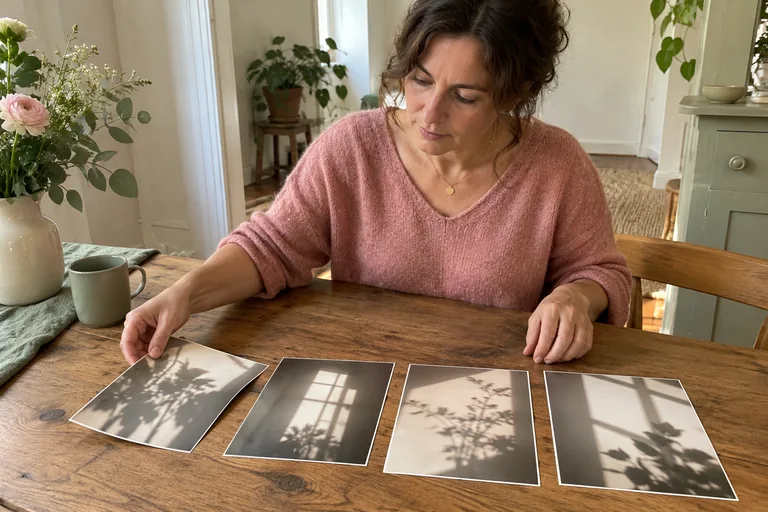
Try three arrangements: from widest to closest, from simplest to densest, or by alternating. Look at the transitions between two photos. Repeating shapes can create continuity; contrast can renew attention. You don’t need to invent a chronological story if your subject is based on comparison.
Then reverse the order. This small test can reveal that a final image gives the series a conclusion you didn’t want. Choose the first photo for what it makes you anticipate and the last for what it leaves you with. The guide to find a title for a creative work helps you complete this direction without explaining every detail of the series.
Workshop: assign a role to each photo
Open
Choose the image that clearly establishes the series’ rule or question.
Develop
Keep a variation that adds new information, not just a second version of the same effect.
End
Compare an ending that brings things together with one that leaves things open. Choose according to the experience you want to leave behind.
Share without confusing taking a photo with having permission
A photograph taken in a place open to the public is not automatically free of restrictions on how it can be shared. Service Public presents the rules concerning image rights and privacy, with distinctions depending on the situation. For this workshop, the simplest choice is to work with objects or places you’re authorized to photograph, with no identifiable person present, then check the sharing conditions for the actual project.
If a person is recognizable or the image concerns a private space, don’t assume you have their consent. Permission to take a photograph doesn’t necessarily cover every later use. This guide doesn’t replace legal advice about an exhibition or sale. If in doubt, choose another image or find out more before sharing it, not afterward.
Finish your selection without losing your experiments
Ask for targeted feedback Focus on the perceived rule and the image that seems missing or redundant. Don’t ask only which images people like best. Someone may love a photo that doesn’t serve this set. You’re responsible for the selection and can explain your choice based on the original intention.
Archive the original files separately from the final selection, using consistent names. If you want to prepare a creative exhibition, test the order and formats before making any final prints. For a private project, a small contact sheet is enough to bring it to a close. You can note in your learning journal what sorting taught you about your way of seeing, then start another theme.
Compose your set
Generator
A photographic rule
Photographing round objects in rectangular frames.
See all the phrases
Shape
- Photographing round objects in rectangular frames.
- Keeping the same distance for six permitted thresholds.
Time
- Observing the same corner of a table at three different times.
- Looking for traces of tidying up after a personal activity.
Quiz
Series or accumulation?
The best standalone photo should always stay in the series.
See the answer
No. Its role in the whole matters too.
A shared filter is enough to create an intention.
See the answer
No. Cohesion requires choices about subject, form, and selection.
Flip cards
Refine the selection
Two images say the same thingFlip
Keep the one that best fulfills the role you chose.
The theme is still vagueFlip
Rephrase it as an observable rule.
The order seems arbitraryFlip
Compare a progression with an alternation.
One image raises questions about sharingFlip
Check the conditions or choose another image.
Checklist
A selected series
0 / 5
Your collection can be complete without showing every photo you took.
Try making a selection without captions
Show the small series without a title or explanation to someone who agrees to look at it. Ask what they notice recurring and which image seems to belong to another set. You’re not trying to get them to guess your exact starting sentence, but to check whether a connection emerges. Their answers may reveal a continuity of shapes you hadn’t noticed or a stronger difference than you expected.
Then restore the title and compare how it changes the interpretation. If the explanation completely changes how the subject is perceived, decide whether that serves your project. A documentary series may need contextual information; a formal exploration may work more freely. This test doesn’t rank these approaches: it helps you consciously choose how to use words alongside the images.
For a complementary perspective, watch this video from Shoot On Film - with Ari Jaaksi.
Frequently asked questions
How many photos do you need for a series?
There’s no required number. To get started, a small set lets you compare the roles of each image without making the sorting process too burdensome.
Can you use a phone?
Yes. This workshop is mainly about perspective, framing, and selection. Use the equipment you already know how to use.
How do you choose a theme?
Turn a broad idea into an observable rule, such as a type of object in a specific setting. Add a scope you can manage.
Do all the photos need the same filter?
No. Using a consistent treatment can be a choice, but it doesn’t replace cohesion in the subject and composition.
How do you arrange the images?
Compare a progression, an alternation, and the reverse order. Pay particular attention to the relationships between consecutive images.
Can you publish photos of people taken on the street?
The rules depend on the situation and how the image will be used. Check image rights and privacy before sharing; don’t assume you have general permission.