Contents
- Which point of view should you choose for an object?
- Define what an object can perceive
- Create a voice without overdoing the effects
- Build an event seen through the object
- Example: a key in front of the wrong door
- Review the information one piece at a time
- Keep going without turning all your objects into stories
- Choose your starting point
- An experiment with two objects to refine the point of view
- Give the object a memory without telling its whole life story
- Choose an ending: discovery, mistake, or change of place
- A revision process in four passes
- Frequently asked questions
- Sources
Writing from an object’s point of view means letting it narrate a scene according to one simple rule: it can perceive only what is within reach from where it is. A cup, a key, or an umbrella becomes a fictional voice; you don’t have to pretend that objects actually have consciousness.
This exercise invites you to shift your perspective instead of telling the sentimental life story of your belongings. You’ll choose an object, define how it perceives things, build a small event, and check what it knows. Cards and a generator will help you find a consistent voice.
Which point of view should you choose for an object?
A good candidate doesn’t have to be unusual. A waiting-room chair sees people come and go but can’t follow them outside. A key travels with its owner but is often hidden away. A dish towel picks up marks and hears conversations in the kitchen. Each one has a different kind of access to the world, offering interesting challenges to solve.
Choose an object you can actually observe. Look at its angles, weight, wear, and the way people move it. These details will help you invent sensations, not prove a story. If you first want to build your concrete vocabulary, start with describing a place with the five senses and only then adapt the perceptions that make sense for your object.
| Object | What it allows | What it limits |
|---|---|---|
| Cup | Warmth, movement, proximity | Limited view inside a cupboard |
| Key | Journeys, contact, changes of lock | Long periods in a pocket |
| Bench | People passing by and returning to the same place | Unable to follow anyone |
| Umbrella | Rain, transport, opening | Scenes hidden from view when it’s folded |
The narrator is the voice that tells the story; point of view determines what information is available. First-person narration doesn’t automatically provide access to every character’s thoughts. This distinction, explained in the storytelling resources cited at the end of the article, becomes very concrete when your narrator can’t leave a windowsill.
Define what an object can perceive
Write a small fictional contract before the first paragraph. For example: “This cup can smell warmth, hear voices, and recognize movements, but it can’t see beyond the edge of the table.” You can choose another convention. The important thing is to stick to it or clearly explain an exception, so the reader understands how the story works.
Don’t give the object every sense just for convenience. A narrator who sees, hears, knows people’s memories, and guesses every intention ends up sounding like an omniscient person with the name of a piece of furniture. A limitation often raises a question: what can a key understand about the appointment it perceives only through vibrations in a bag?
Separate three columns in your draft: sensation, interpretation, certainty. “I’m set down abruptly” is an invented sensation; “she’s in a hurry” is an interpretation; “she’s going to miss her train” requires additional information. This method can complement your learning journal if you’d like to track your storytelling progress.
Create a voice without overdoing the effects
Your vocabulary can come from the object’s function. A key thinks in terms of passages, resistance, or doors; a lamp measures the moments when it gives light; a button knows the tension of a coat. Choose two or three key words, then let them recur subtly. Not every sentence needs a play on words about the material.
Try two openings. The first can be neutral: “I was left on the table after coffee.” The second can be more distinctive: “I’ve been cooling down since the two voices fell silent.” The second links temperature to the scene without immediately explaining what happened. Both work; their value depends on what follows, not on a universal formula.
Also avoid constantly writing “me, the cup.” A coherent action is often enough to remind readers who’s narrating. Read a few lines from your quote journal to observe how voices are distinguished, but create your own wording. The point is to study a technique, not to copy an author’s phrasing.
Build an event seen through the object
Give the story an initial situation, a change, and a consequence. An umbrella is forgotten in a café; a stranger takes it; it comes back the next day with a ribbon tied around the handle. You don’t need to tell the characters’ whole life stories. The question can stay small: does the object find its place again, understand what’s changed, or get its destination wrong?
Start with the facts you know as the author, then remove the ones the object doesn’t know. You know the stranger is the owner’s sister, but the umbrella may only recognize the same scent of soap. That detail doesn’t prove they’re related. The text can let the reader make a guess without presenting it as knowledge the narrator has.
If the story feels still, add an action that changes the physical situation: someone closes the closet, moves the bench, or replaces the lock. These events directly affect the object. To develop an exchange between the people without losing this frame, see the dialogue workshop and keep only the words your narrator could hear.
 Read alsoScripting: Write your dream life to clarify what you want
Example: a key in front of the wrong door
Here’s an original opening: “Three times, she slipped me into the lock. Three times, my teeth caught. The pocket that usually sheltered me smelled of warm bread; today, it held the scent of paint. No one moved behind the door.” The object perceives contact, smells according to the chosen convention, and the absence of audible movement.
The story could go on to reveal a move, a key that was exchanged, or a replaced door. Choose just one direction, then plant a clue that fits it. If you choose the move, a new key ring or packing tape in the bag works better than a sudden explanation of the whole family’s plans.
You can keep two endings in your creative project journal. Compare the version where the key understands and the one where the reader understands before it does. This difference creates narrative distance: the text knows more than its narrator, without arbitrarily turning the narrator into an expert on the situation.
Review the information one piece at a time
Underline every sentence that mentions an intention, an emotion, or a distant event. Ask yourself how the object learned about it. Overheard conversation may be enough; a memory can only be something it has already experienced in the story. By contrast, writing “she regretted her childhood” requires access to a thought your rules may not allow.
Replace the claim with a sign or with a guess attributed to the narrator. “She kept the photograph under my saucer” leaves room for interpretation. “I imagined she didn’t want to lose it” reveals the object’s point of view. Neither choice needs to become a psychological conclusion about a real person.
Have someone read a page and ask two questions: “What did you understand about what happened?” and “At what point does the object know too much?” Our guide to asking for specific feedback can help you keep the discussion useful. You can fix one inconsistency and let the rest of the text rest.
Keep going without turning all your objects into stories
A short session is enough to try this perspective. During a observation walk, note three objects and where they are, without photographing people or entering a private space. When you get back, choose the one whose limits interest you most. A shop window sees a lot but can’t move; a ticket travels and then disappears.
Store unused opening ideas in your idea notebook along with their perception rules. You can return to them without having to remember what you imagined. If writing feels intimidating, set aside a solo creative session to write just six sentences, with no goal of sharing them.

The piece is finished when a change becomes clear, even if not every question is resolved. It can remain funny, strange, or understated. The object doesn’t have to offer a lesson about life: its particular point of view is already a story idea.
Choose your starting point
Generator
An object, a boundary, an event
A bench sees a suitcase return, but not its owner.
See all the phrases
Still
- A bench sees a suitcase return, but not its owner.
- A lamp lights an empty chair every evening.
Carried
- A key ends up in an unknown pocket on moving day.
- An umbrella returns to the café with a ribbon on its handle.
Enclosed
- A cup hears preparations from inside its closed cupboard.
- A ticket forgotten in a book discovers another reader.
Flip cards
Check the narrator’s knowledge
It knows a human thoughtFlip
Add something overheard or turn certainty into a possibility.
It can see behind a closed doorFlip
Return to sounds, touch, or the stated convention.
It tells an entire life storyFlip
Keep a scene where its presence truly changes the story.
Its voice sounds like all the othersFlip
Look for vocabulary related to its use.
Quiz
Who knows what?
Writing “I” allows the narrator to know every thought.
See the answer
No. Grammatical person and access to information are two separate choices.
An object narrator can misunderstand a scene.
See the answer
Yes, if the text provides consistent clues. The difference between its assumptions and the clues can be part of the story.
Checklist
My story holds together
0 / 5
Your object has a unique perspective and a scene to tell.
An experiment with two objects to refine the point of view
Imagine the same kitchen described first by a cup, then by the dish towel hanging near the sink. Someone prepares two drinks, leaves one untouched, and takes the other into the next room. The cup left behind perceives itself cooling and the touches on the table. The dish towel, according to the convention you choose, knows the hands that pick it up and the drops that pass through it. Neither should directly describe what happens behind the wall.
For the cup, you might write: “They had filled me to the brim. The other cup left before my warmth stopped passing through the porcelain. A sleeve brushed my handle. Then the daylight shifted across the table.” The passage of time appears in the material and the light. You can keep this slow pace if the story is built around waiting, or add a physical event so the scene doesn’t remain purely descriptive.
The dish towel would offer a different arrangement: “The hands came back wet. They searched for my dry corner, the one that’s always folded inward. When I was hung back up, the second spoon had stopped clinking.” These sentences are workshop examples, not literary quotations. They mainly show that changing the object means rebuilding the information, not just replacing one noun with another.
Now compare what the reader can infer. An absence, a delay, or simply a preference for drinking somewhere else are all possible. If you want one interpretation to stand out, add an accessible clue: a phone call overheard, the front door closing, a drink poured down the sink. Don’t use an outside revelation just to resolve an ambiguity you created by forgetting the narrator’s limitations.
Give the object a memory without telling its whole life story
A fictional memory can enrich a voice, as long as it remains useful in the present. The dish towel recognizes a gesture it has experienced before; the cup has changed places since the table was moved. Choose a memory that changes how the current scene is understood. A long backstory about how an object was made adds nothing if it changes neither its vocabulary, expectations, nor reactions.
You can bring back a detail at two different moments. At the beginning, the cup waits for the familiar tap of a spoon. At the end, a wooden spoon takes the place of the metal one. The change is tiny, but it may be enough to suggest a new habit. You don’t have to explain who decided on it. Sometimes a story lies in the appearance of a difference that only this particular narrator could have noticed.
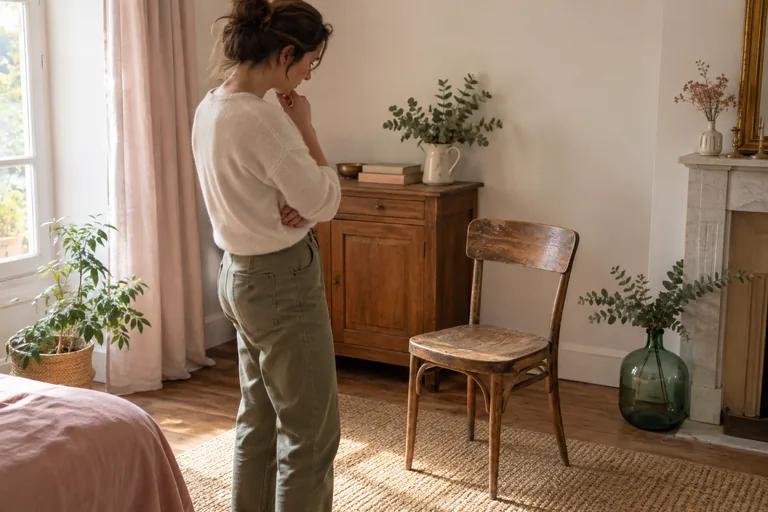
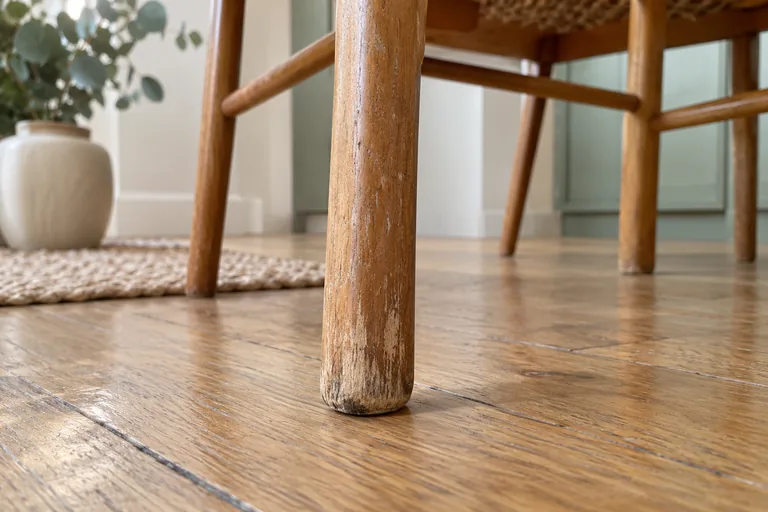
If the object doesn’t know where it came from, let that ignorance remain in the text. A chair doesn’t necessarily need to know the name of the wood it’s made from. A voice that thinks “my legs” and “my backrest” doesn’t necessarily have access to all the vocabulary of a cabinetmaking workshop. Check that its language fits the knowledge you give it, even in a very free-form work of fiction.
Choose an ending: discovery, mistake, or change of place
One possibility is to make information accessible at last. The cupboard opens, and the cup discovers a table set somewhere else. The ending answers an expectation established earlier. For it to work, make sure that expectation exists in the text: a discovery is more interesting when it changes a question the reader was already asking.
A second possibility keeps the narrator mistaken. The umbrella thinks it was chosen for a grand departure, when it’s simply being carried to another room to dry. The reader understands from clues that the object interprets things differently. Still, avoid making it deliberately inconsistent. Its mistake should come from its limited experience, like a voice that takes every move for a journey because it knows only the coat rack.
A third ending moves the object without resolving the human situation. The bench is repainted and turned toward the street instead of the square. Now it watches people leave instead of play. This transformation opens up a narrative future, but it also brings something to a close: the old vantage point is gone. You can end on this shift without announcing a general lesson about change.
A revision process in four passes
On your first read, trace the object’s movements on a very simple sketch. A cup can’t go from the table to the cupboard without an action making that possible. On your second pass, check the information: what is perceived, reported, or assumed? Separating these steps helps you avoid correcting the geography and the voice at the same time, since they require different kinds of attention.
The third read focuses on recurring words. A key that uses “open” in every sentence quickly loses its distinctiveness. Keep a few terms related to its purpose, then let the syntax and comparisons establish the rest. On your final pass, remove the object’s name from the title and ask whether the scene is still understandable. This test doesn’t require you to hide its identity; it simply checks that the story doesn’t depend on an explanation from outside it.
For a future session, change just one dimension: a stationary object becomes mobile, a new object becomes worn, or a certain voice becomes hesitant. Keep the original scene so you can observe the effect of this change. This will give you a small collection of narrative possibilities, with genuinely noticeable differences instead of several texts that tell the same story under different labels.
Workshop: Check What Your Object Knows
How does the object learn this fact?
Choose among perception, overheard speech, an imagined memory, or a hypothesis.
Does its position give it access to this information?
Place the object back in the scene and remove anything that remains beyond its reach.
For a complementary perspective, watch this video from TED-Ed.
Frequently asked questions
How do you tell a story from an object’s point of view?
Choose what it can perceive and write a scene from that position. Keep the same convention throughout the story, even if you give it a human voice.
Which object should you choose for your first piece of writing?
A cup, a key, or a bench is enough. Choose an object whose position and movements you understand rather than a spectacular one.
Do you have to write in the first person?
It’s a practical option, but not a requirement. Third-person narration can also stay limited to the object’s fictional experience.
Can you give objects emotions?
Yes, as a literary convention. Present the text as fiction and avoid confusing this choice with a claim about real objects.
How can you avoid an all-knowing narrator?
Reread the sentences that describe thoughts or distant events. Add their source or limit them to the narrator’s hypothesis.
What length should you aim for?
A scene of a few paragraphs is a good first try. Make it longer only if a new event adds something to the chosen perspective.