Contents
A solo creative date is time set aside to explore something you choose for its own sake: draw an object, try a material, look at a collection, or listen to a soundscape. Plan a simple setup, an amount of time you have available, and a limit on preparation. You don’t need to come away with a successful creation or turn it into a challenge to post.
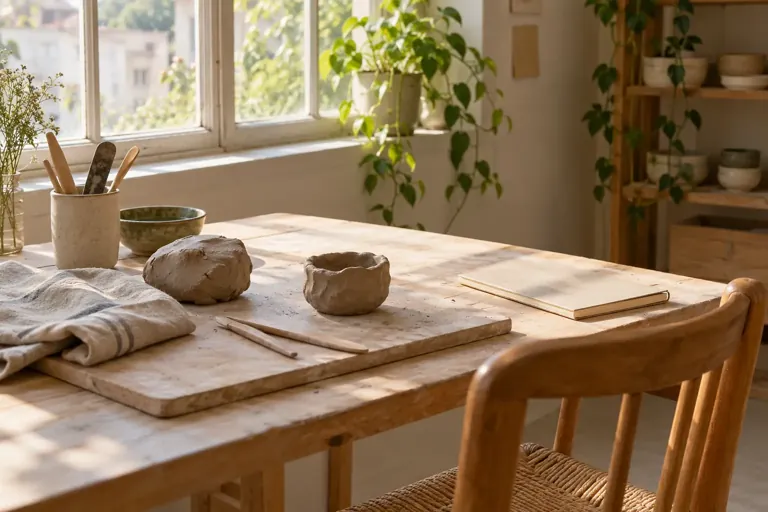
The idea can be very modest. A cleared table, a few sheets of paper, and half an hour may be enough. The date feels personal when the activity reflects a real curiosity, rather than an image of what a creative person should do in their free time.
Choose a specific curiosity
Start with a question: What material, shape, or place do I want to explore? “Try drawing a mug from three angles” is easier to prepare for than “be creative.” “Look at the posters on a street” gives you a starting point for an outing without requiring an extraordinary destination.
You can choose something you already know. It doesn’t have to be new. Revisiting a technique you enjoy with a different constraint can be interesting: two colors, a small format, a different object. The date doesn’t have to prove that you’re constantly stepping outside your habits. This date can become a small test of interest before a bigger project.
Don’t confuse curiosity with buying materials. If you want to try an activity, first see what you can do with the resources you have or in a suitable introductory setting. Buying a full set of supplies can become disproportionate preparation before you even know if you enjoy the activity.
Set a structure that fits the day
Choose a length of time that includes setup and cleanup. If you have an hour, an activity that takes forty minutes to prepare will leave little time to explore. A simpler version may better fit the time you have.
Decide on the place and what you’ll need: light, a table, an acceptable noise level, access, and weather. For an outing, check the venue’s official website for current hours and rules before you go. If the activity requires a reservation or has a fee, decide on those details before committing.
Plan a simple alternative. A walk canceled because of the weather could become an observation from a window or a small collage at home. The alternative doesn’t have to be as ambitious. It simply keeps an option open when conditions change.
Let go of an expected outcome
Write down what you want to try rather than what you have to accomplish. “Compare two textures” or “figure out how this shape holds together” gives you a direction without requiring a finished object. You can finish with a sample, a question, or a clearer preference.
Decide in advance that you can change course or stop. A self-chosen exploration isn’t a contract with yourself. If the materials don’t work for you or the activity doesn’t interest you, you can note that and move on. The session can teach you what you don’t want to pursue.
The guide to starting a new activity helps separate discovery from the expectation that you should already feel comfortable. You can keep things safe and suitable without turning the moment into an assessment of your overall abilities.
Flip cards
Choose based on what you feel like doing
LookFlip
Observe an object, artwork, or place, then note three specific details.
HandleFlip
Compare papers, fabrics, or a familiar material in a small experiment.
WriteFlip
Describe a short scene, imagine a conversation, or jot down a question.
AssembleFlip
Put together a page, a small series of images, or an arrangement of existing objects.
 Read alsoNew moon ritual: set your intentions for the month
Make room for a hesitant start
The first few minutes can be for setting out your materials, choosing a starting point, or trying something without a particular purpose. You don’t need to interpret that hesitation as proof that the session isn’t working. Start with a simple action: draw, cut, place, describe.
A gentle constraint can help you get started. Use three kinds of paper, draw without erasing for a few minutes, or describe a place without naming it. Choose a constraint that invites play, not a rule that immediately makes things difficult for you.
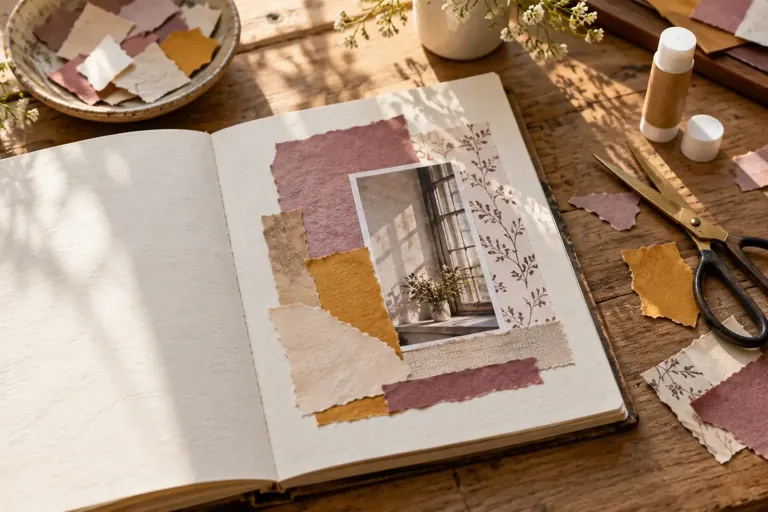
If you’d prefer a guided prompt, the creative collage journal lets you start with just a few materials. You can also choose a observation walk to gather shapes and details without setting up a full workshop.
Notice what interests you as you try it
Notice the moments when you want to keep going: a material, a color, a question, or a gesture. You can make a quick note, but try not to keep interrupting the activity to analyze your experience. A brief review at the end will often be enough.
Separate the enjoyment of the process from satisfaction with the result. You can enjoy handling a material without wanting to keep the object you made. You can also be happy with the result while finding the method too demanding for your daily life. Both insights can guide your next choice.
Don’t try to compare your experiment with images you see online during the session. If you need a reference, choose one beforehand or limit your search to a specific question. An exploration can lose its rhythm when it becomes a series of comparisons with finished work made under different conditions. If preparation gets in the way, try a creative session with just a few supplies and two versions you can compare. If preparation delays your first move, you can create a simple ritual to start creating.
An example of an hour at home
Imagine you want to explore the colors of a travel memory. You get five sheets of paper, a journal, and some glue, then choose a personal photo as your starting point. You’re not trying to reproduce the photo. You keep just three colors and one relationship between the shapes. A session can be as simple as three prints in a texture journalusing personal surfaces you’re allowed to use.
After an initial arrangement, you remove a piece of paper and the page becomes easier to read. You note this change, then add a sentence about the place. The result can remain unfinished. The interesting insight may be that you prefer compositions with plenty of open space.
This fictional example is not a template to reproduce exactly. It shows how a focused question, a small amount of material, and the time available can make a complete session. The session doesn’t need to become a new daily routine to have been worthwhile.
Wrap up by keeping a record of your choice
At the end, keep a photograph, a sentence, or a sample if you’d like. Add what you’d like to do again and what you’d simplify. You can also keep nothing. A creative experience doesn’t need an archive to be worthwhile.
Put the materials away somewhere you can find them again. If an item needs to dry or be stored under particular conditions, follow the guidance appropriate for that material. Don’t let an experiment create a lasting inconvenience in a shared space without taking that into account.
Then freely choose another time to meet, or leave the idea open. A schedule can help if you want one, but it shouldn’t turn curiosity into an obligation. The format is still successful if it let you explore something under conditions that work for you, even if your next interest is very different.
Frequently asked questions
Do you really have to be alone?
The suggested format is a solo activity, so you can choose the pace and the subject. You can also organize a group activity, with a different structure and shared expectations.
Could a museum visit work?
Yes, if it suits your curiosity and what’s possible for you. Choose a focus or a few works instead of feeling obligated to see everything. Check the practical details before your visit.
What if I only have fifteen minutes?
Keep the materials and the question simple. A brief observation, a sketch, or a simple arrangement may be enough. Setup shouldn’t take up the whole time.