Contents
- Why try out an interest before planning everything?
- What question should your experiment help answer?
- How can you try out an interest with a reversible experiment?
- How can you prepare for the trial without turning it into another project?
- What should you pay attention to during and after the activity?
- Is one try enough to decide?
- How can you move from trying it out to making a measured commitment?
- What does research say about interests that feel like a good fit?
- How can you let an interest remain just an interest?
- Check your guideposts before your next attempt
- Frequently asked questions
- Sources
Trying out an interest means experiencing a small, real part of an activity before making a major commitment. Choose a short experiment, an acceptable cost, and a specific question, then consider what you learned from it.
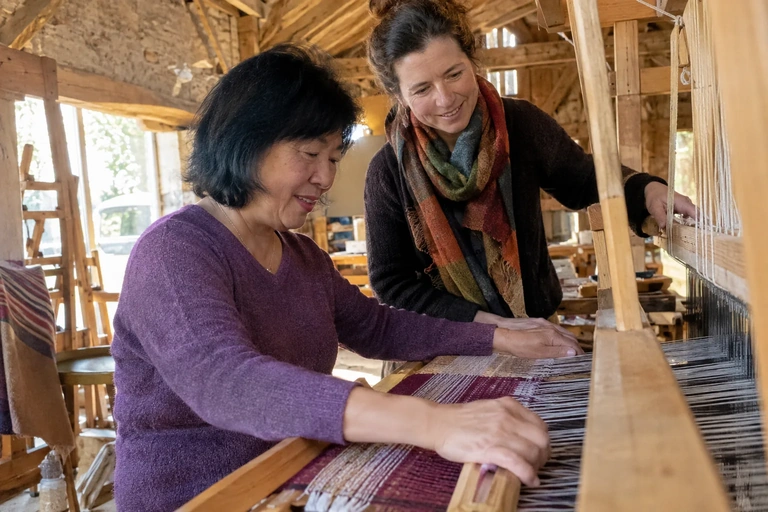
You may be drawn to pottery, writing a story, or organizing a workshop without knowing whether the day-to-day reality of that activity suits you. The trial doesn’t have to prove that you’re talented. It gives you a chance to experience the tasks, constraints, and potential enjoyment beyond the appealing image you have of it. You’re free to continue, adapt the idea, or set it aside.
Why try out an interest before planning everything?
A desire sometimes rests on a particular scene: a beautiful finished notebook, a piece on display, or a group gathered around an activity. That scene doesn’t necessarily show the failed attempts, the cleanup, the travel, or the conversations involved. A hands-on first experience can reveal these less visible parts without requiring you to already know every step of the project.
This isn’t about distrusting your enthusiasm. You can use it as a reason to try something instead of buying all the supplies or announcing a six-month plan. If you’re unsure where your desire comes from, distinguishing a personal wish from other people’s goals can clarify what draws you in. The experience will then give you different information: would you enjoy doing it, and under what conditions?
| Imagined desire | Small, possible trial | What you notice |
|---|---|---|
| Write a story | Tell a scene in twenty minutes | Enjoyment of the process and desire to return |
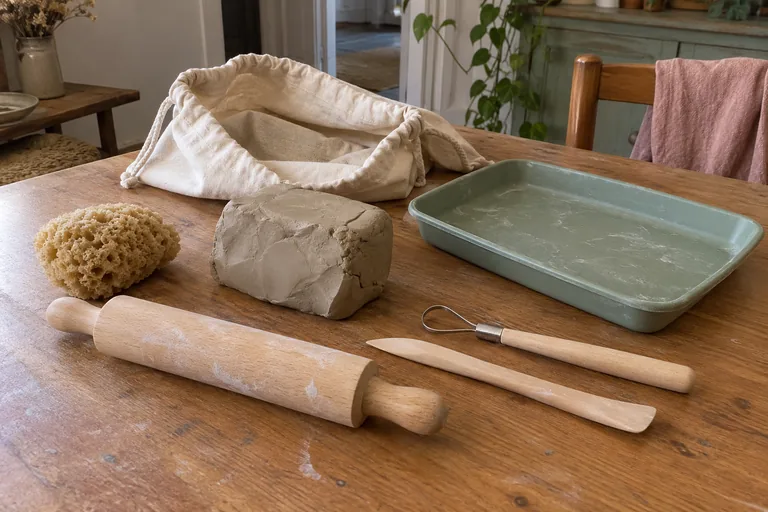
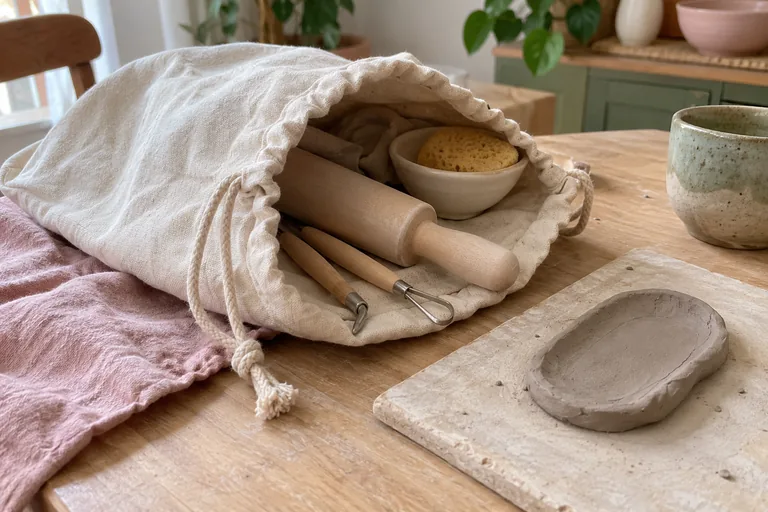
| Try pottery | Take a guided introductory class | Sensations, pace, practical constraints |
| Lead a workshop | Prepare an activity for two willing friends | Preparation, listening, and adapting |
| Draw outdoors | Go out with a pencil and a sheet of paper | Your relationship with the place, other people’s attention, and time |
What question should your experiment help answer?
Choose an uncertainty you can actually observe. “Will this activity change my life?” is too broad. “Will I want to do it again after trying it once?” is closer to the experience. You can also look at a specific obstacle: does the travel fit your schedule, is the equipment manageable to set up, and does the group format suit you?
A clear question keeps you from judging your whole future based on one detail. You can enjoy working with clay and dislike the atmosphere of a particular workshop. You can enjoy telling a scene without wanting to write a book. To hold on to these nuances, a decision journal lets you note what you thought before the trial and what you know afterward, without reconstructing your impression in hindsight.
How can you try out an interest with a reversible experiment?
Choose an experience you can leave without disproportionate consequences. Borrowing a book, using the available equipment, attending an introductory session, or making a small object often gives you more insight than a major purchase. Check the practical details before signing up: duration, cost, required materials, and whether you can choose not to continue. Reversibility doesn’t mean there’s no effort at all; it means you know what the trial will involve.
If the activity requires safety skills, supervision, or authorization, don’t replace those requirements with an improvised challenge. A professional project involving sales, invoicing, or regulated work requires an appropriate framework. Bpifrance Création describes several ways to test a business activity; these aren’t the same as exploring a hobby. The examples here are simple personal trials, without significant legal or financial commitments.
How can you prepare for the trial without turning it into another project?
Limit preparation to what you need to get started properly. Choose a realistic time, gather the essential supplies, and decide how big the experience will be. To write a scene, you don’t need to pick your final software first, create a complete folder, and read ten methods. A simple prompt, such as a place or a memory, may be enough to get the first sentences down.
A five-minute small step can reduce the preparation, but the length of the trial should remain consistent with the activity. A guided introduction can take a morning. The goal isn’t to make everything as small as possible; it’s to avoid adding tasks unrelated to the question. If you’d like an organized record, the creative project journal can start as a single page.
 Read alsoThe Law of Attraction: What It Really Says and How to Use It
What should you pay attention to during and after the activity?
Observe enjoyment, difficulty, and circumstances separately. A first session can feel awkward and still be interesting. Conversely, getting a nice result doesn’t mean you want to repeat the steps it took. Note the moments when you felt curious, the ones when you were waiting for it to be over, and what depended on the circumstances. You don’t need to evaluate every minute to get a useful impression.
After the trial, give yourself a little time for the initial excitement or disappointment to fade. One simple question may be enough: “What part do I want to return to?” To avoid confusing being a beginner with a final judgment about your ability, read our guide to starting an activity without having to be good at it already. An initial difficulty sometimes offers a learning question, not a verdict on your ability.
Is one try enough to decide?
It depends on what you learned. An obvious practical obstacle may be enough to put the idea on hold. An experience heavily disrupted by the location, fatigue, or planning leaves more uncertainty. If a second attempt seems useful, change one condition at a time when possible. You’ll have a better sense of whether you were reacting to the activity itself or to the way you encountered it.
Still, avoid extending the trials just to get a positive answer. You’re allowed to find that you like the idea more than the practice. A judgment-free goal review can make room for this conclusion. You can also keep the interest in an organized idea journal, marking it “not now” instead of making a promise to return that you’d then feel obliged to keep.
How can you move from trying it out to making a measured commitment?
If the interest remains, choose a proportionate next step. You could schedule a second session, finish one piece, or try a different setting before making a long-term commitment. Also consider how much space this activity will take in your week. One more interest doesn’t automatically create more time. Making room realistically is more protective than a schedule based only on your best days.
To move forward, break the project into milestones helps you keep track of decision points. You can say, “I’ll try three sessions, then see whether I want to continue,” without presenting that number as a scientifically ideal duration. If you enjoy several activities, choosing a temporary priority lets you explore one more deeply without giving up the others.
What does research say about interests that feel like a good fit?
The self-concordance model studied by Sheldon and Elliot in 1999 examines the relationship between the reasons for pursuing goals, effort, their attainment, and well-being. It distinguishes, among other things, goals that are more closely aligned with personal interests and values from those driven more by pressure. This work does not validate a universal “interest test” protocol or an ideal number of sessions. It reminds us that the reasons behind a commitment are worth examining.
The experience described here is therefore a practical suggestion, not a validated psychological test. It can help you clarify your preferences in a limited situation. It does not predict a career, an identity, or future success. If you’re considering a major career change, appropriate guidance and information about the real-world conditions of the job will also be needed, in addition to this initial exploration.
How can you let an interest remain just an interest?
You can enjoy photography without buying a camera, love novels without writing one, or admire an activity without wanting to practice it. Not every interest calls for a commitment. If you enjoyed trying it, it can remain a pleasant, complete experience in its own right. A solo creative session doesn’t need a lasting result to have value.
Sometimes the most useful conclusion is very ordinary: “I enjoyed trying it, but I’d rather spend my time on something else.” It doesn’t close off every possibility forever. It simply describes your choice based on the information available today. You can make a note of what you discovered, put away the equipment, and move on without wondering whether you need to turn every curiosity into a fully realized version of yourself.
Check your guideposts before your next attempt
Quiz
Three useful distinctions
A trial has to prove that I’m already good at it.
See the answer
False. It helps you observe the activity and its conditions.
Changing one condition can help you understand an initial disappointment.
See the answer
True. This helps distinguish the activity from its context.
A business venture can always be tested without a legal framework.
See the answer
False. Requirements depend on the activity; a personal trial doesn’t replace checking them.
Flip cards
Things to keep in mind
Question that’s too broadFlip
Will this activity change my life? Replace this with an uncertainty you can observe.
Testable questionFlip
After an introductory session, do I want to try these steps again?
Reversible trialFlip
A limited session with known costs and conditions.
Possible conclusionFlip
I enjoyed discovering it, but I don’t want to continue right now.
Checklist
Prepare for the next step
0 / 5
You’ve clarified the points that matter. You can choose to begin, adjust, or stop here.
Generator
A question to reflect on
What part of the day-to-day reality of this activity am I unfamiliar with?
See all the phrases
Before
- What part of the day-to-day reality of this activity am I unfamiliar with?
- What trial could help me find out without requiring a disproportionate commitment?
Afterward
- What part would I like to experience again?
- What depended mostly on the context?
Next
- What small step would give me new information?
- Can I let this discovery remain a pleasant experience?
Personal workshop
Designing a limited trial
Open a prompt and write your answer in your journal. This workshop doesn’t collect any entries.
Question to explore
Be specific about what the real practice should teach you about this interest.
Limit of the trial
Choose a format and cost that feel acceptable, without a required purchase or commitment.
Decision after the trial
Notice what you enjoyed, what felt burdensome, and what information is still missing.
For a complementary perspective, watch this video from TEDx Talks.
Frequently asked questions
How can I try something I’m interested in without buying equipment?
Use what you already have, borrow with permission, or look for an introductory session that provides the equipment. The choice depends on the activity’s safety and real-world conditions.
What should I observe during my first trial?
Separate enjoyment, difficulty, and constraints. A messy result can come with genuine curiosity, and a beautiful result doesn’t guarantee you’ll want to try again.
Is one trial enough?
It can shed light on a simple question. If the conditions significantly affected the experience, another focused attempt may give you different information.
Do I have to be good at it to continue?
No. Getting started is also a chance to discover what you’d like to learn. It isn’t a definitive test of your ability.
How do I know if I can commit to it more?
Notice whether you want to come back to it and whether it realistically fits into your life. Choose a limited next step before making a long-term or costly commitment.
Can I enjoy trying something without wanting to continue?
Yes. The experience can be complete in itself. You don’t have to turn every interest into a lasting project.
Sources
- Sheldon, K. M. and Elliot, A. J. (1999). Goal striving, need satisfaction, and longitudinal well-being: The self-concordance model. Journal of Personality and Social Psychology. DOI verified.
- Bpifrance Création. Try an activity before taking the plunge. Reference on the professional context, distinct from an exploratory hobby.