Contents
- What is a personal premortem?
- How can you do a personal premortem without getting discouraged?
- The five steps of a limited preparation
- A complete example: preparing a small exhibition
- How do you choose which obstacles call for action?
- What should you do after this preparation?
- Limits to keep in mind
- Frequently asked questions
- Sources
A personal premortem involves imagining that a project has run into a difficulty, then looking for plausible reasons and useful preparations. It does not predict the future: it turns a vague worry into a few points to check before you begin.
You want to organize an exhibition, learn to sew or prepare a family collection. You already have an idea of the result, but less of the small things that could make the process more difficult. This guide offers a short version of the premortem, adapted to an everyday project. You’ll choose a limited scenario, separate facts from assumptions, then decide which precautions really deserve your attention.
What is a personal premortem?
In a usual review, you look back at what happened. In a premortem, you temporarily shift your point of view: “It’s the end of the month, and my project hasn’t progressed as planned. What might have happened?” The past is imagined. The causes you write down are hypotheses to examine, never events that have been foretold.
Gary Klein presents this approach for project teams. Its practical value is that it gives reservations a place before the plan is put into action. The personal adaptation offered here follows that approach without claiming to reproduce a scientific intervention validated for every situation. You can do it on your own, on paper, or with someone involved who agrees to take part.
| Question | Helpful premortem | Endless worry |
|---|---|---|
| Scope | One defined step | Your entire future life |
| Wording | A verifiable cause | A judgment about yourself |
| Wrap-up | A check or an adjustment | More scenarios |
| Ending | The page is closed | The exercise continues without limit |
So start with define what success means. “Prepare three photographs for a private presentation” provides a clear framework. “Succeed in my creative life” doesn’t make it possible to identify a specific difficulty or choose a proportionate response.
How can you do a personal premortem without getting discouraged?
You don’t need to describe a catastrophe. Instead, imagine that the chosen step was postponed, abandoned or completed under conditions that don’t suit you. This wording is enough to look for weak points in the plan. It also leaves room for a reasonable outcome: changing a project can be a good decision, even if it wasn’t your original scenario.
Research on “prospective hindsight,” published by Mitchell, Russo, and Pennington, examines how viewing an event as certain or uncertain influences the explanations people give. It does not show that a personal list can prevent a specific percentage of failures. Here, the exercise is a tool for reflection. It is not associated with any score, predictive ability, or guarantee of success.
If imagining difficulties immediately sends you into a spiral of anxiety, reframe the question. “What does this first step need to go smoothly?” may feel more manageable. You can also go straight to a visualization of the project’s steps, focusing on concrete actions rather than feared consequences.
Quiz
Two points to check
Imagining a difficulty lets you know for certain what will happen.
See the answer
False. The scenario helps you examine the plan; it does not predict the future.
A simple check can be more useful than a complicated backup plan.
See the answer
True. The response should be proportionate to the project and its stakes.
Flip cards
Four points to keep in your journal
Known factFlip
Verified information about the venue, equipment, or schedule.
HypothesisFlip
A possibility to consider, without presenting it as certain.
CautionFlip
A step that reduces a specific difficulty at a reasonable cost.
Review pointFlip
New information that will make it worthwhile to revisit the page.
 Read alsoGuided visualization: turning a dream into a concrete intention
The five steps of a limited preparation
1. Describe the project as it exists today
Note the outcome you’re aiming for, the next step, the people involved, and the resources already available. Avoid filling in the gaps with what you hope to have later. If a room hasn’t been booked, write “room to be confirmed,” even if the conversation with its owner seemed encouraging. A premortem is useful when it works with the actual plan.
Add the reason this project matters. A private exhibition might be a way to show your work to three friends, practice selecting images, or prepare an application. These intentions call for different precautions. Our guide to distinguishing intention from goal helps you hold on to that meaning when practical details take up all the space.
2. Imagine a disappointing but ordinary outcome
Place yourself at the deadline for this step, even if that date is only a reference point. Write a factual sentence: “The presentation didn’t happen” or “I finished, but in a rush I don’t want to repeat.” Don’t turn that sentence into a verdict: “I’m incapable of following through on anything” isn’t a useful cause.
Then look for a few different reasons. The file wasn’t in the right format. The time slot came after an overly busy day. Someone needed to respond before printing, but no deadline had been discussed. Varied hypotheses are more useful than several versions of the same self-criticism. Stop looking once you have enough to choose a precaution.
3. Separate what’s known, possible, and imagined
Review each reason with three questions. Do I already have information to support it? Is it a plausible possibility in this context? Or is it a dramatic scenario without any particular evidence? You can leave a hypothesis unresolved. The goal isn’t to turn every uncertainty into certainty before you live.
For the presentation, “the printer is closed on Saturday” can be checked. “My friend might be unavailable” calls for a conversation. “Everyone will think my work is ridiculous” assigns others a judgment you don’t know they hold. That last sentence may signal apprehension, but it shouldn’t be treated as logistical information.
4. Choose a low-cost response
A precaution should be proportionate to the project. Checking the printer’s hours is simple. Ordering several expensive pieces of equipment to cover every possible failure isn’t. Compare the cost of preparing, its likely usefulness, and how easy it would be to adapt the plan if the problem still occurs.
You can take action, prepare a backup plan, ask for information, or accept uncertainty. These are four different responses. For a tight schedule, you can prepare the materials the day before. For a venue that isn’t certain, plan to give the presentation at home. For possible criticism, choose what kind of feedback you’d like with the guide for asking for feedback on a creative work.
5. End with an action, then close the page
An analysis that doesn’t change anything about the plan can become another mental task. Choose a concrete step: send a question, test a format, reschedule an appointment, or reduce the number of pieces. If you’ve identified a recurring trigger, turn it into if-then plan, without adding more rules.
Also decide what would make you reopen the page. A confirmed date, a change of venue, or a new person getting involved may change your assumptions. A rise in anxiety without new information, however, doesn’t mean you have to repeat the whole exercise. You can review the decision you made, then return to the work you planned.
Personal workshop
Choose the situation that applies to you
Open a prompt, then write your answer in your journal. There are no fields or saved entries on this page.
A very general fear
Replace “everything will go wrong” with a difficulty you can observe in the next step.
An external dependency
Ask for information or agreement; don’t decide on the other person’s behalf.
Too many scenarios
Keep one useful precaution, then close the exercise. You don’t have to anticipate everything.
A complete example: preparing a small exhibition
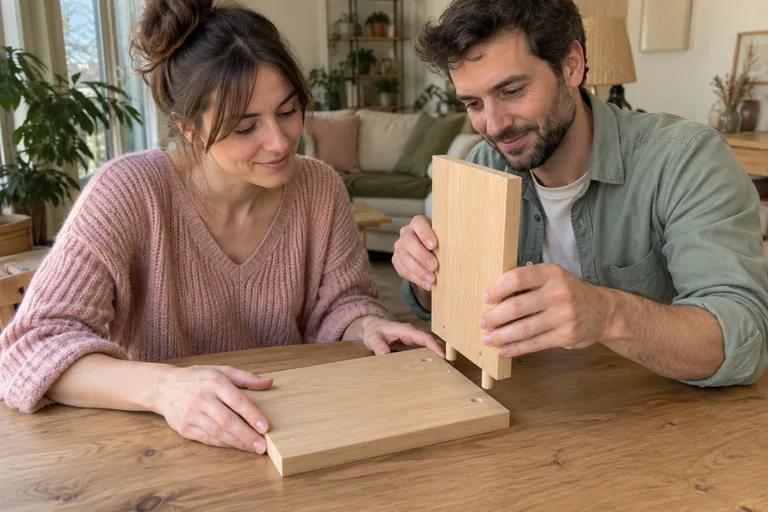
Imagine you want to hang four drawings at a friend’s place for an afternoon. In your pre-mortem, you write that the installation couldn’t happen. Three reasons come up: the hanging system isn’t suitable for the wall, the drawings aren’t all the same size, and no one decided on an arrival time.
These reasons don’t all have the same status. The wall can be observed or described by your friend. The difference in size already exists, but it doesn’t necessarily prevent a cohesive display. The arrival time is something you need to decide together. This way, you avoid turning three separate questions into one vague impression: “This project is too complicated.”
One possible response would be to display the drawings on a table, keep their different sizes, and agree on a time to set things up. The visual result changes, but the intention remains intact. You haven’t eliminated every risk: you’ve made the step manageable with the resources available right now. For more complete preparation, see the guide for prepare a creative exhibition.
After the afternoon, compare only the useful assumptions with the observed facts. Perhaps the real problem was the lighting, which wasn’t on your list. That finding doesn’t invalidate the exercise. It simply reminds you that a plan is incomplete. You can keep this information for next time without blaming yourself for not having thought of everything.
How do you choose which obstacles call for action?
Imagined disasters can easily grab your attention. Yet a modest, common difficulty may be more useful to prepare for than an impressive but highly unlikely scenario. For a personal project, focus on whether the obstacle blocks the next step, whether you can check it now, and whether there’s a simple response available.
Avoid made-up percentages. You probably don’t have enough data to claim that someone close to you will cancel with a twenty percent probability. Labels such as “has happened before,” “information missing,” or “depends on a response” are often more honest. They describe what you know without giving it false precision.
You may also discover that the project depends on too many favorable conditions coming together. In that case, the best preparation may be to reduce or adapt the goal. A collection of ten pieces can become an initial selection of three. A public gathering can become a private reading. Reducing exposure to risk doesn’t necessarily take away the meaning.
What should you do after this preparation?
Over the following days, test the precaution you chose in a real situation. A five-minute trial may reveal that a file won’t open properly or that the equipment takes up too much space. A conversation may show that an assumed agreement wasn’t shared. This is useful information to have before investing more time.
Note the difference between “I prepared” and “I checked.” Buying a folder isn’t the same as testing how to carry the drawings. Writing a date in your journal isn’t the same as getting another person’s agreement. A decision journal helps you keep track of the reasons for a choice and the information you’re still waiting for, without recounting every minute of the project.
At the next step, don’t automatically start a full premortem again. Review what’s still relevant, remove what isn’t, and then move forward. The method should stay lighter than the project it supports. If your journal contains more scenarios than evidence of action, choose a five-minute small step or put the tool aside.
Limits to keep in mind
A premortem doesn’t replace technical skills, professional advice, or a safety check. For an activity that involves physical, financial, or medical risk, the rules of that field take priority. Feeling prepared isn’t enough to make an action safe. The exercise described here is intended for ordinary, reversible personal projects.
It also isn’t meant to hold someone responsible for everything that happens to them. A widespread outage, an outside decision, or a family emergency can interrupt a well-prepared project. You can make thoughtful choices without controlling the circumstances. The judgment-free goal review helps you separate learning from blame afterward.
Finally, if looking for obstacles fuels persistent anxiety, disrupts your sleep, or leads you to check things over and over, stop this exercise. Talk to a health care professional if this difficulty is weighing on your daily life. You don’t have to practice imagining the worst to deserve to start a project.
Checklist
Your next practice
0 / 4
You can keep one useful action and set the rest aside.
Generator
A wording to adapt
I’ll confirm this information before building the rest of the plan.
See all the phrases
Verify
- I’ll confirm this information before building the rest of the plan.
- I can distinguish what I know from what I’m still assuming.
Adapt
- I can scale back this step without losing its intent.
- If this condition is missing, I’ll choose a limited fallback.
For a complementary perspective, watch this video from WOOP.
Frequently asked questions
What’s the difference between a premortem and a review?
A review looks at events that have already happened. A premortem temporarily imagines a future difficulty to help prepare the current plan. The causes written down during the exercise remain hypotheses, even if they seem very convincing.
How long should you spend on a personal premortem?
Choose a short amount of time that’s proportionate to your project. One page may be enough for a simple step. Stop when you’ve identified a useful precaution instead of trying to make an exhaustive list of everything that could happen.
Do you have to imagine the project failing completely?
No, it’s enough to imagine a step being delayed or completed under poor conditions. You can keep the personal adaptation deliberately modest. If the failure scenario unsettles you, focus instead on the conditions needed for an acceptable outcome.
Can you do this exercise with someone else?
Yes, if both people agree and can express a concern without being judged. Each person can write down their ideas separately first. Then compare your hypotheses and decide together which points you need to check.
Does a premortem attract problems?
Imagining a difficulty isn’t proof that it will happen, and it isn’t an order sent to the future. The exercise is about practical preparation. You’re free not to use it if this approach doesn’t work for you.
What should you do if all the obstacles seem important?
Focus on the next step instead of evaluating the entire project. Look for the information that would help you make an immediate decision. If no reasonable version is available, postponing or scaling back the project can be a thoughtful response.
Sources
- Gary Klein. Introduction to the premortem method.
- Mitchell D. J., Russo J. E., Pennington N. (1989). Back to the future: temporal perspective in the explanation of events.
The suggested exercises are editorial adaptations, not individually validated protocols. The example situations are fictional.