Contents
Imagining the moment when your project is finished can give you a welcome sense of direction. You see the printed book, the installed exhibition, or the completed presentation. Yet when you return to the first page, you may feel just as unsure as before. The final scene doesn’t always contain the information you need to get started.
Visualizing an action means shifting your attention to a specific part of the work: opening a session, writing the first sentence, handling the materials, or picking up again after an interruption. You explore an ordinary sequence that you can then try in the real world. This practice complements concrete preparation; it doesn’t replace it or guarantee that the project will succeed.
Choose a short sequence instead of an ideal day
Start with a limited moment that has a recognizable beginning and end. For a presentation, that might be arriving in the room and saying the first sentence. For a creative project, taking out the materials and making a first attempt. For a professional conversation, opening the conversation and asking a clear question.
Avoid mentally narrating an entire friction-free day. The longer the sequence, the more likely you are to fill in the gaps with an ideal scenario. A scene with just a few actions helps you notice practical details: where the document is, what you need to have on hand, and which instructions you want to follow. If you’d like to keep focusing on actions in a writing practice, our workshop invites you to describe an interaction without dialogue.
If possible, choose a step that’s close enough to try soon. Imagining a moment that will happen years from now may fuel a desire, but it won’t necessarily tell you what to do tomorrow. If you’re looking for a general introduction, the guide to creative visualization offers a broader framework. Here, you’re intentionally working on a small scale. The imagined action can become a process goal connected to the desired outcome.
Start with a real environment
Set the scene in a place you know or have reliable information about. Imagine the size of the table, the position of the door, or where the materials are. If you don’t know the place, leave uncertain details open instead of inventing a reassuring certainty.
You can look at an authorized photo of the place, reread the instructions, or actually prepare your space before the exercise. These details give you a more useful foundation than an atmosphere that’s merely decorative. You’re trying to understand what you’ll do, not create an inner advertisement for an ideal version of yourself.
Also take ordinary conditions into account: a little noise, imperfect lighting, a short deadline. You don’t need to add every possible problem. Just avoid making the scene depend on absolute quiet that never exists in your daily life. Realistic preparation can feel gentle without being artificially perfect.
Describe the actions in order
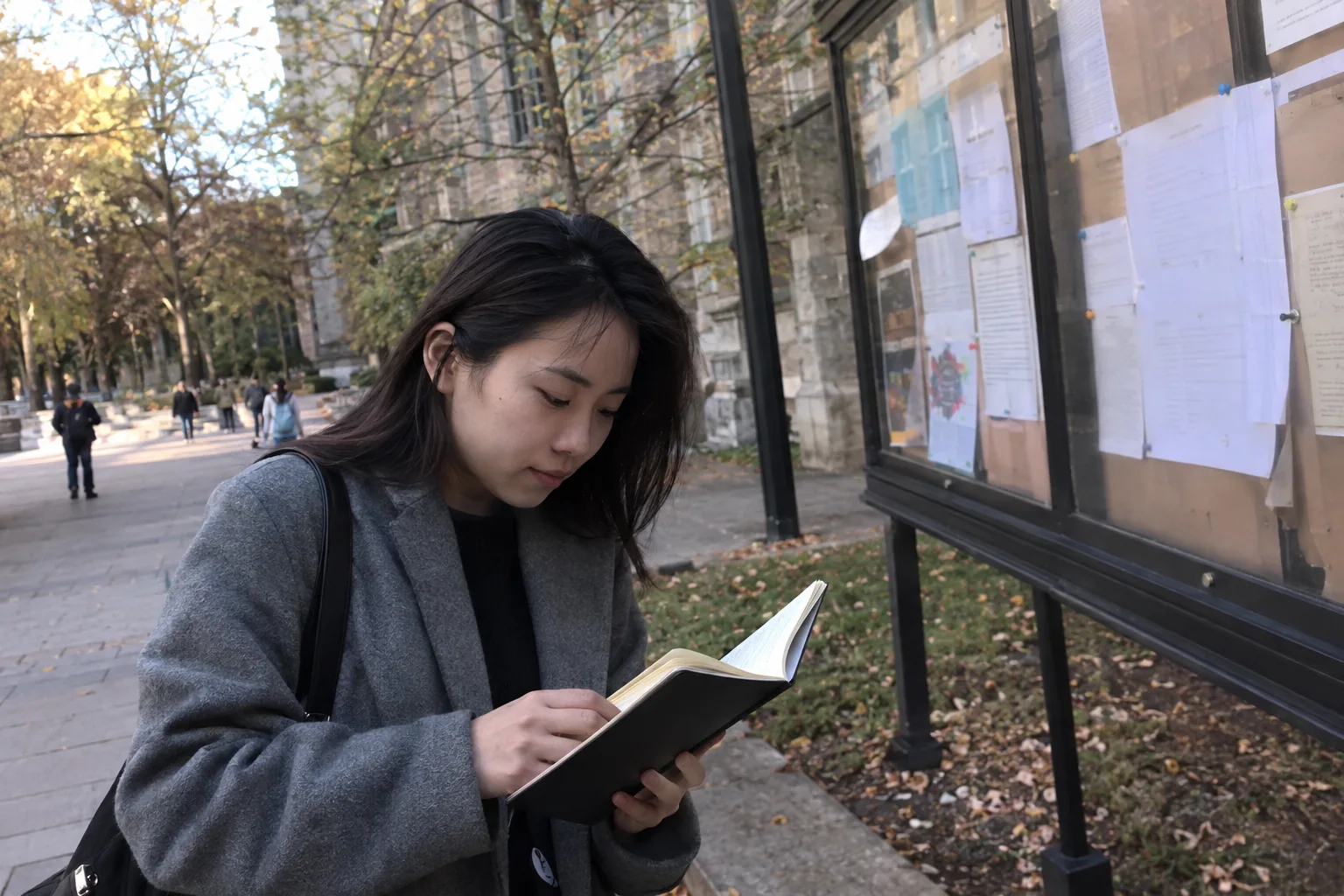
Describe what you’re doing in the first person, using simple verbs. “I set down my notebook, open the page, reread the question, write a first answer.” This sequence helps you spot a vague part. If you get stuck on “I begin,” ask yourself what movement or decision actually marks the beginning.
You can use sight, sounds, or everyday sensations if they come easily to you. The feel of the pen, the sound of a door, or the first sentence you say aloud can serve as cues. No sensory detail is required. If you work more with words, a short description is enough to examine the sequence.
Avoid automatically adding an emotion you’re expected to feel. You can take action while feeling a little hesitant or without feeling spectacularly enthusiastic. A rehearsal that requires you to feel perfectly confident before the first step may create an extra condition. Instead, prepare for what you’ll do with the feelings you have, as long as the situation is appropriate for taking action.
Prepare a concrete sequence
Fill in these prompts to prepare for your next attempt. Nothing is sent or saved.
Your prompt will appear here after you make your choices.
Plan for an ordinary hiccup and a response
After a simple first run-through, add a plausible obstacle. You lose your train of thought mid-sentence, the supplies aren’t where you expected them to be, or a question makes you pause to think. Choose a common difficulty, not a catastrophic scenario designed to test your resilience to the limit. If you’d prefer a very simple physical reminder, you can choose an object as a simple reminder of your intention.
Imagine a straightforward response: check a note, ask for clarification, go back to the previous step, or use a simpler version. For a presentation, you could prepare to say, “I’ll return to my main point.” For a creative session, you could decide to start with a sample instead of the finished piece.
This step isn’t meant to control everything. It simply checks that your scenario allows for changes. If the obstacle involves a skill you haven’t mastered, look for an appropriate explanation or training. A mental image doesn’t replace technical instructions, supervised practice, or the safety rules for an activity.
 Read alsoCreative visualization: How to practice it, step by step
Move fairly quickly to a concrete trial
Once you’ve clarified the sequence, try a real version as soon as conditions allow. Say the first sentence aloud, prepare the objects, or make a draft. You can compare what you imagined with what the action actually requires.
The difference between the two is useful information. You thought an introduction would take a few seconds, but it’s too long. You thought you had the supplies, but a piece is missing. You can adjust your preparation based on these facts. The goal isn’t to defend the initial scenario; it’s to make the next attempt more practical.
If you prefer audio guidance, Miraya offers on-demand sessions based on an intention. You can describe the specific moment you’d like to explore, then save a small action for the end of the listening session. The sessions in the app remain a source of personal inspiration; trying it in real life provides the information that only experience can offer.
Build a small library of possible starting points
After several tries, you can keep two or three useful sequences: starting a session, picking things up after a break, explaining an idea simply. Keep them short enough to find easily, without turning preparation into an extra task.
Write down what actually helped you. Was it knowing your opening sentence, seeing the materials ready, or having planned a response to hesitation? That detail helps you tailor the practice to how you work. You don’t need to repeat every step each time if some of them don’t help you.
End with a specific decision: what action will you try, where, and when? You can write it in “My Small Steps” and review it after you act. The imagined scene then becomes one form of preparation among others, connected to a project that is still unfolding. It remains in service of the path you’re exploring, without requiring reality to match exactly what you had in mind.
Frequently asked questions
Should I repeat the scene several times?
You can revisit it if that helps clarify a step, but there’s no set number of times you need to do it. As soon as the next step is clear enough, favor a real attempt over automatic repetition.
Can I do this exercise with my eyes open?
Yes. Look around your space, read your sequence, or use a note. The goal is to prepare for the action with whatever support works for you, not to maintain a particular posture.