Contents
- Personal Tradition: Repetition and Chosen Meaning
- What the Research Can’t Claim
- Create a Personal Tradition in Five Decisions
- Invite Loved Ones Without Assigning Them a Role
- Three Examples That Don’t Require Much Planning
- When a Tradition No Longer Feels Like You
- Keep the Memory Without an Obligation to Continue
- Frequently asked questions
- Sources
A personal tradition is a small occasion you choose to repeat because it means something to you. It can be brand-new, involve only you, and change over time: a meal, a walk, a page, or a gesture is enough.
You don’t need to invent an original ceremony or reproduce a family tradition. Start with an experience you’d like to revisit, in a simple enough format to remain a choice. If other people take part, their agreement is part of the tradition.
Personal Tradition: Repetition and Chosen Meaning
A habit can repeat without you paying much attention to it. A tradition often adds meaning: marking a date, maintaining a connection, or recalling a period. The two can overlap, but they aren’t identical. Brushing your teeth and preparing a birthday meal don’t hold the same place in your personal story.
The evening ritual can become a tradition if you give it that meaning, but it doesn’t have to. A tradition can also be annual, seasonal, or tied to an event. Its frequency doesn’t indicate its value. What matters is being able to understand why you want to return to it.
| Shape | Aspect | Flexibility |
|---|---|---|
| Solo | Chosen personal moment | No public explanation needed |
| Shared | Agreement from participants | Everyone can change or decline |
| Seasonal | Recognizable time period | Date can be moved if needed |
What the Research Can’t Claim
Research on habits, including work by Lally and colleagues, examines the automaticity of repeated behaviors. It doesn’t prove that a personal tradition necessarily creates happiness or strengthens every relationship. Symbolic meaning, history, and the participation of loved ones call for different questions. This guide offers a practical workshop, not a recipe validated for every situation.
So you can invent a tradition without having to attribute a scientific benefit to it. It may simply appeal to you or mark something that matters. The little pleasures journal helps you revisit moments you’ve enjoyed, without promising they’ll always produce the same emotion when repeated.
Quiz
Check your understanding
Does a tradition have to be old?
See the answer
No, it can start now. Meaning and the desire to repeat it can develop over time.
Do loved ones have to participate to make you happy?
See the answer
No, their agreement is still necessary. A shared practice should allow people to decline.
Create a Personal Tradition in Five Decisions
Name what you want to mark
Choose an occasion or a relationship: the end of a project, a season, a birthday, or a shared moment. Avoid starting with the décor. A lovely setting doesn’t necessarily meet the need. Ask yourself what you want to recognize or preserve through this repetition.
A personal timeline can reveal important dates that aren’t official holidays. You can mark a move or the end of a training program, but you don’t have to celebrate every milestone. Choose what has meaning for you now.

Define a gesture that’s small enough
Find a simple action: prepare a recipe, read an old page, walk to an accessible place, or write a question for next year. The five-minute small step helps you scale back an idea that’s too ambitious. The tradition doesn’t need to take up an entire day.
If it requires supplies, start with what’s available. You don’t need to buy anything to make the gesture special. You can use a mug, a journal, or a recipe you already have. The meaning comes from how you choose to use them, not the price of the items involved.
Choose a flexible frequency
Choose a recognizable cue: a season, an event, or a time when people can get together. Leave some room to move the date. A tradition that can’t accommodate any unexpected changes may become a burden, especially when it involves several schedules.
The seasonal transition journal can accommodate a flexible date, without a specific day. For a tradition tied to a project, you can wait until that stage is actually complete. The calendar should serve the occasion rather than replace it.
Plan a shorter version
Imagine you have less time or energy. Which part preserves the main meaning? A full recipe could become a drink you share; a long walk could become a few minutes somewhere nearby. The scaled-down version is part of the plan, not a failure.
You can keep this adaptation in a recipe and memory journal or a simple note. The goal is to avoid having to reinvent the whole ritual when something unexpected comes up. You can also skip an occasion without arranging a make-up.
Decide how to end
A tradition can include a closing gesture: putting the object away, writing down the date, or saying goodbye. This ending keeps the occasion from turning into a vague obligation. You can acknowledge the moment and then return to everyday life, without trying to prolong the atmosphere at all costs.
The journal to close out the day offers a similar approach: leave enough of a record, then stop. A meaningful experience doesn't need to be documented from every angle to count.
Flip cards
Choose a starting point
MeaningFlip
Name the occasion or relationship you want to mark.
ShapeFlip
Choose a small gesture and a shorter version.
AgreementFlip
Check whether the people involved want to take part and have the right to say no.
 Read alsoNew moon ritual: set your intentions for the month
Invite Loved Ones Without Assigning Them a Role
Present the idea as a suggestion: what you'd like to do, how often, and how flexible you'd like it to be. Ask what works for them. A shared tradition doesn't come from one person's enthusiasm alone; it requires that others can take part, make changes, or decline without feeling guilty.
The guide to setting a boundary goes both ways. You can say what you want and accept the other person's limits. If you're the only one who wants to repeat the activity, it can become a personal tradition instead of an imposed group commitment.

Three Examples That Don’t Require Much Planning
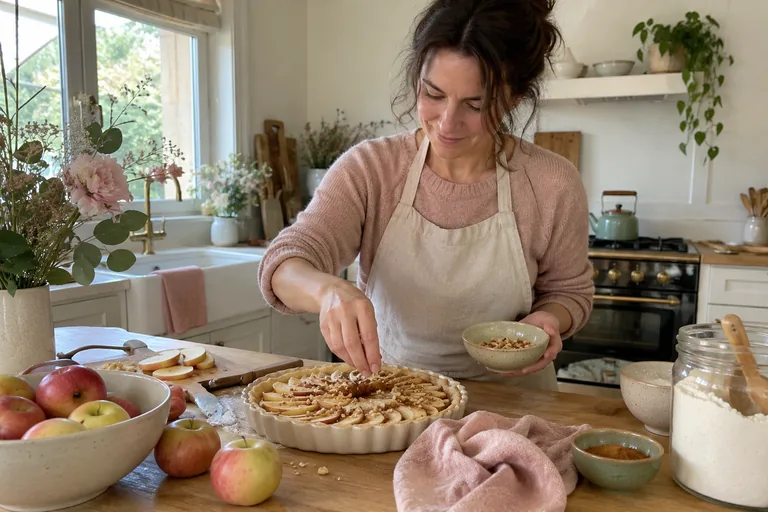
A reading tradition could involve choosing a text you already love each season and noting what moves you differently. The reading journal keeps a record. A food tradition could involve making a simple recipe again with someone who's willing, while leaving the date up to you.
A creative tradition could mark the end of a project with a closing page, followed by a solo creative session devoted to something else. In each case, the repetition stays light. You don't have to make the event bigger every year for it to keep its value.
Generator
A wording to adapt
Name the occasion or relationship you want to mark.
See all the phrases
Starting point
- Name the occasion or relationship you want to mark.
- Choose a small gesture and a shorter version.
Adapt
- Check whether the people involved want to take part and have the right to say no.
- I can keep what works for me and remove the rest.
When a Tradition No Longer Feels Like You
A practice may lose its meaning after a change in your life or relationship. You can change it, pause it, or stop. The guide to adapt a goal to change helps you distinguish between staying true to an intention and staying true to a form that has become burdensome.
If other people are involved, talk about the change instead of quietly disappearing from an expected agreement. You can acknowledge what the tradition brought you without promising to continue it indefinitely. Choosing to end it doesn't make the moments that came before any less real.
Keep the Memory Without an Obligation to Continue
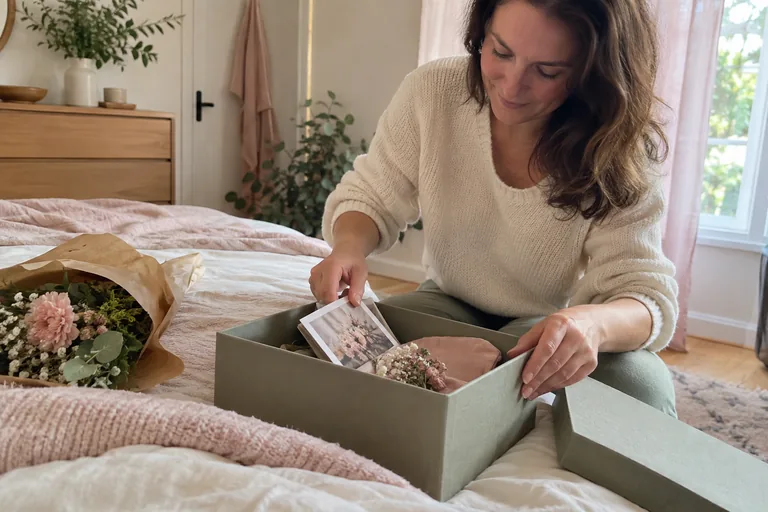
A photo, a few words, or an object can remind you of the first time. The guide to writing about a specific memory helps preserve the scene without inventing a perfect story. You can also note the adjustments and unexpected events: they are part of the tradition’s life.
The final question is simple: do you still want to make room for it? If so, keep it practical. If not, you might thank it for what it represented, then let it become a memory. A personal tradition is valuable for the living meaning it holds, not because you’re forbidden to stop.
Checklist
Keep only what works for you
0 / 4
You’ve set your reference points. You can adapt or stop this practice.
Personal workshop
Prepare your version: personal tradition
Answer the three prompts below, or use them aloud. This workshop works without JavaScript. This workshop does not offer a save feature. Copy anything you want to keep into your journal, and avoid entering sensitive information on a shared device.
How do you finish this workshop?
Review your answers and keep only a next step that seems doable to you. You can also decide not to pursue anything today. This decision creates neither a score nor a commitment.
For a complementary perspective, watch this video from ReligionForBreakfast.
Frequently asked questions
How do you create a personal tradition?
Choose what you want to mark, a simple gesture, and a cue for repeating it. Plan a shorter version, too.
Can you have a tradition on your own?
Yes. It doesn’t need a group or outside recognition to be meaningful.
Does it need to be on a set date?
No. A season or an event may be enough, and you can move the date.
What if loved ones don’t want to take part?
Respect their answer and adapt the idea. The activity can remain personal.
Can you miss an occasion?
Yes. An interruption doesn’t erase the moments that came before, and you don’t necessarily need to make up for it.
Can you stop a tradition?
Yes. You can acknowledge what it meant to you, then change it or let it become a memory.
Sources
- Lally, P., van Jaarsveld, C. H. M., Potts, H. W. W., and Wardle, J. (2010). How are habits formed: Modelling habit formation in the real world. European Journal of Social Psychology. DOI verified.