Contents
- Savoring a Moment: Attention, Memory, and Photography
- What Research Really Says About Photos
- How to Savor a Moment Without Monitoring Yourself
- When a Photo Has a Real Purpose
- People and Places Have Boundaries
- An Experiment Without Moral Comparisons
- If You’re Afraid of Forgetting an Important Moment
- Frequently asked questions
- Sources
Savoring a moment without a photo means choosing to stay with the experience without immediately trying to turn it into an image. This choice may suit you in some situations, but it isn’t more authentic or necessarily more enjoyable than taking photos.
You can alternate between the two: take a photo, put your device away, then continue enjoying the moment. The goal is to give yourself room to choose, not to make your phone an enemy or judge how other people preserve their memories.
Savoring a Moment: Attention, Memory, and Photography
Observing, remembering, and taking photos are related but different activities. You can look for a composition with great care, or take a picture almost automatically. You can also put your camera down while thinking about something else. So, not taking a photo doesn’t guarantee perfect presence.
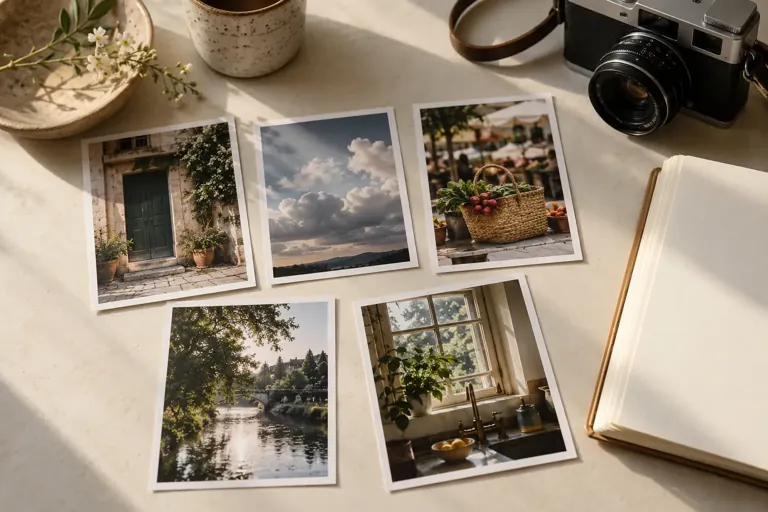
The A personal photo journal shows that taking a picture can be a deliberate practice. Here, the question is whether taking a photo supports what you want in the moment or interrupts it. The answer can change depending on the scene, the people there, and how you plan to use the image.
| Choices | Possibility | Limit |
|---|---|---|
| Observe | Stay with the scene | Doesn’t guarantee perfect attention |
| Take photos | Create a visual record | Can interrupt some activities |
| Write afterward | Keep a personal detail | Doesn’t capture the whole moment |
What Research Really Says About Photos
Linda Henkel’s study of a museum visit examined the memory of objects that people observed or photographed. Its findings depend on the instructions and the kind of attention given to the objects; they don’t show that every photo harms every memory. A laboratory experiment or guided visit doesn’t sum up all everyday uses.
Other research by Diehl, Zauberman, and Barasch found that taking photos could increase enjoyment during some positive experiences, especially by encouraging engagement. The effect varied when photography interfered with the activity. So the practical takeaway is nuanced: choosing based on the situation is better than following a universal “always” or “never” rule.
Quiz
Check your understanding
Do photos always reduce enjoyment?
See the answer
No, their effects depend on the context. Studies have also found greater enjoyment when people took photos.
Will the memory be complete without a photo?
See the answer
No, every record is partial. The goal is to choose, not to guarantee a perfect archive.
How to Savor a Moment Without Monitoring Yourself
Choose a small part of the experience
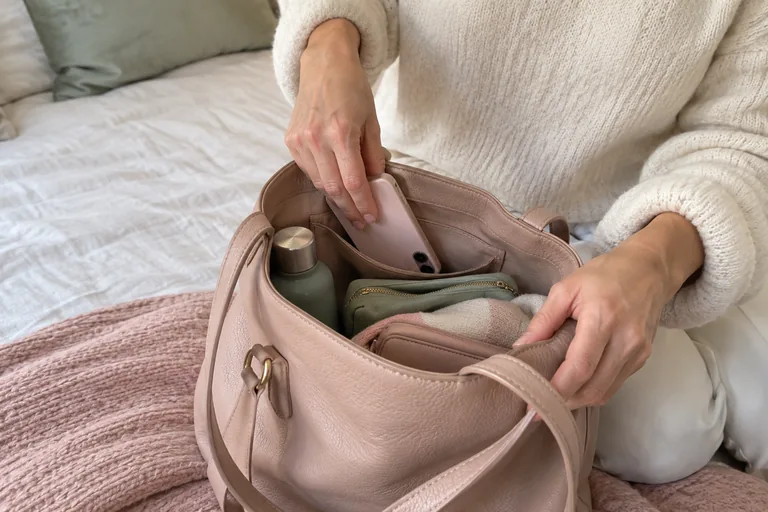
Decide to keep your phone put away for a specific stretch of time: one song, the start of a meal, or a few moments looking at a view. You don’t have to commit to doing this for an entire outing. This limit makes the choice more concrete and leaves you free to take photos afterward if you feel like it and are allowed to.
The little pleasures journal can help you name what draws you in: a color, a texture, or a conversation. But don’t turn the scene into a collecting exercise. You can notice a single detail, then let the moment continue without a constant running commentary in your mind.
Return to what’s actually happening
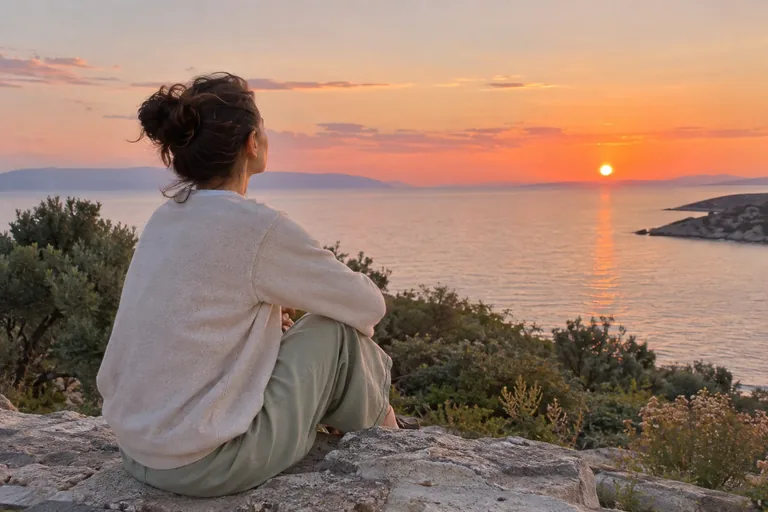
If your attention drifts to a future post, ask yourself what’s here now. Who’s speaking? What movement is unfolding? What’s changing in the light? The guide to describing a place through the senses offers prompts you can adapt, without any obligation to use all your senses.
You might also find that you don’t like the moment as much as you expected. You don’t have to savor it more to get your money’s worth from the outing or fit a happy image. Paying attention can lead to a neutral observation. You’re free to change activities, talk, or simply wait.
Let the memory be incomplete
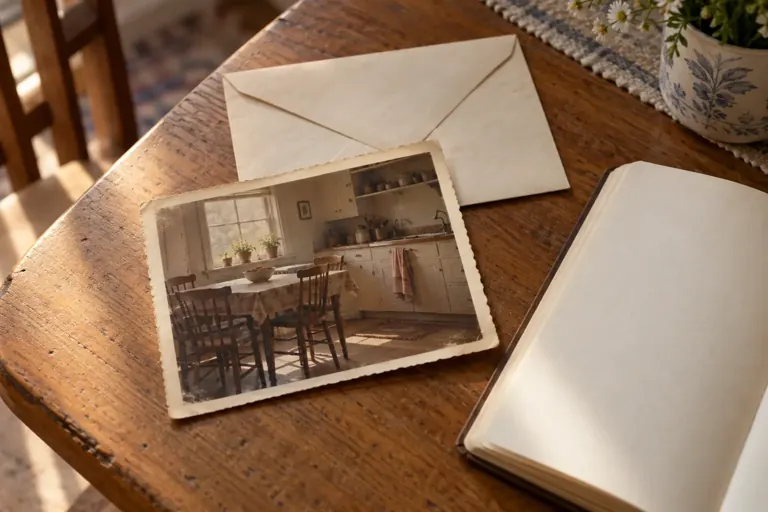
You won’t remember every detail, with or without a photo. An image preserves some elements and leaves others out of frame. A personal memory changes too. You can accept this limit without trying to archive every moment. The guide to writing down a precise memory helps preserve a scene for later when you want a record of it.
After the moment, a few words may be enough: place, detail, person present—with their consent if you share it. Avoid immediately rewriting the whole experience while it’s still unfolding. You can wait for a quiet moment. The record should serve the memory, not take its place in the middle of the encounter.
Flip cards
Choose a starting point
ChooseFlip
Choose a small part of the moment to experience without a device.
ObserveFlip
Bring your attention back to a real detail instead of thinking about a future post.
Keep a recordFlip
Then choose a simple way to remember it, if you feel like it.
 Read alsoNew moon ritual: set your intentions for the month
When a Photo Has a Real Purpose
There are good reasons to take photos: to preserve an artistic detail, share news, document work, or keep a picture with someone close to you. You don’t have to give up these uses to complete the exercise. Just distinguish a specific need from automatic accumulation. One chosen photo may be enough, but that number isn’t a rule.
The travel journal can combine images and text. You can decide in advance when to take photos, then leave the rest of the time free. If you’re with someone, ask what works for them instead of insisting on an outing that’s photographed from start to finish or entirely device-free.
People and Places Have Boundaries
Follow the rules of the place and respect the consent of the people you photograph. A beautiful moment doesn’t automatically give you the right to capture or share an image. The decision to take a photo and the decision to publish it are separate. If someone prefers to stay out of frame, you can share the memory another way.
A memorable conversation can be preserved as a personal impression, without repeating private words. Likewise, you can describe a work of art in a culture journal when photography is prohibited. Not having an image doesn’t rule out every kind of record.
Generator
A wording to adapt
Choose a small part of the moment to experience without a device.
See all the phrases
Starting point
- Choose a small part of the moment to experience without a device.
- Bring your attention back to a real detail instead of thinking about a future post.
Adapt
- Then choose a simple way to remember it, if you feel like it.
- I can keep what works for me and remove the rest.
An Experiment Without Moral Comparisons
In a fictional scenario, Manon arrives at a landscape she had wanted to see. She takes a picture first, then puts her phone away and stays for a while. She notices a sound and a movement that her photo doesn’t capture. That doesn’t make the image useless; the two experiences give her different things.
On another outing, she prefers photographing shapes and colors because that activity is part of what she enjoys. The creative observation walk can specifically include an eye for composition. Her standard is no longer a ban, but whether the place of the device fits what she wants to do.
If You’re Afraid of Forgetting an Important Moment
You can choose a minimal record before putting your device away: one photo, one word, or one detail to tell someone about later. This may feel more comfortable than a total ban. The one-sentence journal offers a short format for keeping what made an impression on you without writing a full account.
If the fear of losing a record becomes overwhelming or keeps you from taking part in moments, professional support may help. A presence exercise shouldn’t become another constraint. You can stay flexible: some memories will have an image, others a few words, and others only the place they hold in your story.
Checklist
Keep only what works for you
0 / 4
You’ve set your reference points. You can adapt or stop this practice.
Personal workshop
Prepare your version: savor a moment
Answer the three prompts below, or use them aloud. This workshop works without JavaScript. This workshop does not offer a save feature. Copy anything you want to keep into your journal, and avoid entering sensitive information on a shared device.
How do you finish this workshop?
Review your answers and keep only a next step that seems doable to you. You can also decide not to pursue anything today. This decision creates neither a score nor a commitment.
You can agree with someone on a specific time for taking pictures, then put your devices away during the conversation. Ask whether that arrangement works for them instead of presenting your choice as a rule for being present. Some people enjoy taking photos together; others prefer not to be in them. A concrete agreement for part of the get-together leaves more room for everyone than a general comment about how people should enjoy themselves.
For a complementary perspective, watch this video from Kurzgesagt – In a Nutshell.
Frequently asked questions
How can you enjoy a moment without taking a photo?
Choose a short part of the experience and notice one detail. You can take a photo afterward if you want to and it’s allowed.
Does taking photos keep you from enjoying yourself?
Not always. Research shows different effects depending on attention and interference with the activity.
Should you leave your phone at home?
No. You can keep your device with you and choose when to use it.
How else can you keep a memory?
A few words, a story, or a conversation can serve as a record. No medium preserves everything.
What if I’m afraid I’ll forget?
You can keep an image or a brief note before returning to the moment. A total ban isn’t necessary.
Can you take photos of others to remember the moment?
Respect their consent and the rules of the place. Taking a photo and publishing it are two separate decisions.
Sources
- Henkel, L. A. (2014). Point-and-Shoot Memories: The Influence of Taking Photos on Memory for a Museum Tour. Psychological Science. doi:10.1177/0956797613504438.
- Diehl, K., Zauberman, G., and Barasch, A. (2016). How taking photos increases enjoyment of experiences. Journal of Personality and Social Psychology. doi:10.1037/pspa0000055.