Contents
- Screen-free break: what need do you want to meet?
- Why not call it a detox?
- Put together a screen-free break that takes no preparation
- Four very different breaks
- If you pick up your phone again right away
- Start again without asking the break to fix everything
- An experiment to make your own
- Frequently asked questions
- Sources
A screen-free break means choosing, for a few minutes, an activity that doesn’t require looking at a phone, tablet, or computer. Ten minutes is a practical guideline you can adjust, not a medically ideal duration or a promise of a “detox.”
You can use this time to change position, look around, listen to a sound, or do something with your hands. The important thing is to choose what works for you right now, without turning the break into another wellness obligation.
Screen-free break: what need do you want to meet?
Putting your phone down doesn’t yet tell you what you want. You might need to move, have some quiet, talk with someone, or simply stop reading information. Start with that concrete question. A very quiet activity may not be the right fit if you’ve been sitting all morning; an energizing activity may not suit you after an already demanding stretch.
The little pleasures journal can offer a few ideas, but you don’t need to feel any particular enjoyment for the break to count. You can simply switch activities. Avoid assessing every minute by asking whether you already feel more rested: that monitoring can sometimes add another task to the break itself.
| Envy | Option | Adaptation |
|---|---|---|
| Shift your focus | Look out a window | Stay seated if you like |
| Work with your hands | Draw shapes | No outcome expected |
| Change your pace | Walk somewhere safe | Choose another activity if needed |
Why not call it a detox?
The word “detox” suggests that screens are a substance to eliminate or that a short break would reverse a specific effect. This guide makes neither promise. Digital activities vary: working, talking to someone close to you, reading, and scrolling through content aren’t the same experience. You can prefer some screen-free time without labeling all screen use as harmful.
Research on habits offers a general framework for thinking about a change in routine, not validation of any particular ten-minute duration. Lally and colleagues’ study, in particular, reminds us that behaviors and people don’t all follow the same pace. The if-then plan keep this as an organizational option: “After this folder, I’ll choose a short activity away from screens.”
Quiz
Check your understanding
Is ten minutes a medically ideal duration?
See the answer
No, it’s a practical framework. Choose the duration based on the context.
Does checking the time cancel the break?
See the answer
No, adjust as needed without turning the moment into a test. Your actual needs come first.
Put together a screen-free break that takes no preparation
Choose an activity that’s already within reach
Look at what’s within reach: a window, a sheet of paper, a glass of water, something to repair, or a small space to walk. Choose an activity that doesn’t require spending a long time searching online for an idea. The break can start by opening a book you already have, drawing a few shapes, or watching the light change on a wall.
If you’d like to write, a journal entry is enough. You can note what you notice right now, without taking stock of your life. If writing feels too much like the work you just finished, switch things up: a hands-on activity or a short observation walk may better suit what you feel like doing.

Keep accessibility and availability needs in mind
You may need your phone for assistive technology, an important contact, or a responsibility. A break doesn’t mean you have to turn it off or put it out of reach. You can leave the channel you need accessible and choose not to check the rest. The goal is a voluntary choice, not an isolation challenge.
Likewise, you don’t have to walk, close your eyes, or use all your senses. Choose an activity that works with your mobility, surroundings, and comfort. The guide to describing a place through the senses can be adapted to focus on just one detail you can see or hear. The accessible version is the complete version for you.
Plan for a simple ending
If you need to stick to a schedule, use a clock or an alarm set in advance. Briefly checking a screen for the time doesn’t cancel the whole break. You can also choose an activity with its own natural ending: read two pages, water the plants that need it, or put away a few tools you’ve used.
Avoid a task you know will lead to a long chain of work. Sorting one drawer can turn into a big cleanup; preparing a snack can turn into planning all your meals. If you really want to rest, choose an activity you can keep manageable. The five-minute small step helps keep an activity contained without requiring it to be productive.
Flip cards
Choose a starting point
ObserveFlip
Choose one detail in your surroundings without needing to photograph it.
DoFlip
Try a simple hands-on activity with whatever you have available.
Leave some spaceFlip
Leave part of the time without any additional goal.
 Read alsoNew moon ritual: set your intentions for the month
Four very different breaks
An observation break means noticing three details in a familiar setting: a reflection, a shape, a distant sound. You can make a note in a nature journal if it suits the context, but keeping a record isn’t required. Paying attention can be an experience that produces nothing.
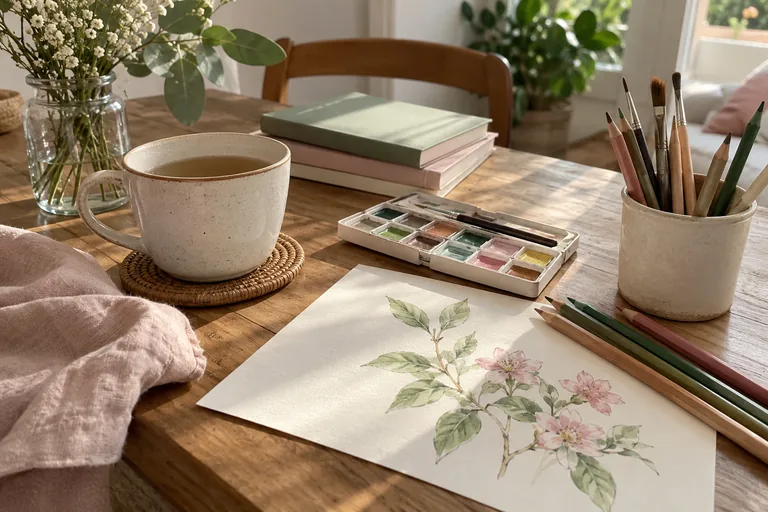
A hands-on break could mean folding a sheet of paper, drawing an object, or touching a pleasant texture. A social break could be a conversation with someone who’s available, without imposing your exercise on them. A break with no goal can simply leave a moment unfilled. You don’t have to fill the ten minutes for them to count.

If you pick up your phone again right away
Notice what brought you back to it. Were you checking the time, looking for information, or seeking a distraction because the activity you chose didn’t suit you? That distinction is more useful than the verdict “I can’t do this.” You can change the break: get the information beforehand, switch activities, or choose a time when you’re not waiting for an important reply.
A decision journal can make room for this observation if the subject interests you. But avoid treating every time you check as a mistake. A screen-free break isn’t a test of willpower. You can shorten it, move it to another time, or give it up when it doesn’t meet your actual need.
Generator
A wording to adapt
Choose one detail in your surroundings without needing to photograph it.
See all the phrases
Starting point
- Choose one detail in your surroundings without needing to photograph it.
- Try a simple hands-on activity with whatever you have available.
Adapt
- Leave part of the time without any additional goal.
- I can keep what works for me and remove the rest.
Start again without asking the break to fix everything
Before returning to your previous activity, identify just the next step. It might be opening a document, answering a question, or wrapping up the day. The journal to close out the day is an option if you decide to stop. A break can also help you realize that you need a longer rest.
Don’t measure its value only by the productivity that follows. You’re allowed to take a moment for yourself without it immediately improving your output. If fatigue, pain, or an ongoing difficulty concerns you, seek appropriate advice rather than a more demanding routine. Ten minutes can’t replace sustainable working conditions or the support you need.
An experiment to make your own
Choose three different activities for three occasions, then keep the one that suits you best. Compare how practical they are, not how much well-being they earn you. Was it accessible? Did you feel like continuing? Was it easy to wrap up? These questions offer concrete ways to adjust your choice.
You can keep a short list in a idea notebook, then stop thinking about it until the next time you need it. A break is one option among others, with no streak to maintain and nothing to make up. An ordinary moment is enough; it doesn’t have to become another project.
Checklist
Keep only what works for you
0 / 4
You’ve set your reference points. You can adapt or stop this practice.
Personal workshop
Prepare your version: screen-free break
Answer the three prompts below, or use them aloud. This workshop works without JavaScript. This workshop does not offer a save feature. Copy anything you want to keep into your journal, and avoid entering sensitive information on a shared device.
How do you finish this workshop?
Review your answers and keep only a next step that seems doable to you. You can also decide not to pursue anything today. This decision creates neither a score nor a commitment.
For a complementary perspective, watch this video from Kurzgesagt – In a Nutshell.
Frequently asked questions
What can I do for ten minutes without my phone?
You can observe, read a few pages, draw, or make no plans at all. Choose an accessible activity that suits what you feel like doing in the moment.
Do I need to turn off my phone completely?
No. Keep the features and contacts you need, especially for your responsibilities or accessibility needs.
Is this a digital detox?
This guide makes no detox promises. It simply suggests voluntarily taking a break from certain uses.
Can I take a shorter break?
Yes. The duration isn’t a threshold for success and can be adjusted to fit your availability.
What if I pick up my phone again?
Notice what you were looking for, then adjust the break. You don’t need to judge yourself or restart the timer.
Should I be more productive afterward?
No. Personal time doesn’t have to be justified by improved productivity. You might also notice that you need a longer rest.
Sources
- Lally, P., van Jaarsveld, C. H. M., Potts, H. W. W., and Wardle, J. (2010). How are habits formed: Modelling habit formation in the real world. European Journal of Social Psychology. DOI verified.