Contents
- Awe journal: what is it about?
- What research can help us distinguish
- Start your awe journal with a scene
- Quiet awe and spectacular awe
- A possible page inspired by an ordinary trip
- The boundaries that keep the experience open
- Reread without trying to build a perfect collection
- Frequently asked questions
- Sources
An awe journal collects what catches your eye or gives you a sense of vastness: a detail in nature, a work of art, a group effort, or a new idea. You describe the experience without pressuring yourself to find something extraordinary every day.
Awe isn’t exactly gratitude or happiness. You can feel surprised without feeling joyful, and appreciate a detail without experiencing an intense emotion. The journal is a way to observe, not proof that you know how to enjoy life more.
Awe journal: what is it about?
In psychology research, “awe” generally refers to an experience of something perceived as vast that calls for an adjustment in how we understand it. The Greater Good Science Center at Berkeley presents this definition and its nuances. The everyday word “wonder” can cover a broader range of experiences, including a pleasant, ordinary surprise.
For this journal, you can keep it simple: something interrupted the way you usually see things. The nature journal works for some observations, but nature isn’t the only place to start. Architecture, music, or how an object works can also spark new curiosity.
| Practice | Starting point | Distinction |
|---|---|---|
| Gratitude | Help or support you appreciated | A thank-you may be part of it |
| Enjoyment | A pleasant moment | The scale stays ordinary |
| Awe | A surprise or sense of vastness | Not always entirely pleasant |
What research can help us distinguish
Research on awe uses a variety of situations and measures. It can’t promise that a journal will give everyone the same experience. Berkeley’s overview also points out that awe isn’t limited to pleasant emotions: a sense of vastness can come with unease. So you don’t have to seek intensity at all costs.
Our exercise doesn’t replicate a clinical protocol. It invites you to describe and reflect on an experience you choose. If you’d rather simply notice everyday pleasures, the little pleasures journal fits that intention. If you want to give thanks for help you received, the gratitude journal has a different purpose.
Quiz
Check your understanding
Do you need to feel an intense emotion every day?
See the answer
No, a quiet observation or a pause is valid. The journal doesn’t measure your sensitivity.
Is awe the same as gratitude?
See the answer
No, their objects can differ. A surprise isn’t always a reason to give thanks.
Start your awe journal with a scene
Describe before interpreting
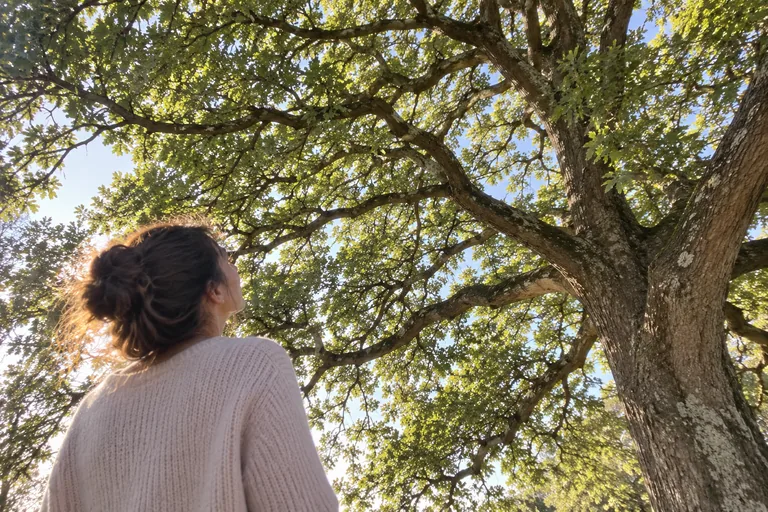
Note what you actually noticed. “The branches cast very fine shadows on the wall” gives you more to work with than “nature is incredible.” You can add the place, the time, and one detail. The guide to describing a place through the senses helps you choose an accessible starting point.
You don’t need to use all your senses or stand still for a long time. Observing from a window may be enough. Keep your attention in line with what’s safe in your surroundings, especially near a road, water, or a busy place. The journal doesn’t require you to go anywhere unsafe to find a more impressive scene.
Naming what surprised you
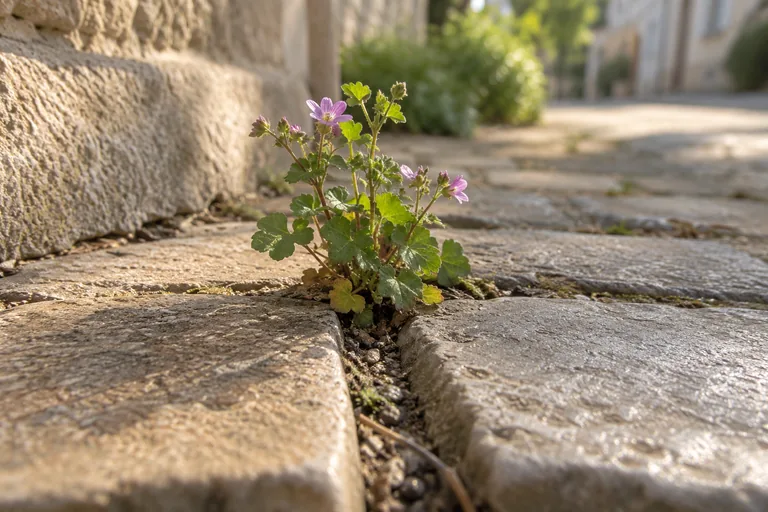
Ask yourself what differed from what you expected. Was it a scale, a level of detail, a duration, or a contrast? Maybe you’d seen that tree often without noticing its shape. Maybe a very small work demanded more attention from you than a monument. This question makes the page personal without requiring a dramatic emotion.
A creative observation walk can multiply the opportunities, but you can also stay somewhere familiar. The goal isn’t to consume extraordinary experiences. It’s to notice what momentarily escapes the automatic way you see.
Keep a question open
After the description, write what you’d like to understand. How did this shape come about? Who made this object? What phenomenon produces this color? If you look for an answer later, separate what you observed from what the source explains. Your journal can hold questions without immediate answers.
The idea notebook helps you keep track of leads if there are many. Still, avoid turning every moment into a research assignment. You can let a question be. An experience doesn’t need a complete explanation to have been interesting.
Flip cards
Choose a starting point
DescribeFlip
Note the detail you actually noticed before drawing a general conclusion.
SurpriseFlip
Ask yourself what differed from what you expected.
QuestionFlip
Stay curious and open without feeling obligated to search.
 Read alsoNew moon ritual: set your intentions for the month
Quiet awe and spectacular awe
A starry sky can bring an obvious shift in scale. A detail in an everyday object can create a subtler surprise. These experiences don’t need to be ranked. If you start looking for something more impressive every day, your journal could become a competition with your own previous pages.
You can alternate entries: nature, human creativity, an idea, a connection to a place. The film and exhibition journal offers a starting point for artworks. Consider noting the title and artist when you know them, rather than vaguely attributing your impression to “art” in general.
A possible page inspired by an ordinary trip
In a fictional scene, Élise waits at a tram stop. She notices that a building’s facade seems to change color as the clouds move. She notes the surface, the light, and the movement, then asks: “Is it the material or just the lighting?” She doesn’t conclude that she must now love all her commutes.
The next day, she doesn’t notice anything in particular. She leaves the journal closed. Later, she finds another surprise in a song or a drawing. Continuity comes from being able to return, not from a daily obligation. The one-sentence journal shows that a record can stay very short when you feel like writing.
Generator
A wording to adapt
Note the detail you actually noticed before drawing a general conclusion.
See all the phrases
Starting point
- Note the detail you actually noticed before drawing a general conclusion.
- Ask yourself what differed from what you expected.
Adapt
- Stay curious and open without feeling obligated to search.
- I can keep what works for me and remove the rest.
The boundaries that keep the experience open
You don’t have to turn a difficult period into an opportunity for wonder. An interesting observation can coexist with a problem without resolving it. Also, avoid comparing yourself with accounts from people who describe very intense emotions. Your journal isn’t a sensitivity test or a measure of how open you are to the world.
If an experience makes you uncomfortable, stop the exercise or change your surroundings. Wonder doesn’t require seeking extreme sensations. A freewriting can hold a mixed impression, but you can also choose not to explore it on your own if it overwhelms you.
Reread without trying to build a perfect collection
After a few pages, notice which kinds of surprises keep returning. Maybe you’re drawn to changes in light, precise gestures, or structures. This observation can inspire a creative activity without becoming an obligation to start a project. A solo creative session can help you follow a thread further if you feel like it.
You can keep the pages in the order they happened, even if some are very simple. The journal reflects encounters between your attention and the world, not a list of the best moments. Its value may lie in a detail you might otherwise have overlooked.

Checklist
Keep only what works for you
0 / 4
You’ve set your reference points. You can adapt or stop this practice.
Personal workshop
Get your version ready: a journal of wonder
Answer the three prompts below, or use them aloud. This workshop works without JavaScript. This workshop does not offer a save feature. Copy anything you want to keep into your journal, and avoid entering sensitive information on a shared device.
How do you finish this workshop?
Review your answers and keep only a next step that seems doable to you. You can also decide not to pursue anything today. This decision creates neither a score nor a commitment.
You can devote a page to a made object: a seam, a frame or a visible mechanism. Describe what you understand about how it was made and what remains mysterious. If you want to learn about the work behind the object, look up its maker or process afterward using a reliable source. Wonder can then turn your attention to craftsmanship, without giving the object an invented history or forgetting the people who designed it.
For a complementary perspective, watch this video from ASU Department of Psychology.
Frequently asked questions
What is a journal of wonder?
It’s a record of what surprises you or shifts the scale of your attention. You can describe modest experiences.
Do I have to write every day?
No. Opportunities may come irregularly, and you don’t need to keep a streak.
Do I have to go out into nature?
No. A work of art, an idea, or an object can also spark a sense of surprise.
How is it different from gratitude?
Gratitude often involves appreciating someone’s contribution. Awe can arise from a surprise when there’s no one to thank.
What if I don’t feel anything?
You can simply describe a fact or close the journal. No emotion is required.
Can I keep just one sentence?
Yes. One detail and one question can be enough for a page.
Sources
- Greater Good Science Center, University of California, Berkeley. Awe: definition and overview of the research.