Contents
- Familiar place: reconnect without expecting the same experience
- An observation practice, not a guarantee of well-being
- Choose a familiar place you can return to freely
- Write three lines instead of capturing the whole place
- Return after a long absence
- An example centered on a neighborhood square
- Respect the people who live in the place
- When to choose another place
- Frequently asked questions
- Sources
Returning to a familiar place can become a small observation ritual: you notice what has changed, what remains, and what you see differently. You don’t need to travel far or feel exactly the same as you did on a previous visit.
The place could be an accessible park, a square, a library, or a route. The practice is always subject to access rules, your safety, and the peace and quiet of the people there. Having a memory of a place doesn’t give you any special right to be there.
Familiar place: reconnect without expecting the same experience
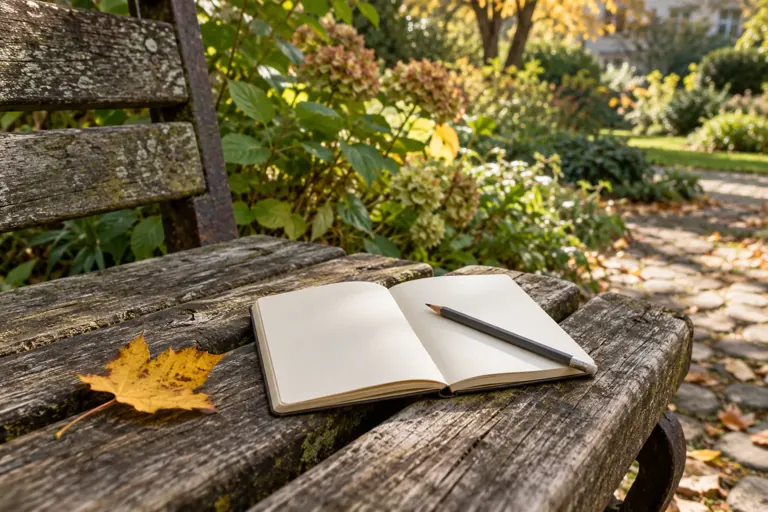
A familiar place holds both physical features and personal associations. You can recognize a bench and still feel different from the last time you visited. You might also discover an old detail you’d never noticed before. The ritual is about leaving these possibilities open, rather than checking whether the place always has the same effect on you.
The nature journal can work for an outdoor space. For a cultural venue, the film and exhibition journal offers another kind of record. You don’t have to choose a spectacular place: familiarity often comes from ordinary visits.
| Perspective | Question | Caution |
|---|---|---|
| Present | What do I see today? | Describe before explaining |
| Memory | What did I remember? | Accept uncertain details |
| Return | Do I want to come back? | Respect access and safety |
An observation practice, not a guarantee of well-being
Some research explores attention to environments and awe. It doesn’t prove that returning to your particular place will make you feel good every time. The Greater Good Science Center’s definition of awe emphasizes an experience that can change your perspective, but feeling awe isn’t required.
Our ritual is an editorial suggestion for observing and writing. You may find it interesting, feel nostalgic, or feel nothing in particular. The journal can make room for this range of responses. Try not to ask yourself why you don’t feel at peace in a place that’s supposed to bring peace.
Quiz
Check your understanding
Does a memory give you the right to enter a closed place?
See the answer
No, actual access rules come first. Attachment doesn’t replace permission.
Should returning bring up the same emotion?
See the answer
No, the place and your perspective can change. Observation leaves room for different experiences.
Choose a familiar place you can return to freely
Check actual access rules
Choose a place you can reach without going around a closure or ignoring a restriction. Hours, construction, and rules can change. Check relevant information when you need it. A place connected to your past may now be private or used differently; your attachment to it doesn’t replace permission to enter.
Also consider how accessible the route is and the current conditions. You can choose a closer option or observe from an authorized spot. A creative observation walk doesn’t require a long walk or difficult terrain. The right place is first and foremost a place you can comfortably reach.
Choose a simple point of comparison
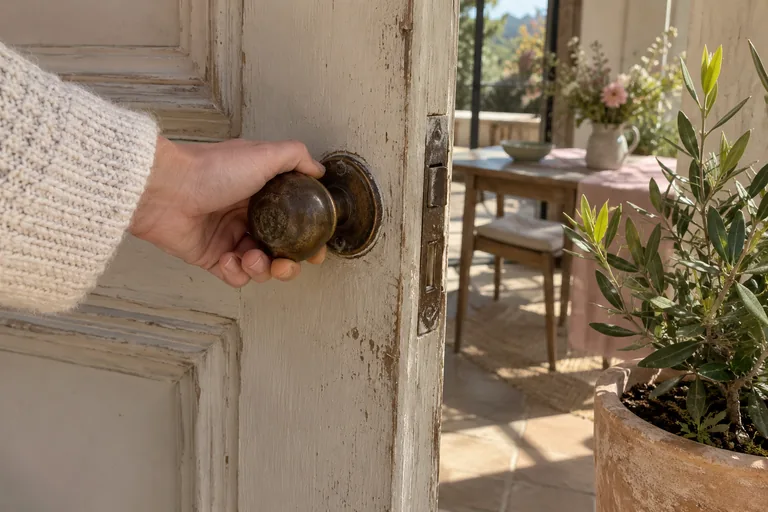
Choose a landmark: a window, a tree, a facade, or a viewpoint. Return to this landmark without trying to recreate the entire visit. You can compare the light, how the place is used, or a visible detail. The guide for describing a place through the senses helps you choose a specific, accessible observation.
Don’t automatically assign a cause to what has changed. A less leafy plant can have several explanations; a closed business alone doesn’t tell you what happened. First, note what you observed. Possible explanations can remain questions to check, separate from your description.
Notice what remains, too
Change often draws attention, but what stays the same matters, too. A route, a shape, or a use may still be there. You can describe these things without idealizing them. Stability isn’t reassuring for everyone, and a transformation isn’t necessarily a loss.
The seasonal transition journal provides a framework when you’re interested in seasonal changes. You can still return at a different frequency. No particular interval is needed for your observation to be valid: choose based on access, interest, and what you want to look at.
Flip cards
Choose a starting point
ChangesFlip
Name one detail that’s different without assigning it an unverified cause.
ContinuityFlip
Describe what remains visible or recognizable.
QuestionFlip
Stay curious about the place or your perspective today.
 Read alsoNew moon ritual: set your intentions for the month
Write three lines instead of capturing the whole place
After your visit, note one change, one continuity, and one question. These three lines are enough to create a record you can compare over time. You can add the date and relevant conditions, such as a different time of day or visible construction. Avoid turning the page into an exhaustive inventory.
The photographic journal can complement the description if taking photos is permitted and respectful. Don’t photograph people or private spaces to document your ritual without considering their rights and privacy. A personal note can often capture what interests you without exposing them.
Return after a long absence
An earlier visit may have left you with a very precise memory or one that has been reconstructed over time. If the place seems different, don’t immediately conclude that it has lost what made it valuable. Your perspective, the time of day, and your circumstances have changed, too. The guide for writing about a specific memory helps you distinguish the past scene from what you observe now.
You can write the two versions side by side: “I remembered…” and “Today, I notice…”. They don’t have to match perfectly. The page then preserves an encounter between memory and the present, without requiring one to correct the other in every detail.
Generator
A wording to adapt
Name one detail that’s different without assigning it an unverified cause.
See all the phrases
Starting point
- Name one detail that’s different without assigning it an unverified cause.
- Describe what remains visible or recognizable.
Adapt
- Stay curious about the place or your perspective today.
- I can keep what works for me and remove the rest.
An example centered on a neighborhood square
In a fictional scenario, Samira returns to a small square she used to visit often. She notices a new layout, recognizes a familiar façade, and hears less traffic at this hour. She notes all three details, mentioning that she came earlier than she used to. That detail keeps her from attributing all the change to the square itself.
Then she wonders whether she wants to return or simply hold on to this visit. A ritual can grow through repetition, but a single visit can also be enough. The little pleasures journal can capture a pleasant detail without committing to an ongoing tradition of returning.
Respect the people who live in the place
A neighborhood, library, or garden is more than the backdrop to your story. Other people live and work there or come to find some quiet. Be mindful of the space you occupy, the noise you make, and how the place is used. If you want to talk with someone about your memories, check that it’s a good time for them, and accept that they may not share your attachment.
You can keep an impression in a conversation journal without reproducing unnecessary identifying details. If you publish an account, reread it with the people and places involved in mind. A personal observation doesn’t need to reveal everything to be interesting.
When to choose another place
If returning feels difficult, you can end the visit or choose not to go back. Attachment doesn’t obligate you to remain loyal to a particular place. Some places become inaccessible, painful, or simply less relevant. You can keep a record of it in a personal timeline and look for another point of observation.
The ritual stays alive when it allows for these changes. You’re not trying to keep the world still, but to notice the relationship you have with it today. A short, respectful visit without a spectacular outcome can already be a complete experience.
Checklist
Keep only what works for you
0 / 4
You’ve set your reference points. You can adapt or stop this practice.
Personal workshop
Prepare your version: familiar place
Answer the three prompts below, or use them aloud. This workshop works without JavaScript. This workshop does not offer a save feature. Copy anything you want to keep into your journal, and avoid entering sensitive information on a shared device.
How do you finish this workshop?
Review your answers and keep only a next step that seems doable to you. You can also decide not to pursue anything today. This decision creates neither a score nor a commitment.
For a complementary perspective, watch this video from Explore Nature.
Frequently asked questions
How can you observe a familiar place in a new way?
Choose a point of reference and note one change, one continuity, and one question. A brief observation may be enough.
Do you have to return at the same time each time?
No. You can simply note the conditions to understand some of the differences.
Can you take photos of the place?
Only if you respect the rules and the people there. A description can replace the image.
What should you do if the place has become private property?
Respect the new situation and stay in authorized areas. The memory doesn’t give you a right to access the place.
What if I mostly feel sad?
You can end the visit or choose not to return. No pleasant emotion is required.
Do you have to turn the visit into a tradition?
No. A single visit can be complete and enough.
Sources
- Greater Good Science Center, University of California, Berkeley. Awe: definition and overview of the research.